
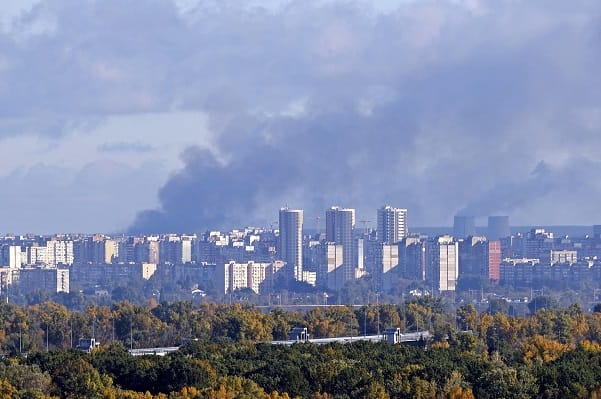
Russia is preparing to intensify its attacks on Ukraine, including potentially striking targets in the centre of Kyiv, after concluding that efforts to negotiate an end to the war have reached an impasse, according to people close to the Kremlin.
Moscow is also considering expanding its use of conventional ballistic missiles against infrastructure across Ukraine, according to Bloomberg, which cited four sources familiar with the thinking inside the Russian leadership.
The sources said attempts to revive negotiations had effectively collapsed, leaving the two sides back at square one. Russia increasingly regards Ukrainian attacks as attacks by NATO itself, given the weapons, intelligence and other support provided to Kyiv by alliance members.
“The current stage of hostilities isn’t the peak of military escalation,” the sources said.
The assessment underscores the growing risk that Russia could intensify its campaign against Ukrainian cities and critical infrastructure just as diplomatic efforts involving Washington face mounting obstacles.
Read more related news:
UK on red alert: Brits told to prepare for an attack as Russian war plans pushed forward
Putin is planning an imminent test on NATO which forces CIA chief to rush to Moscow
UK intelligence warns Kremlin is ‘preparing something’ as security source warns Burnham will be tested
UK is in Russia’s crosshairs as Putin warns he will attack British military sites
Latvian President Edgars Rinkēvičs said on June 6 that NATO needed to remain prepared for worst-case scenarios, describing Russia as dangerous and unpredictable and warning that its next move was difficult to anticipate.
The concern extends beyond Ukraine. NATO’s eastern members, particularly the Baltic states, have increasingly been preparing for the possibility that the conflict could spill over into their territory.
Drones have repeatedly entered the airspace of countries including Romania and Poland, while Moldova has also faced security concerns linked to the war. Russia has simultaneously stepped up efforts to prepare its population for a potential confrontation with NATO by 2030, while European governments have reported an increase in Russian hybrid activity and cyberattacks.
According to Bloomberg’s sources, President Vladimir Putin is unlikely to abandon the war because of European sanctions or Ukrainian attacks against Russian oil, energy and logistics infrastructure.
Four people close to the Kremlin said Russia now saw few alternatives to further escalation if it was to achieve its military objectives.
Moscow is nevertheless awaiting a possible diplomatic initiative from US special envoys Jared Kushner and Steve Witkoff. Russian officials hope their visit could produce new proposals, although expectations of a breakthrough remain limited.
The stakes are particularly high because some Russian officials increasingly believe Putin could eventually consider the use of tactical nuclear weapons as a last resort in Ukraine.
“An extreme response is viewed as possible because the only outcome worse than continuing the war for Putin would be losing it,” Bloomberg reported, while stressing that there is currently no indication Russia is preparing to use nuclear weapons.
The warnings came as CIA Director John Ratcliffe travelled to Moscow on Tuesday, August 25, after flying from Riga in a US military transport aircraft.
Flight-tracking data indicated that a C-17 Globemaster III arrived in Riga on Sunday, August 23, after departing from Camp Springs, Maryland, home to Andrews Air Force Base.
Kremlin spokesman Dmitry Peskov initially denied knowledge of the aircraft.
“We have no information about this,” Peskov said when asked about the flight, adding that Russia was not planning meetings with the US administration.
Peskov subsequently said Putin and Ratcliffe had not met. The Kremlin later confirmed Ratcliffe’s visit, saying there had been “talks between the intelligence services”.
Axios, citing two anonymous US officials, reported that Washington had informed Kyiv ahead of the trip that a high-level US delegation was travelling to Moscow and had asked Ukraine not to launch strikes on the Russian capital.
The purpose of Ratcliffe’s visit remains unclear. Analysts have suggested that talks with Russian intelligence officials could have focused on the war in Ukraine, wider security issues or the conflict between the US and Iran.
On the same day as Ratcliffe’s visit, Putin signed three undisclosed decrees. Documents numbered 605, 606 and 607 were signed but not published, leaving their contents unknown.
US President Donald Trump said on Wednesday that Ratcliffe’s trip could produce results as Washington continued efforts to bring the war to an end.
“We would like to see the Ukraine war end,” Trump said, adding that his administration was “working very hard to get that war ended.”
“Something may come out of it,” he continued.
For Kyiv, the prospect of renewed Russian escalation comes at a particularly sensitive moment, with diplomacy stalled but Washington still seeking a route towards a settlement.
The Kremlin’s reported conclusion that negotiations have reached a dead end suggests the coming weeks could instead be defined by an intensification of military pressure, raising the risks for Ukraine and for NATO states along Russia’s western flank.


Leave a Comment