
A major split has erupted inside NATO after the UK, France and several allies reportedly blocked plans by Secretary General Mark Rutte to sharply increase military aid for Ukraine.
According to The Telegraph, Rutte hoped to secure agreement at the alliance summit in Ankara on a target requiring members to spend at least 0.25 per cent of GDP on military support for Kyiv. But the proposal was halted after five NATO states refused to back it — exposing widening fractures inside the alliance.
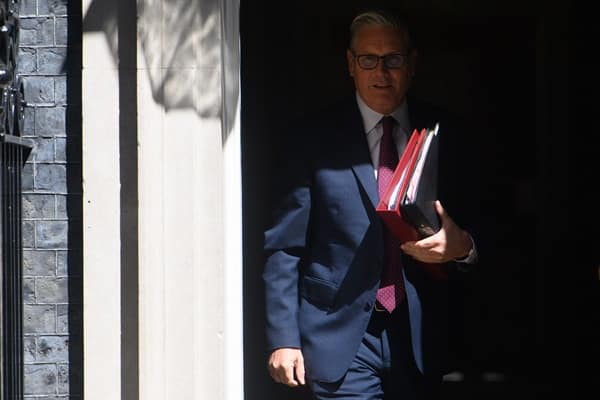
The development is particularly awkward for Keir Starmer, whose government has repeatedly presented Britain as one of Ukraine’s staunchest backers. Britain currently contributes around £3 billion annually — roughly 0.1 per cent of GDP — making it one of the largest donors in cash terms, but still well below the proposed threshold.
Read more related news:
Putin’s prized Black Sea fortress left burning after Ukrainian blitz
Putin cries ‘terror attack’ after overseeing years of devastation in Ukraine
Kremlin finally noticing Putin’s war is not going to plan
Russia launches ‘a nuclear missile without a nuclear warhead’ on Ukraine
The row comes just days after Downing Street faced criticism over the easing of sanctions on Russian-origin petroleum imports, intensifying accusations that Britain’s tough rhetoric is not being matched by action.
Kemi Badenoch accused Starmer of “losing his moral compass” during a bruising Prime Minister’s Questions clash over the Government’s approach to Russian oil sanctions.
Badenoch said at the time, “Labour should be ashamed.
“They are banning new North Sea licences here at home while lifting sanctions on Putin’s oil industry abroad.”
Ms Badenoch told MPs during PMQs: “I wonder if he is okay. He is so deep in the bunker: he is importing sanctioned Russian oil, he’s nationalising steel, [and] he’s imposing price controls in the supermarket. It’s like the Soviets won.
“This country needs a government that has got its act together. Instead, what we have is a Prime Minister hanging by a thread with fake support by his backbenchers, too scared to take difficult decisions, losing his moral compass by backsliding on Ukraine.”
However, several eastern and northern European allies are already meeting or exceeding the proposed spending level. According to the Kiel Institute for the World Economy, countries including the Netherlands, Poland and the Nordic and Baltic states are contributing at or above 0.25 per cent of GDP to Ukraine’s defence effort.
Meanwhile, France, Spain and Italy — Europe’s largest economies after Germany — continue to face criticism for failing to increase support more aggressively.
The dispute has unfolded against a backdrop of growing anxiety over the future reliability of the United States under Donald Trump. At the GLOBSEC forum in Prague, European leaders reportedly clashed over whether the continent can continue depending on American military guarantees and weapons supplies.
Concerns deepened further after the US Army abruptly cancelled a planned deployment of more than 4,000 troops to Poland in mid-May. The move was later reversed after Trump reportedly intervened directly and questioned Defence Secretary Pete Hegseth over the decision.
The episode has reinforced fears that NATO unity is fraying at a critical moment in the war — with divisions over Ukraine funding now spilling into public view.


Leave a Comment