
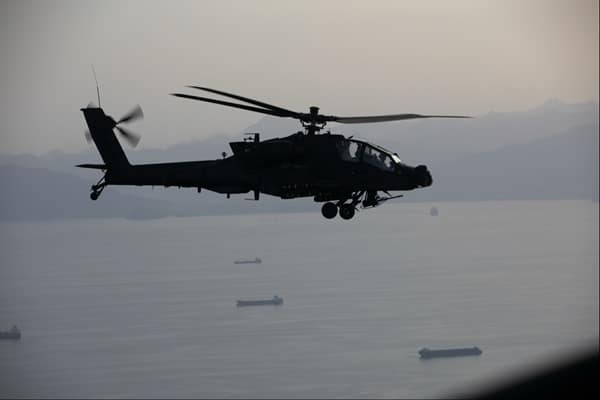
The United States has carried out fresh military strikes against Iran, escalating tensions across the Gulf as fragile ceasefire arrangements come under increasing strain amid repeated confrontations in the Strait of Hormuz.
U.S. Central Command (CENTCOM) confirmed that four Iranian attack drones were intercepted while approaching the strategic shipping corridor, after being assessed as posing a direct threat to maritime traffic and U.S. forces operating in the region.
Separately, a military facility near the port city of Bandar Abbas was struck in what U.S. officials described as a pre-emptive action, reportedly targeting a site preparing to launch a fifth drone.
Iranian state media reported explosions east of the city, though details of damage and casualties remain unclear.
The operation marks the second round of U.S. strikes inside Iran in recent days, underscoring how quickly the confrontation has escalated despite ongoing diplomatic efforts to stabilise the region.
The Strait of Hormuz — a critical artery for global energy supplies — has become the focal point of the crisis, with repeated drone and missile incidents disrupting shipping and driving volatility in global oil markets.
Washington has described the strikes as “measured, purely defensive, and intended to maintain the ceasefire,” insisting its actions are designed to deter further attacks on commercial vessels and military assets.
However, Tehran has strongly condemned the latest operation, calling it a “grave violation” of the ceasefire and warning that Iran “will not leave any act of hostility unanswered.”
The Islamic Revolutionary Guard Corps has also claimed responsibility for shooting down a U.S. drone and engaging additional aircraft it said had entered Iranian airspace, further fuelling fears of retaliation.
At a cabinet meeting, former U.S. President Donald Trump adopted a more confrontational tone, suggesting that Iran remained under pressure to negotiate while warning that further military action remained on the table.
“They just want to make a deal — I don’t think they have a choice,” he said, while adding that if talks failed, “we’ll have to just finish the job.”
Iranian state television later aired what it claimed was a draft peace framework involving reopening the Strait of Hormuz and the withdrawal of U.S. forces, though the White House dismissed the report as “a complete fabrication.”
Despite intermittent signals of progress in negotiations, the latest exchanges suggest diplomacy remains fragile, with both sides continuing to combine limited military action with ongoing talks.
Energy markets remain highly sensitive to developments, with thousands of commercial vessels already affected by reduced traffic through the Strait of Hormuz and insurers warning of sustained risk premiums if instability continues.
For now, both Washington and Tehran insist they are not seeking full-scale war — but the pace and proximity of recent strikes have raised growing concerns that the conflict is drifting further out of control.





Leave a Comment