
I was in practice as a barrister for 37 years: the first half in general common law, with an emphasis on crime, and the second in professional negligence, specialising in high-value clinical negligence, often involving death. I now write legal thrillers based on that experience.
Reading the room is an essential skill in both persuasion and negotiation.
Persuading a jury that will not even look at you because of the heinousness of your client’s alleged crime is an art. Of course, you must have something to work with. There must be evidence, an alternative narrative, a weakness in the prosecution case. You cannot make bricks without straw. But given a little straw, the task becomes: how do you persuade twelve reluctant men and women to see the world as you see it?
You begin by selling yourself. Before a jury will accept your case, they must accept you. They do not have to like you, but they must trust you enough to follow you through the evidence. Good advocates build a quiet bond with those twelve anonymous individuals.
I used to liken it to spinning plates. You find a point that resonates with one or two jurors. You see it—a nod, a flicker of recognition, eye contact. Then you move to another, without losing the first. Gradually you build momentum: four plates, then six, then more. By the end, you aim to have all twelve engaged—watching you, following you, perhaps even smiling at a well-judged moment of levity. If you can make them laugh, so much the better.
These skills transfer directly into civil litigation, particularly negotiation.
Again, you must know your case inside out. You must understand where you are vulnerable and where you are strong. But you must also read the room. The audience has changed: no longer a jury, but counsel—often a KC—and, crucially, those behind them.
In high-value clinical negligence claims, the real decision-makers are not always the advocates. Acting for a claimant, you may face a barrister, a solicitor, and an insurer or trust representative—the person with the cheque book. The barrister may have been brought in for the case; the solicitor and insurer may have worked together for years. In that situation, persuading the solicitor may be more effective than persuading counsel, because the insurer trusts their judgment.
In other cases, the insurer may be inexperienced or unfamiliar with the file. They may defer heavily to their legal team. The balance of power shifts. The key question is always the same: where, exactly, does authority lie in this room?
Acting for a defendant presents different challenges. The claimant’s family may not be motivated solely by money. In cases of death or catastrophic injury, they may want acknowledgment, an apology, an admission of fault. Sometimes that matters more than extracting the last pound of compensation. That is something you can work with.
Equally, they may be driven by grief or anger. In such cases, your task is often indirect: persuading their advisers so that they, in turn, can guide the client. A figure that is entirely rational on paper may be unacceptable to a lay client for reasons that have little to do with law or evidence.
Every case involves balancing risk.
Your opponent’s expert may be weak on causation. You may believe you can dismantle them in cross-examination. You may even have the questions already lined up. But it is never guaranteed. Are you prepared to take the case to trial on that uncertainty? What proportion of your claim are you willing to concede to eliminate that risk?
Or consider the reverse. Your own expert appears robust on paper, but in conference has shown signs of yielding under pressure. You suspect that, in the witness box, they may give ground. The other side does not yet know this. If the case goes to trial, they soon will. You cannot reveal that weakness in negotiation—you must maintain an appearance of quiet confidence—but you must factor it into your decision-making. What discount are you prepared to accept to avoid that exposure?
One of the most important disciplines is knowing when to stop.
As negotiations progress, there is often a moment when agreement feels just within reach. The temptation is to concede a little more to close the deal. But like a gambler in a casino, you must know your limits in advance. Agree with your client beforehand: what is the figure below or above which we will not go, however close we appear to settlement?
Negotiation can resemble an auction. The successful bidder often pays over the odds, because they have bought at the top of the market.
The advocate’s role is not to achieve perfection. That is rarely possible. It is to guide the client towards a rational decision in conditions of uncertainty. That requires candour. It is no service to maintain a position that is no longer defensible, or to reject an offer that properly reflects the risks of litigation. Equally, one must guard against settling out of fatigue or impatience. The difference between a good settlement and a poor one may lie in a single, well-judged pause.
Finally, there is emotional control.
These meetings can be long and, at times, confrontational. Voices may rise; positions may harden. It is essential that the advocate remains composed. Irritation rarely assists. It may satisfy a momentary impulse, but it weakens authority and clouds judgment.
Calmness, by contrast, has practical value. It steadies the client, maintains focus, and can subtly influence the tone of the room. It also preserves flexibility. A composed advocate can shift position without appearing inconsistent; an agitated one cannot.
In the end, successful negotiation is not about dominance or theatrical victory. It is about resolution—achieving an outcome that reflects the realities of the case and serves the client’s interests as far as those realities permit.
The law provides the framework. Within it, the line is drawn by judgment.

Simon Michael, author
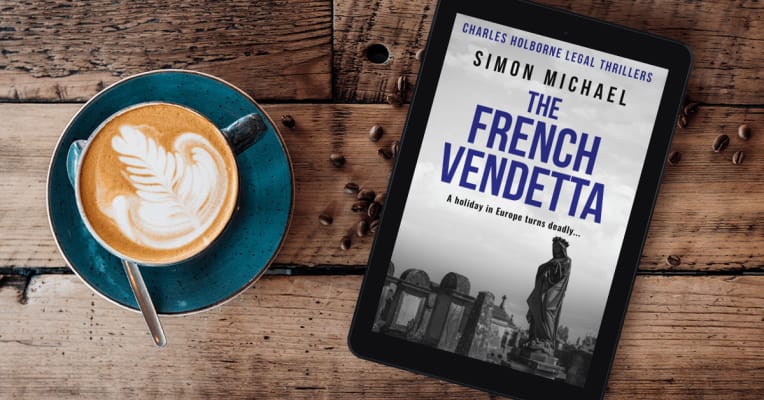
Simon Michael is the author of the Charles Holborne series of legal historical crime thrillers. The French Vendetta, book 11, is out now: www.simonmichaelauthor.com
The French Vendetta, Sapere Books, available in audiobook, ebook and paperback online and in all good bookshops: https://mybook.to/TheFrenchVendetta

Leave a Comment