
Kyiv’s reported attack threatens to unravel Washington’s fragile energy ceasefire as Ukraine vows to “burn Russian refineries” and Britain prepares to reaffirm its support for Volodymyr Zelensky.
Ukraine has reportedly struck an oil depot in Russia, threatening to undermine Donald Trump’s attempt to halt attacks on energy infrastructure and exposing the fragility of Washington’s latest effort to contain the war.
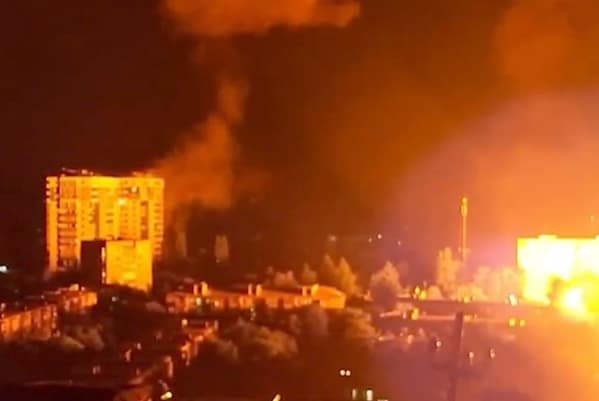
More than 500 drones were reportedly launched towards Russia overnight, with video footage showing the aftermath of what appeared to be a devastating strike. If confirmed, the attack would mark the first Ukrainian strike on energy infrastructure since Trump announced an “energy ceasefire” days earlier.
The escalation puts Kyiv on a collision course with the US president, who has warned that Washington could cut intelligence-sharing and freeze the PURL weapons mechanism if Ukraine resumed attacks on Russian energy facilities.
Ukraine’s response has been defiant: “We will burn Russian refineries.”
Read more related news:
British bosses given secret Whitehall briefings on Russian attacks
‘Absolutely unacceptable’: Bulgaria savages Moscow as a ship is sunk off NATO coast
NATO chief warns Russia we are ‘ready to fight tonight’ as ex-general raises conscription alarm
MI5 chief warns Britain faces ‘seismic shock’ as Russia prepares for years of confrontation
The confrontation highlights the central weakness of the proposed truce: neither side appears willing to leave the other’s energy infrastructure untouched while attacks continue against its own.
President Volodymyr Zelensky said Russian forces had struck at least six Ukrainian energy facilities since Trump declared the ceasefire on Sunday. Kyiv has argued that its campaign against Russian refineries and oil logistics is a response to Moscow’s repeated attempts to cripple Ukraine’s electricity and heating systems.
Energy infrastructure has become a strategic battleground. Ukrainian long-range drone attacks seek to disrupt the revenues and logistics supporting Russia’s war effort, while Moscow has repeatedly targeted power and heating facilities, threatening civilians as winter approaches.
Trump’s intervention was intended to restrain both sides. But the reported Russian and Ukrainian attacks risk turning the ceasefire into another diplomatic initiative without an effective enforcement mechanism — and leaving Kyiv vulnerable to pressure from its most important military backer.
The stakes are particularly high for Ukraine, which depends on Western military assistance and intelligence to sustain its defence. A US decision to restrict either could weaken Kyiv’s operational position even as Russian attacks continue.
Britain is seeking to reinforce the opposite message. Zelensky is expected in the UK, where Prime Minister Andy Burnham has pledged continued support for Ukraine and urged international partners to increase pressure on Moscow.
“Our rock-solid support to Ukraine is vital for keeping us safe here in the UK,” Burnham said, promising to go “further and faster” in backing Kyiv.
“Russia’s aggression cannot be allowed to succeed on our continent,” he added.
London has also called for tougher sanctions against Russia and greater international pressure on Vladimir Putin to respect the American ceasefire initiative.
The diplomatic divide is becoming harder to ignore. Washington is threatening consequences if Kyiv resumes energy strikes, while European allies insist that Russia must be held accountable for attacks on Ukrainian infrastructure.
For Zelensky, the calculation is brutal: restraining Ukraine’s ability to hit Russian oil facilities could leave Moscow’s energy war intact, while defying Trump risks jeopardising American support.
The reported strike therefore threatens more than a fragile ceasefire. It exposes the growing tension between Washington’s demand for restraint and Kyiv’s determination to make Russia pay a price for continuing the war.


Leave a Comment