
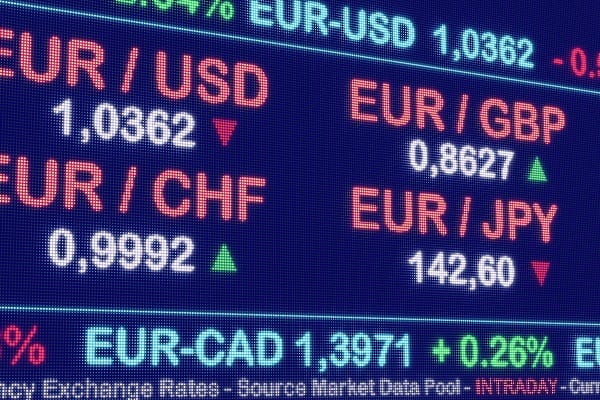
EURUSD is recovering significantly as fundamental factors tilt toward supporting the euro, while the USD continues to come under pressure from a series of weak economic data.
Recent reports from the US show that the economy is showing signs of slowing down, from consumption and manufacturing to the labour market.
Retail Sales and Core Retail Sales rose more slowly than expected, reflecting the weakening in household spending, which accounts for a large portion of US GDP.
At the same time, the CB Consumer Confidence Index dropped sharply to 88.7, the lowest level in many months, indicating that consumers are becoming more cautious about the economic outlook.
The manufacturing sector also continuously sends negative signals, clearly shown through the Richmond Manufacturing Index falling to -15, the weakest level in recent times.
As growth drivers weaken, PPI remains low and the labour market cools, expectations that the Fed will soon shift to an accommodative stance have strengthened significantly (According to the FedWatch Tool, expectations of a 25-basis-point cut are now above 80%), pushing the USD broadly lower, retreating from 100 points to around 99.1 points.
Meanwhile, the Eurozone shows relative stability amid a global environment still full of uncertainties. Reports from the ECB, including the Economic Bulletin and the Financial Stability Review, indicate that the euro area economy continues to maintain modest growth, with Q3 GDP rising 0.2% thanks to recovery in the services sector and strong digitalization trends. Inflation is moving closer to the 2% target, allowing the ECB to maintain a stable policy stance and avoid the easing pressure faced by the Fed.
Additionally, a solid labour market, record-high confidence in the euro at 83%, and a banking system assessed as resilient help reinforce the medium-term outlook for the common European currency.
These factors make the EUR more attractive in a context where global capital flows are temporarily cautious toward the USD.
More notably, the ECB emphasizes that the global tariff shock in April 2025 has revealed a weakening in the traditional safe-haven role of the USD and US Treasury bonds.
During periods of strong market volatility, instead of rising as usual, the USD plunged while US Treasury yields surged. This makes the USD no longer an absolute anchor in a risk-off environment. The ECB also warns that if the correlation between the USD and US Treasuries continues to shift in an unfavourable direction, this could increase systemic risk and affect the long-term asset allocation strategies of euro-area investors.
Overall, the outlook for EURUSD in the near future is beginning to tilt toward the positive.
The USD is facing a series of weak economic data, declining consumer sentiment, and the risk that the Fed will soon have to cut interest rates. In contrast, the Eurozone maintains stability in growth, inflation, the labour market, and the financial system, while facing far less easing pressure than the US.
As interest rate expectations show signs of narrowing, and the USD gradually loses its safe-haven role during major shocks, the upward momentum of EURUSD has a basis to sustain in the short to medium term. However, investors should continue to closely monitor upcoming US data, as any unexpected improvement in growth or inflation could trigger a technical rebound in the USD, thereby pressuring EURUSD.


Leave a Comment