
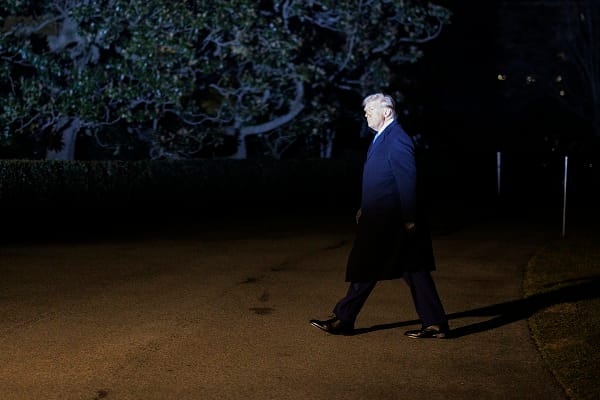
For much of the past year, the Trump administration has attempted to distance itself from Kyiv.
Military aid slowed to nothing, humanitarian support was paused, and at times Washington appeared eager to push Ukraine towards negotiations and concessions rather than continued resistance, with virtually little pressure, certainly publicly, placed on the Russian leadership.
Yet events in the Middle East have now produced an uncomfortable strategic irony, and all this without even so much as a ceasefire in Ukraine.
Many are beginning to ask questions. If Russia is allegedly supplying intelligence and showing political allegiance to the Iranian regime, why has the Trump administration appeared reluctant to publicly challenge Moscow?
Even this week, presidential envoy Steve Witkoff suggested the United States should take Russia “at their word” regarding certain assurances, a bizarre idea.
That suggestion alone raised many eyebrows, mainly because Russia has made such assurances before.
In January 2022, just weeks before launching its full-scale invasion, Russian President Vladimir Putin insisted that “Russia will not start a war in Ukraine”, dismissing Western warnings of invasion as hysteria.
The country Washington had been quietly sidelining is now helping protect American service personnel. Ukraine, forged by four years of relentless war with Russia and near-daily drone attacks, has become the world’s most experienced laboratory in counter-drone warfare. That expertise is now being exported to protect U.S. bases under attack from Iranian drones.
Ukrainian President Volodymyr Zelensky confirmed this week that Kyiv has deployed interceptor drones and a team of drone specialists to Jordan to help defend U.S. military bases from Iranian attacks after a request from Washington.
It is a remarkable reversal of the usual dynamic.
For decades the United States trained and equipped allies. Now, one of those allies, hardened by necessity and innovation, is providing battlefield solutions to the world’s largest military power.
The context is grim. The rapidly escalating conflict with Iran has already taken a toll on American personnel in the region. According to reports, around 150 U.S. troops have been wounded during attacks on American bases in the Middle East, with several fatalities reported.
Not all of those injuries were caused by drones, but unmanned systems have become a defining feature of the battlefield, and this is precisely where Ukraine now leads.
Since Russia’s full-scale invasion in 2022, Ukrainian cities and infrastructure have been bombarded by Iranian-designed Shahed drones supplied to Moscow. Kyiv responded not by relying solely on expensive Western missile systems, but by innovating rapidly: building layered defences using electronic warfare, cheap interceptor drones, and improvised anti-drone systems.
In some cases, Ukrainian interception rates against incoming drones have reportedly reached around 90 percent, thanks to these low-cost solutions.
For the United States, which has traditionally relied on highly sophisticated and extremely expensive systems such as Patriot and THAAD interceptors, the drone war presents a different kind of problem. Cheap attack drones costing thousands of dollars can force defenders to fire missiles costing hundreds of thousands.
Ukraine solved this problem out of necessity and now that expertise is being shared, but at what cost? There is also a political irony in all of this.
Months before the current Middle East conflict, Ukraine reportedly offered assistance to help counter Iranian drones, an offer that was largely ignored by Washington at the time. Some U.S. officials now acknowledge that overlooking that offer may have been a “tactical error” in preparing for the conflict.
The result, a strategic paradox, and an unbelievably bad decision. Especially as a military man myself, “you fail to prepare, prepare to fail” mantra that’s ingrained to any military professional, it’s a bitter pill to swallow, especially if the Trump administrations priority is to lean towards a Russian regime intent on continuing its invasion of Ukraine & supply Intelligence to a Iranian Regime intent on killing US Service personnel.
A positively huge conflict of interest that should be waving red flags and setting off alarm bells.
After years of war, Ukraine has evolved into one of the most innovative military ecosystems in the world. Its engineers, soldiers and drone operators have built an entire defensive doctrine around the very systems now threatening American forces.
For President Zelensky, there may be a quiet sense of vindication. For Washington, there is likely a degree of humility. The reality of modern warfare is now undeniable, the lessons of this war were always going to travel far beyond Ukraine and the signs have been there for years, when many have just buried their heads.
Today, those lessons are helping protect American troops thousands of miles from the front line, despite the White House making Ukraine jump through rings of fire. It is a stark reminder that while Washington hesitated, Ukraine adapted. The uncomfortable reality now facing policymakers is simple, the country they tried to sideline has become one of the most valuable military laboratories in the world, and it still came to America’s aid when asked.


Leave a Comment