
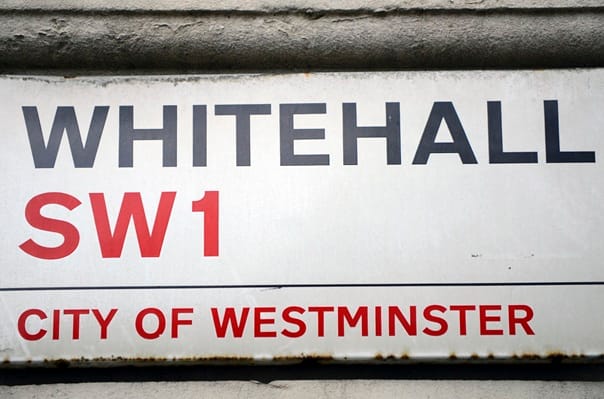
British companies operating critical infrastructure and defence businesses are being called into closed-door Whitehall briefings over the threat of Russian cyber attacks, sabotage and disinformation, as ministers warn that Moscow is increasingly targeting the organisations that keep the UK economy and national security functioning.
Senior executives and industry representatives from some of the country’s most sensitive sectors will receive intelligence briefings from security and defence ministers as the government seeks to strengthen the private sector’s ability to withstand hostile activity.
The move reflects a widening definition of national security risk for British businesses. Russia is no longer viewed solely as a military threat operating on the battlefield in Ukraine, but as an adversary capable of disrupting companies and infrastructure through operations below the threshold of open conflict.
Read more related news:
Households urged to prepare for blackouts, Cyberattacks and widespread war
General tells Brits ‘be prepared’ for conscription ‘as army of 70,000 is not going to cut the mustard’
UK warned we are in the ‘most dangerous era’ as war with Russia may all ready be under way
Burnham does the ‘unthinkable’ and invites Putin to G20 sparking security fury in Whitehall
The government said Russia poses an “enduring and significant threat” to the UK and its interests around the world, with Russian state agencies and proxies seeking to disrupt organisations that underpin everyday life or support Ukraine.
The tactics include cyber attacks, sabotage and disinformation, which ministers say can take organisations offline, interrupt operations and undermine public confidence.
Security Minister Dan Jarvis will chair a briefing involving industry bodies representing critical national infrastructure providers, while Armed Forces Minister Louise Sandher-Jones will hold separate discussions with representatives from the defence sector.
“Strong defences are built on a clear understanding of the threat,” Jarvis said.
“That’s why I’ll be chairing this briefing, to share world-class intelligence with some of the most important organisations in the country, to ensure they understand and are prepared for the threats we face.”
Sandher-Jones said Russia was “actively seeking to disrupt the organisations that form the bedrock of our national security”.
“By bringing government and defence industry leaders together, we can deepen our shared understanding of the threat and strengthen our collective resilience,” she said.
For businesses, the concern extends beyond the immediate cost of a cyber incident.
An attack on an energy supplier, telecommunications network, transport operator, technology company or defence contractor could interrupt supply chains and essential services, while prolonged disruption could damage confidence among customers, investors and business partners.
The government has therefore sought to bring companies more directly into its national security response, providing access to specialist policing, cyber expertise from the National Cyber Security Centre and security advice from the National Protective Security Authority.
The latest meetings follow earlier briefings for university leaders and political parties on foreign interference and national security.
They also come against the backdrop of an active UK criminal investigation into alleged Russian-linked sabotage.
The Crown Prosecution Service charged a British man this month with assisting a foreign intelligence service and preparing an act of sabotage following alleged contact with an individual believed to be linked to Russia’s GRU Volunteer Corps.
The defendant, Joshua Cammidge, denies the allegations and remains entitled to a fair trial. The CPS has warned that the proceedings are active and should not be prejudiced by public commentary.
The case has provided a concrete example of the type of threat now being discussed with corporate leaders behind closed doors.
The government has not disclosed the intelligence it plans to share with industry or identified the companies taking part in the briefings.
That secrecy is itself significant. Rather than publishing a general warning to businesses, ministers are using classified intelligence to explain the nature of the threat and the measures individual sectors can take to protect themselves.
The shift reflects a broader recognition across Western governments that the dividing line between economic security and national security has become increasingly blurred.
For Britain’s defence industry, the stakes are particularly high. Companies supplying equipment and technology to Ukraine can represent attractive targets for hostile intelligence services, while disruption to suppliers could have consequences extending well beyond an individual business.
Critical infrastructure presents an even broader vulnerability because the economic cost of disruption can rapidly spread through interconnected networks.
The UK government has described the Russian campaign as part of a wider pattern of hostile activity across Europe. In a statement to the OSCE this week, Britain said Russia had intensified disruptive activity beyond Ukraine, affecting borders, airspace and infrastructure across Europe.
The latest Whitehall meetings therefore amount to more than a warning to chief executives to improve their cyber security.
They signal that companies operating Britain’s most sensitive infrastructure are increasingly being treated as part of the country’s frontline national-security architecture.
For corporate Britain, the implication is straightforward: resilience against a state adversary is no longer solely a responsibility for government.
The companies keeping the lights on, moving goods, maintaining communications and supplying the armed forces are now being asked to prepare for a conflict that may never be declared — but which ministers say is already being fought in the shadows.


Leave a Comment