
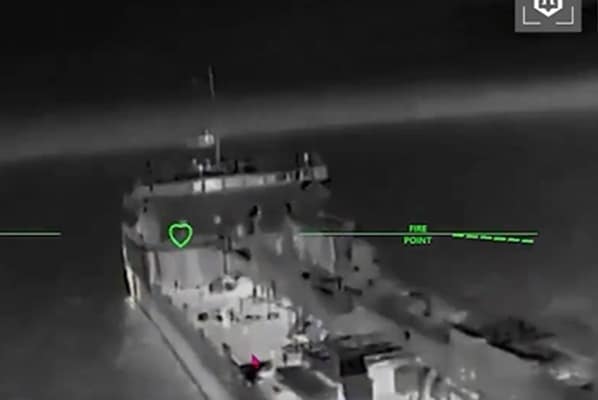
I was fascinated by the news that Ukrainian naval drones reportedly sank a Russian warship in Libya. Zelenskyy has confirmed the operation, which took place some 2,400 kilometres from the Ukrainian front line.
I spend a considerable amount of time with Ukrainian defence technology businesses, and even I find the pace of innovation astonishing.
A few years ago, the idea that Ukraine could use relatively inexpensive, domestically developed unmanned systems to strike Russian naval assets in the Mediterranean would have seemed fanciful. Now we are watching it happen.
I wonder how many European defence planners are looking at these developments and questioning the assumptions on which their own procurement programmes are based.
We have spent decades investing in expensive conventional platforms, and Ukraine is demonstrating how vulnerable some of them can be to technology developed at a fraction of the cost.
Of course, none of this changes the appalling situation at home.
Read more related news:
Europe fears coordinated sabotage as Starlink attacks trigger multinational investigation
‘My greatest fear’: UK intelligence chief issues chilling Putin warning over risk of NATO war
‘Russia considers launching a nuclear strike’ as Medvedev delivers chilling message to Kyiv and the West
Zelenskyy reported yesterday that Russia had launched around 2,700 drones, nearly 1,460 guided bombs and 165 missiles at Ukraine over the previous seven days. Twenty regions were hit. Another attack on a residential building near Kyiv on Sunday killed civilians.
I find the continued delays around Patriot missiles particularly infuriating. Zelenskyy has again raised concerns about American approval for missiles that Ukraine’s European partners have already agreed to pay for. These are weapons needed to defend Ukrainian cities, and every delay has consequences.
The renewed restrictions on Starshield are equally troubling. Ukrainian forces have reported continued connectivity problems with high-speed interceptor drones, including restrictions affecting systems travelling above approximately 160 kilometres per hour. That is a serious problem when trying to intercept Russia’s faster, jet-powered Shaheds.
There are competing explanations for what has happened, but the uncertainty itself worries me. Ukraine has built essential parts of its defence around technology controlled by an American private company. It now faces restrictions that, according to its own military personnel, are directly affecting operations.
Europe should be paying very close attention. We have become comfortable relying on foreign technology for capabilities that are fundamental to our security. I’m not convinced we’ve properly considered what happens when access becomes conditional.
I was pleased to see Britain’s Defence Secretary Wes Streeting in Kyiv over the weekend, announcing further agreements to manufacture Ukrainian-designed strike drones in Britain. This follows the commitment to provide another 1,000 long-range drones and additional air-defence missiles.
This is exactly the kind of practical cooperation I want to see through UK–Ukraine TechExchange. Ukrainian companies have developed systems under conditions no British manufacturer would ever wish to experience. Britain has industrial capacity, engineering expertise and investors who could help these businesses grow.
But agreements need to become funded contracts and production lines. Too often I meet people with excellent technology who are spending more time working out how to sell it to governments than improving what they have already built.
Ukraine’s Brave1 programme is also working with domestic manufacturers to develop alternatives to Chinese Mavic reconnaissance drones. Meanwhile, Ukrainian thermal-imaging company Oko Camera is establishing production in the Netherlands, with ambitions to manufacture 100,000 cameras annually by the end of 2027.
I would like to see many more of these partnerships. They make commercial sense for European industry, and reduce Ukraine’s dependence on equipment and components that may not always be available.
I also followed the incident over Poland on Friday, when a Swedish Gripen pilot reportedly received authorisation to intercept a suspected Russian cruise missile but couldn’t positively identify the target because of poor weather.
I don’t criticise the pilot for not firing. There are very good reasons for strict identification procedures, particularly over populated areas. But the incident illustrates some of the practical difficulties NATO faces in responding to threats that can develop in seconds.
Last week, I wrote for a leading UK political publication about Britain’s preparedness for hostile drone attacks. My concern is that we’re investing in technology without sufficiently resolving who is responsible for acting when a threat appears, who has the authority to intervene and whether the relevant organisations can make those decisions quickly enough.
I’ve discussed these problems with people across Britain’s defence community. Nobody wants to weaken safeguards unnecessarily, but we should be testing these procedures before they’re needed in an emergency. I fear we’re still treating too much of this as a theoretical exercise.
Finally, I’ve been spending time reviewing some research I commissioned through UK–Ukraine TechExchange into the experiences of Ukrainian military personnel.
It involves 40 detailed interviews with serving personnel and veterans, and I think it will raise some important questions about how we prepare and support soldiers in future conflicts.
Most conversations I have with defence businesses concern technology: what it can do, how quickly it can be manufactured and whether it can survive on the battlefield. All perfectly reasonable questions. But I’ve wanted for some time to understand more about the experiences of the people actually fighting this war.
I don’t want to get ahead of the researchers or reveal their findings before publication, but having seen the first draft, I’m looking forward to sharing their work.
I hope it will make a useful contribution to the discussion in Britain about what we should be learning from Ukraine.


Leave a Comment