
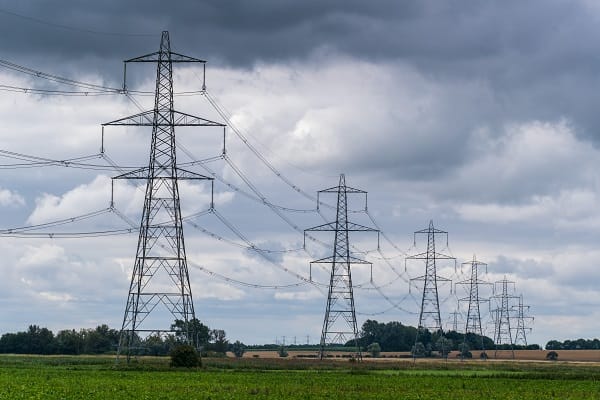
The chief executive of National Grid has warned that hostile states are developing offensive cyber capabilities faster than companies can respond, while declining to disclose whether the energy group’s subsea power cables have been targeted.
Zoë Yujnovich told the Financial Times that the systems controlling Britain’s electricity transmission network were ring-fenced from the company’s wider IT infrastructure, limiting the risk that a conventional cyber breach could spread into critical operations.
“If a phishing exercise contaminates my laptop, it’s not going to find a way into the control system,” she said.
But she warned that the balance was shifting in favour of attackers. “It feels like the offensive capability’s moving faster,” she said, as artificial intelligence makes it easier to identify and exploit weaknesses in existing systems.
Asked whether National Grid had experienced incidents involving its subsea cables, Yujnovich initially replied: “I don’t know.” In a follow-up message the next day, she clarified that “it would not be appropriate to discuss [it] publicly”.
Read more related news:
‘Bordering on irresponsible’ as government accused of abandoning millions unable to afford emergency stockpile
The response comes amid growing concern over the vulnerability of undersea infrastructure to sabotage and disruption. National Grid operates six electricity interconnectors linking Britain with continental Europe and plans two major subsea cables between Scotland and East Anglia.
Such links are increasingly critical to Britain’s energy security, but also present potential targets for hostile states seeking to disrupt electricity supplies.
Yujnovich said that while many power failures could be resolved within seconds or minutes, three days should be sufficient to repair even an extreme assault on the system.
Her comments echo the government’s recent campaign urging households to prepare for emergencies by keeping three days of food, cash and battery-powered devices.
The warning comes as Russian activity around northern Europe’s undersea infrastructure attracts heightened scrutiny. Defence Secretary Wes Streeting told the Atlantic Future Forum in Oslo last week that Russian activity in UK waters had risen by two-fifths this year.
The Royal Navy is developing a network of uncrewed vessels to monitor the seabed and approaches to Britain.
The growing threat highlights the challenge facing energy operators: protecting infrastructure that is increasingly essential to national security, while confronting adversaries whose technological capabilities are evolving rapidly.


Leave a Comment