
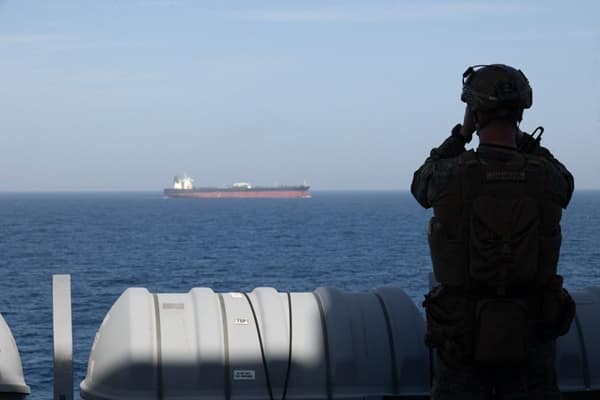
CENTCOM vows to hold Tehran ‘accountable’ after commercial ships hit in Strait of Hormuz as fears grow over global oil prices and wider Middle East war.
The United States has dramatically escalated its confrontation with Iran, launching fresh military strikes and reimposing a naval blockade after Tehran was accused of attacking commercial vessels in the Strait of Hormuz, one of the world’s most vital oil shipping lanes.
The move comes after Iranian cruise missiles reportedly struck two Emirati tankers, killing one crew member and injuring eight others – including two Ukrainian nationals – in an attack that has pushed the Middle East closer to a wider regional conflict.
The US military said it would hold Iran “accountable” for what it described as a series of escalating attacks on civilian shipping.
CENTCOM Commander General Brad Cooper said Iran had deliberately targeted commercial vessels across the Gulf.
“Over the past seven days, Iran has intentionally targeted civilians across the region by attacking seven commercial ships, resulting in nearly a dozen civilian crew members killed, missing, or injured,” he said.
He added that Iranian forces had also launched dozens of missiles and drones towards neighbouring Gulf states, warning that US forces would respond to what he described as “unwarranted aggression.”
The latest military action follows President Donald Trump’s decision to declare the fragile US-Iran ceasefire over and restore a naval blockade against ships travelling to and from Iranian ports.
The blockade took effect on July 14 as US forces simultaneously launched another wave of strikes against military targets along Iran’s coastline and around the Strait of Hormuz.
Trump also issued one of his starkest warnings yet, threatening to cripple Iran’s infrastructure unless Tehran returns to negotiations.
“We’re going to hit them very hard tomorrow night,” Trump said.
“Next week comes the power plants. Next week comes the bridges. We’re going to knock out all their power plants. We’re going to knock out all their bridges unless they get to the table and negotiate.”
The renewed fighting has sent fresh shockwaves through global energy markets.
The Strait of Hormuz carries around 20 per cent of the world’s oil and liquefied natural gas supplies, making any disruption a major threat to global fuel prices and energy security.
The collapse of the ceasefire also comes at a critical moment for Russia.
The European Union faces a rapidly closing window to extend its Russian oil price cap, which is due to expire on July 15.
If no agreement is reached, Moscow could once again sell oil at significantly higher market prices, boosted by rising global energy costs caused by the escalating conflict.
The latest exchange of strikes suggests hopes of a diplomatic breakthrough have all but evaporated.
With commercial shipping under attack, US military operations expanding and Trump threatening to target Iran’s power grid and transport infrastructure, the confrontation is entering a far more dangerous phase.
The fear now is that a conflict once centred on Iran and Israel is rapidly evolving into a broader regional crisis—one that could reshape global energy markets, disrupt international trade and draw even more nations into the escalating confrontation.


Leave a Comment