
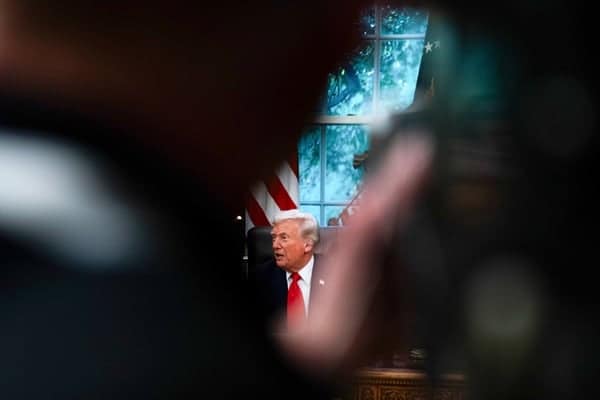
Vladimir Putin and Donald Trump were so engrossed in a 90-minute telephone conversation that neither wanted to end the call first, the Kremlin has claimed, offering a striking picture of personal warmth between the Russian president and his US counterpart as Washington intensifies pressure on Kyiv to negotiate an end to the war.
Yuri Ushakov, Putin’s foreign policy aide, described Friday’s conversation as “very substantive and friendly”. He said the two leaders had ended the call simultaneously.
“Neither wanted to be the first to hang up. They hung up simultaneously, literally at the same time,” Ushakov said.
The Kremlin’s account comes at a sensitive moment for Ukraine. Trump has renewed his public attacks on President Volodymyr Zelensky, questioning his leadership and suggesting that Kyiv should elect someone more willing to reach a settlement with Moscow.
“I suggest they get a new leader who can make a deal because he could have made many deals and for some reason he never does,” Trump told reporters.
Read more related news:
The machines taking the bullets: Ukraine deploys ground robots to rescue troops from Russia’s kill zone
Bodies on the road, profits on the table: Ukraine’s horror exposes the moral cost of negotiating with Putin
Putin rejects peace receives diesel, Trump eases pressure and Ukraine get the bombs
The remarks reinforce concerns in Kyiv that Washington’s pursuit of a negotiated settlement could increasingly place the burden of compromise on Ukraine, the country invaded by Russia, rather than on Moscow to abandon its military objectives.
The phone call also had immediate economic consequences. According to the Kremlin’s account, discussions included an agreement for Russia to supply diesel to US and global markets, with the stated aim of easing fuel prices. Washington subsequently announced a temporary easing of sanctions affecting Russian fuel exports.
The decision prompted an angry response from Zelensky, who condemned the move as a “weak decision” and “an investment in a war that must be ended”.
For Kyiv, the concern is not simply diplomatic symbolism. Easing restrictions on Russian energy exports risks giving Moscow additional commercial opportunities while its forces continue fighting in Ukraine. The scale of any resulting revenue gain will depend on the terms of the arrangements and whether the proposed supplies materialise.
Trump has also blamed Ukrainian attacks on Russian oil refineries for contributing to high diesel prices, linking the war to a domestic economic issue as the United States approaches its midterm elections. The position puts pressure on Kyiv to restrain a campaign intended to disrupt the infrastructure that supports Russia’s economy and war effort.
Yet the Kremlin’s description of an unusually cordial conversation was not accompanied by an immediate breakthrough on ending the conflict.
Ushakov indicated that Putin had played down the prospect of resuming three-way negotiations soon, leaving it uncertain whether the leaders’ personal rapport can translate into substantive progress. US, Ukrainian, and European representatives have continued separate discussions to develop settlement proposals.
The gap between the tone of the phone call and its practical results is central to the diplomatic challenge. A warm exchange between Washington and Moscow may keep channels open, but it does not itself resolve the fundamental questions over territory, security guarantees or the future of Ukraine’s sovereignty.
For Zelensky, pressure is mounting on two fronts; Russia continues its invasion, while the US president publicly questions his leadership and pushes for a deal. At the same time, Washington’s willingness to relax some restrictions on Russian fuel exports has raised doubts in Kyiv about whether economic pressure on Moscow will remain a central part of US policy.
The Kremlin has presented the call as evidence of a productive relationship between the two presidents. But the measure of its significance will not be whether either leader wanted to hang up first. It will be whether the conversation produces concrete concessions, a credible negotiating process and a route towards ending the war.
For now, the public evidence points to cordiality between the leaders, renewed pressure on Ukraine and no immediate diplomatic breakthrough.


Leave a Comment