
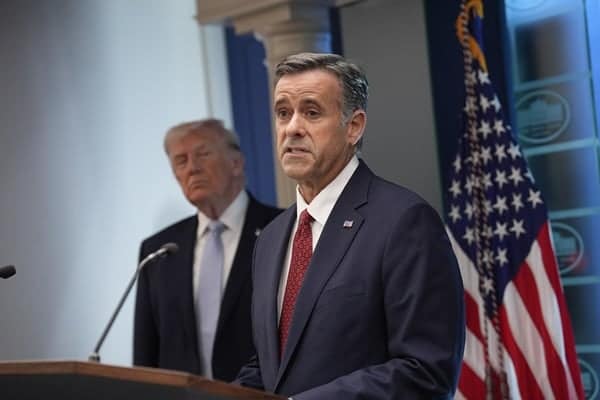
CIA director John Ratcliffe’s extraordinary visit to Moscow was intended to deliver a blunt warning to Russia against escalating its confrontation with NATO, particularly in the Baltic states, according to people familiar with the talks.
The unannounced trip, Mr Ratcliffe’s first known visit to Russia since becoming CIA chief, came amid US intelligence assessments that Moscow could seek to test the alliance’s resolve by targeting NATO territory.
Sources said Mr Ratcliffe warned Kremlin officials against military action involving Estonia, Latvia or Lithuania — the three Baltic members of NATO long regarded as among the alliance’s most exposed to Russian aggression.
One person familiar with the visit said the CIA chief’s “meeting was primarily to warn Russia against any escalatory action against the Baltic states”.
Read more related news:
Putin is planning an imminent test on NATO which forces CIA chief to rush to Moscow
UK intelligence warns Kremlin is ‘preparing something’ as security source warns Burnham will be tested
Kremlin escalates threats with ‘semi-military’ action on UK defence factories
UK on red alert: Brits told to prepare for an attack as Russian war plans pushed forward
The concern in Washington is that Moscow could use an attack or other provocation against the Baltic states to test whether the US and its European allies would respond collectively under NATO’s mutual-defence commitments.
Some officials and analysts believe such a move could also be intended to pressure Western governments into reducing their support for Ukraine, where Russia has struggled to secure a decisive breakthrough.
Mr Ratcliffe also used the visit to urge Moscow to scale back its military and economic support for Iran, according to sources cited by Politico.
The CIA chief arrived in Moscow on Tuesday aboard a US Air Force C-17 aircraft. Flight-tracking data indicated that the plane travelled from the US to Riga before continuing to the Russian capital.
The route added a further layer of intrigue to a visit that had not been publicly announced in advance.
The last known visit to Moscow by a CIA director was in November 2021, when William Burns travelled to the Russian capital to warn the Kremlin against invading Ukraine. Russian forces crossed the border three months later.
President Donald Trump sought to play down the significance of this week’s talks, describing the meeting as “semi-routine” and saying that “something may come out of” the discussions.
The Kremlin also denied that Mr Ratcliffe met Vladimir Putin.
Dmitry Peskov, the Russian president’s spokesperson, said the discussions had taken place between intelligence services.
“There were no meetings with the president of Russia. That’s all I can say on the subject. Naturally, President Putin is briefed immediately about everything.”
Washington told Kyiv that a delegation would travel to Moscow and asked Ukraine to suspend strikes in the region until the delegation departed, according to a senior Ukrainian official.
The request came as Russia and Ukraine continued an intensifying campaign of long-range missile and drone attacks.
Ukrainian strikes against Russian oil infrastructure and the country’s largest online retailer have increased pressure on Moscow’s economy. At the same time, Russia has continued to threaten NATO states providing military support to Kyiv.
The Baltic warning comes against a backdrop of mounting concern over Moscow’s intentions towards the alliance.
Russia has suffered heavy losses in Ukraine but has yet to achieve the breakthrough it needs to seize decisive territory in the eastern Donbas region.
Ukrainian intelligence estimates that the Kremlin could mobilise as many as 500,000 additional people after next month’s parliamentary election in an effort to alter the trajectory of the war.
The conflict has already resulted in the deaths of about 500,000 Russian soldiers, according to Ukrainian estimates.
For Washington, the risk is no longer confined to the battlefield in Ukraine. The possibility that Russia could deliberately probe NATO’s eastern flank has become a central concern, turning Mr Ratcliffe’s unusual journey to Moscow into a high-level warning against allowing the war to spill into confrontation between Russia and the alliance.


Leave a Comment