
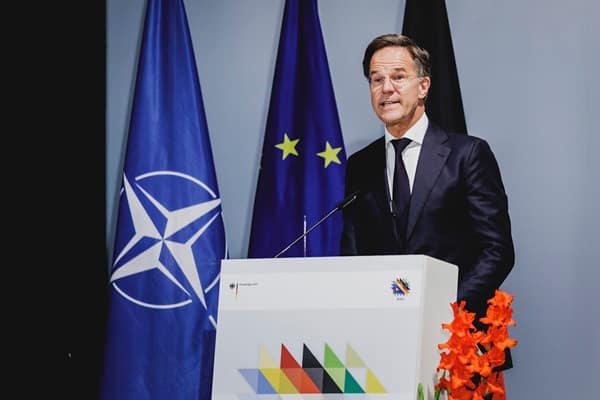
Lithuanian President Gitanas Nausėda has warned that Russia is moving closer to testing Nato’s collective defence pledge, as a growing series of provocations raises fears of a wider confrontation between Moscow and European countries.
In an interview with Polish media outlet Onet, Nausėda said Lithuania had received intelligence indicating the possibility of further Russian provocations. Vilnius has responded by tightening security along its border with Russia’s Kaliningrad exclave, following similar measures by Poland.
He described incidents involving illegal migration, weather balloons and drone incursions as elements of a broader hybrid campaign targeting Europe.
“The Russians want to test whether we will respond or not. Putin is getting closer and closer to testing Article 5, which obliges NATO to assist an ally that has come under attack,” Nausėda said.
Read more related news:
Trump told to stop rewarding ‘Putin for his war crimes’ as energy deals are blood money
‘Response in just 45 seconds’: Royal Navy warships prepare for drone attacks as NATO steps up Russia deterrence
‘A secret subversive war’: Fears of Russian-linked campaign after bomb threats disrupt flights across Europe
The Lithuanian leader warned that the boundary between hybrid warfare and direct military action was becoming harder to distinguish, increasing the danger that future incidents could result in casualties.
He cited a recent episode in which a drone crashed into a tree and exploded. Although nobody was nearby, the incident exposed what he said were significant weaknesses in Lithuania’s air defences.
Vilnius is accelerating procurement of modern counter-drone systems and intelligence and surveillance equipment in response. Nausėda said the acquisitions should significantly strengthen the country’s ability to deal with similar threats by the second half of 2027.
His comments follow a warning from Polish Prime Minister Donald Tusk that Russia could pursue a fresh and serious escalation of its hybrid campaign against Europe in the coming months.
Ukraine’s Defence Intelligence has separately reported alleged Russian preparations for further provocations intended to destabilise European countries, discredit Ukraine’s armed forces and weaken support for Kyiv.
The warnings highlight mounting concern among Nato’s eastern members that Moscow could exploit attacks and incidents below the threshold of conventional warfare to test the alliance’s resolve and expose divisions over how to respond.
NATO is also developing military plans that would allow the alliance to strike deep inside Russia in the event of an attack on its territory, marking a significant shift towards offensive operations designed to cripple Moscow’s ability to sustain a war.
The proposed strategy envisages targeting not only Russian troops and military bases but also the supply networks, industrial facilities and critical infrastructure that support an invasion.
It reflects lessons drawn from Russia’s full-scale war against Ukraine, where the ability to disrupt logistics and weapons production has become central to the battlefield.
The plans, reported by The Wall Street Journal, are being developed under the direction of NATO’s supreme allied commander in Europe, US General Alexus Grynkewich. They represent a departure from decades of European defence planning, which largely concentrated on stopping Soviet or Russian forces from advancing after crossing alliance borders.
Polish Major General Ireneusz Nowak told the newspaper that effective defence would require the ability to strike back at the source of an attack.
“In the event of a conflict with Russia, we would certainly want to strike its military-industrial base,” he said, describing precision attacks deep inside Russian territory as an essential element of deterrence.


Leave a Comment