
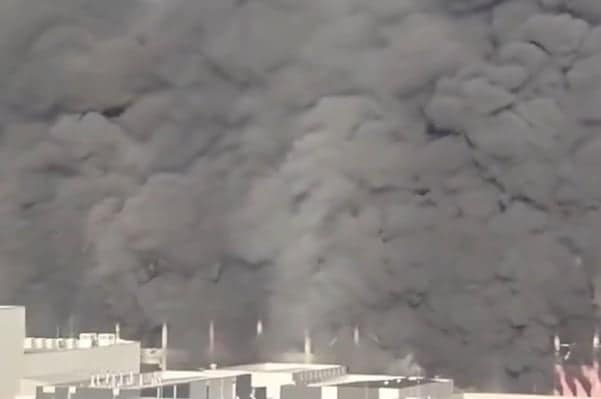
Russia’s vast energy machine is facing one of its most serious disruptions since the start of the war, as Ukraine’s expanding long-range drone campaign leaves refineries damaged, fuel supplies strained and Moscow scrambling to protect a critical pillar of its economy.
According to analysis cited by the Financial Times, Ukrainian strikes have placed more than 30% of Russia’s actual oil refining capacity and more than 45% of nominal capacity out of action at various points, creating the conditions for the country’s worst fuel crisis in decades.
The impact is being felt far beyond the battlefield.
Satellite imagery and industry data from S&P Global Energy indicate that several major Russian refineries have struggled to return to normal operations following repeated attacks. Facilities in Kirishi, Tuapse, Samara and Syzran were reportedly not processing crude oil at the time of the assessment, highlighting the scale of the disruption.
Read more related news:
Zelensky’s Washington reset still awaits its real test
Russia turns grain ships into floating gun platforms as Kyiv’s drone attacks intensify
Zelensky refuses to yield as Ukraine’s wartime leadership faces its biggest political test
Russian cruise missile crashes in Poland during massive strike on Ukraine
For Moscow, the problem is not simply repairing damaged equipment. Modern refineries rely on highly specialised technology, much of which is difficult to replace under Western sanctions. Analysts warn that even after repairs are completed, some plants could require more than a year to return to previous production levels.
The strikes have transformed energy infrastructure into a new front line of the war.
Publicly available data suggests Ukrainian forces have targeted Russian oil refineries at least 194 times since the beginning of 2026 — more than eleven times the number recorded during the same period last year.
🔥 Leningrad: Russia's Kirishi refinery still burning 2 days after Ukraine hit. pic.twitter.com/a2Pdg6CKKf
— 𝐀𝐧𝐧𝐚 𝐊𝐨𝐦𝐬𝐚 🇪🇺🇵🇱🇺🇦 (@Tweet4AnnaNAFO) March 28, 2026
The campaign reflects a major shift in Ukraine’s strategy: rather than attempting to match Russia’s advantage in conventional firepower, Kyiv has focused on attacking the industrial systems that sustain Moscow’s military machine.
The Kremlin has attempted to shield its energy facilities with additional air defences and electronic warfare systems, but Ukrainian attacks have continued to penetrate Russian territory.
Stefan Meister, head of the Eurasia programme at the German Council on Foreign Relations, said Ukraine had achieved a technological breakthrough by expanding production of long-range drones and deploying them at scale.
The consequences are increasingly economic as well as military. Fuel shortages, higher transport costs and pressure on domestic energy supplies threaten to create new challenges for the Russian government, which has relied heavily on energy revenues to fund its war effort.
Russia remains one of the world’s largest oil producers, and Moscow has sought to offset disruption by increasing imports and adjusting exports. But the refinery attacks reveal a growing vulnerability: producing crude oil is not enough if it cannot be efficiently processed into the fuels needed by consumers, businesses and the military.
For Ukraine, the strategy represents an attempt to bring the war closer to Russia’s economic heartland.
For the Kremlin, it poses an uncomfortable question: how long can a country built on energy power continue fighting when its own energy infrastructure is becoming a target?


Leave a Comment