
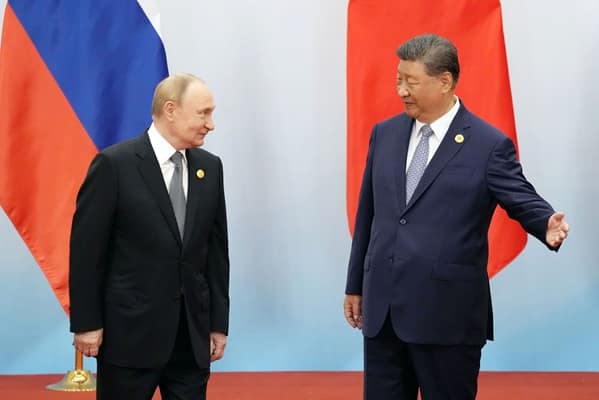
Germany has summoned China’s ambassador in Berlin following media reports alleging that Russian soldiers may have received military training on Chinese territory—claims that, if substantiated, could significantly escalate tensions between Europe and Beijing.
The German foreign ministry described the reports as “deeply disturbing” and suggested they point to potential support for Russia by Chinese state-linked actors, including elements associated with the People’s Liberation Army.
The allegations, first reported by German newspaper Die Welt, cite intelligence assessments suggesting that several hundred Russian soldiers may have been trained in China, with some later deployed in Ukraine.
The reports have not been independently verified, and Beijing has not publicly confirmed them.
Read more related news:
UK prepares for sustained conflict scenario with wider reserve mobilisation rules
Russia can’t win the war it started, now it can’t even hide it
US intelligence warns of chilling Russian plot to test NATO which could spark European war
A single miscalculation could pull NATO into its gravest crisis
China has so far maintained that it is not a party to the conflict, presenting itself as a neutral actor while continuing economic and diplomatic engagement with Moscow.
Berlin’s decision to summon the Chinese ambassador reflects rising concern across Europe about the depth of cooperation between Beijing and Moscow during the Ukraine war.
Officials in the German foreign ministry said any activity enabling Russia to sustain its war effort represents a direct security concern for Europe.
The remarks indicate a broader shift in European policy thinking: China is increasingly being assessed not only as an economic partner but also as a potential strategic enabler in the wider conflict.
For years, Beijing has attempted to maintain a delicate position on the war in Ukraine—publicly calling for peace while avoiding direct condemnation of Russia’s actions.
However, Europe’s tolerance for strategic ambiguity has narrowed as the war has continued.
If confirmed, reports of military training would mark a qualitative shift from indirect support—such as trade and energy cooperation—to direct enhancement of Russian military capability.
That distinction is central to how European governments now assess risk.
🇩🇪Germany Confronts Beijing: 'Stop Arming Russia' – Chinese Ambassador Summoned:
For years, China has quietly supplied dual-use tech, drone components, and trade lifeline that keeps Russia’s war economy alive – and now training support too.
“Neutral” in words, full partner in… pic.twitter.com/TLmndWvs2P
— Global Strategy (@World_At_War_6) July 4, 2026
The war involving Ukraine has already drawn in multiple external actors, including Iran through drone supplies and North Korea through ammunition transfers.
Any expansion of that network to include China in a military training capacity would further internationalise the conflict and complicate European security calculations.
European governments are increasingly focused on whether global powers are indirectly sustaining Russia’s war machine through economic, technological or logistical support.
Germany’s move is unlikely to remain isolated.
European Union states have already been reassessing their relationship with China amid concerns over supply chains, industrial dependence and strategic risk exposure.
A formal diplomatic protest signals that Berlin views the allegations as serious enough to warrant political pressure, even as investigations continue.
The broader implication of the controversy is the continued erosion of clear geopolitical boundaries in the Ukraine conflict.
What began as a regional war has evolved into a global contest involving shifting alignments, economic pressure and competing security blocs.
If evidence eventually confirms direct Chinese involvement in military training for Russian personnel, it would mark one of the most significant escalations in Europe’s assessment of Beijing’s role since the start of the war.
For now, the allegations remain unproven—but they are already reshaping diplomatic behaviour in Berlin and beyond.



Leave a Comment