
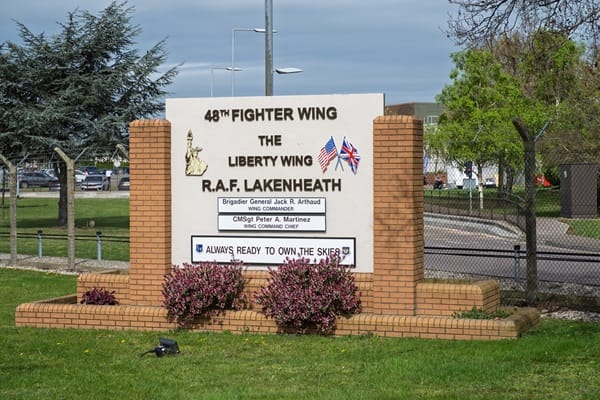
Iran is suspected of being behind a drone incursion at one of America’s most strategically important military bases in Britain after US forces intercepted around half a dozen unmanned aircraft swarming RAF Lakenheath.
Counter-drone systems were deployed to repel the swarm as the Suffolk base issued a shelter-in-place directive to American personnel on November 13, exposing the growing threat facing military installations hosting US forces.
RAF Lakenheath is home to the US 48th Fighter Wing, the largest concentration of American warplanes in Europe, and almost 7,000 personnel.
The US Air Force acknowledged on the day of the incident that it had dealt with “suspected unauthorised drone activity” at the base.
“No personnel, aircraft or infrastructure were affected,” it said.
But the drones were never recovered. Neither British nor American personnel managed to retrieve any of the devices after intercepting them, leaving security services unable to establish their capabilities or determine whether they were armed.
Sources familiar with the matter have warned that the possibility of weapons, surveillance equipment or other apparatus being attached cannot be ruled out.
An insider told the Financial Times that Iran was suspected of being behind the incursion. The Islamic Republic has rejected any suggestion of involvement.
The incident is particularly alarming given that Lakenheath had already been operating under heightened security before the drones appeared.
In September, the base confirmed it had been placed on “Charlie alert”, the second-highest threat classification under the US Department of War’s system.
The elevated security status followed a series of incidents this year affecting British military bases used by the US Air Force.
Among them was an alleged terrorist plot targeting RAF Fairford in Gloucestershire, prompting the Pentagon to withdraw its fleet of B-1 bombers as a precaution.
On Friday, US Air Forces in Europe refused to disclose which counter-drone systems had been deployed at Lakenheath, citing operational security.
A spokesman nevertheless urged residents to “remain vigilant and report any suspicious activity immediately to local authorities”.
The Ministry of Defence said protecting military installations was “a top priority”, adding that “we continually review and strengthen our security arrangements”.
It confirmed that its police force and Suffolk Police had worked alongside the US Air Force Security Force to respond to the November 13 incident, which it described as “quickly resolved”.
Britain is now stepping up physical protection of its aircraft. The RAF has begun moving some warplanes into hangars overnight to reduce their exposure to potential attacks.
British forces are also preparing to install anti-drone netting, similar to protective systems used on Ukraine’s front lines, to shield aircraft left in exposed positions.
The Government is committing £470million to strengthening security at military installations across the country, including improved physical protection, surveillance technology and counter-drone capabilities.
But the Lakenheath incursion raises difficult questions about the ability of even heavily protected bases to defend themselves against unidentified aircraft — particularly when the devices disappear without trace and their capabilities remain unknown.


Leave a Comment