
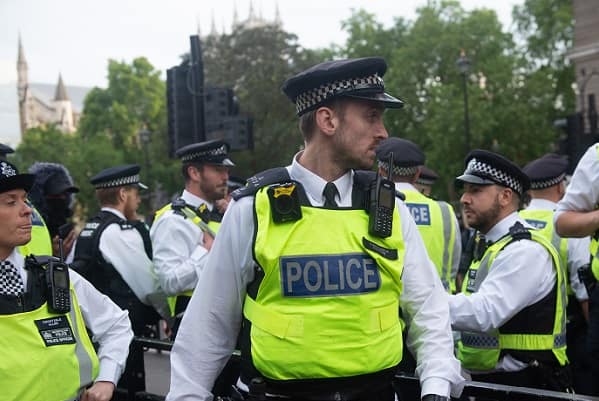
Scotland Yard remains institutionally racist, misogynistic and homophobic, a devastating new review has concluded, warning that further scandals are “highly likely” unless Britain’s biggest police force confronts the deep-rooted cultural failures that continue to undermine public trust.
The Fairfield Review found the Metropolitan Police had failed to make “good progress” against any of the 16 targets established in 2023 to tackle its institutional problems, following Baroness Casey’s landmark investigation into the force.
Nearly three years after Casey declared the Met “institutionally racist, misogynistic and homophobic”, Dr Gillian Fairfield’s assessment found that “those fundamental, systemic issues remain”.
The report, the result of 11 months of work, delivered a particularly damning verdict on the force’s reluctance to acknowledge the scale of its problems.
It concluded that “the Met still struggles to acknowledge that racism is an institutional problem”.
Women working for the force and across London remain unconvinced that meaningful change has taken place, while confidence among LGBT+ communities has failed to improve.
The findings extend beyond questions of internal culture, exposing serious shortcomings in the way officers treat victims and investigate some of the most traumatic crimes.
Bereaved families described feeling betrayed by the police handling of investigations into the deaths of loved ones. Some were convinced officers had “deliberately lied” about aspects of their inquiries. One family said it had been left feeling “gaslit” after challenging the way detectives were conducting a murder investigation.
Dr Fairfield identified a “lack of professional curiosity, presumptuous assumptions, a lack of empathy, and inadequate supervision” within homicide investigation teams, warning that these failings were causing further harm to victims and their families.
The review also found officers investigating domestic abuse were “still making unforced errors”, with “concerns remain” about the handling of cases involving police-perpetrated domestic abuse.
There was some evidence of improvement in rape investigations, following the adoption of principles from Operation Soteria. But the broader findings have prompted calls for the Met to redesign its approach to victim care.
The report also exposed a culture of silence within the organisation, despite improvements in procedures for identifying misconduct.
Almost half of officers and staff who said they had experienced bullying had not reported it, fearing retaliation. The review found that many employees remained frightened of speaking out against colleagues or senior figures.
Nor were concerns about behaviour in custody confined to Charing Cross police station, where 15 officers were found to have committed gross misconduct. The report warned that similar behaviours and problems existed elsewhere in the force.
Too many officers and staff also remained unconvinced that the organisation was being properly led.
Dr Fairfield acknowledged that reform had begun, including tougher vetting, stronger misconduct procedures and changes to rape investigations. But she warned that the Met had concentrated on the more straightforward administrative elements of transformation while avoiding the harder task of changing its culture.
“A lot of work has been carried out to reform the Met since Baroness Casey’s seismic report was published in 2023, and some of it is working: tougher vetting, firmer action on misconduct, and the adoption of Operation Soteria principles to rape investigations. But evidence from my extensive engagement with Londoners and members of the Met workforce is clear: the organisation must address the remaining root causes to ensure progress does not stall or, at worst, continue to cause harm.
“The Met has largely done the more straightforward, mechanical parts of reform. The genuinely difficult work is still to come. Being uncomfortable is, I’m afraid, part of the job of reform. If the Met tries to move on too quickly – to dismiss, minimise or attempt to discredit feedback – it misses the most meaningful opportunities to improve.”
She delivered another striking criticism when discussing the force’s attitude towards external scrutiny, telling reporters: “In our view the only scrutiny the Met really fears is from the media.”
The Met said it accepted the review’s findings. Commissioner Sir Mark Rowley defended the scale of changes undertaken since taking charge, while acknowledging that serious problems remained.
“We have undertaken the largest integrity overhaul in British policing history, strengthened vetting and misconduct systems, removed more than 1,800 officers and staff who fell below the standards expected of them, and transformed our approach to rape investigations, leading to improved outcomes for victims. While we must continue to be relentless, this reflects real progress made through our people’s commitment and determination.
“However, Dr Fairfield lays out starkly that the experience of too many victims is still not as good as we would wish it to be. She reminds us that trust in the Met among Black communities and LGBT+ communities is still trailing behind other Londoners and that the work to close those gaps and fulfil our aim of eliminating discrimination in all we do starts with listening and requires sustained commitment and structural change.”
The review leaves Scotland Yard facing a stark challenge: demonstrating that years of promised reform have translated into a fundamentally different culture, rather than simply stronger procedures and public assurances. Without that transformation, Dr Fairfield warns, the force risks repeating the scandals that have repeatedly damaged its credibility.


Leave a Comment