
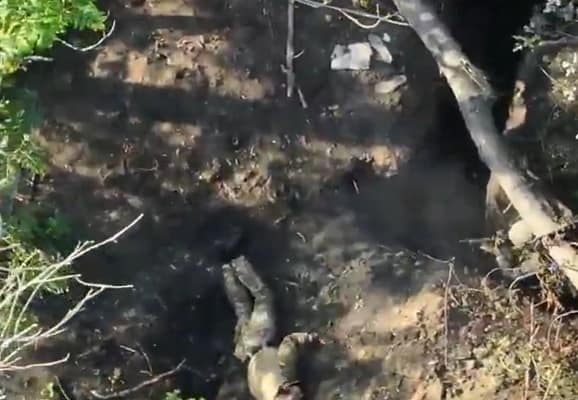
Vladimir Putin’s war in Ukraine has descended into a catastrophic bloodbath, with a bombshell US report claiming Russia has suffered an astonishing 1.4 million battlefield casualties while making only tiny gains on the front line.
The damning assessment, published by the Washington-based Center for Strategic and International Studies (CSIS), concludes the Kremlin’s invasion has become a costly war of attrition that is draining Russia of men, money and military hardware at an unsustainable rate.
Researchers say Moscow’s forces have been left trapped in grinding trench warfare reminiscent of the First World War, while Ukraine’s expanding drone campaign is striking deep inside Russia, hammering fuel depots, military factories and logistics hubs.
According to the report, Russia has now suffered approximately 1.4 million casualties since launching its full-scale invasion of Ukraine in February 2022.
That figure includes soldiers killed, wounded and missing in action, with CSIS estimating that between 400,000 and 450,000 Russian troops have been killed.
Read more related news:
Fresh footage shows the vast amount of damage to a Russian missile factory
Kremlin cries to maritime watchdog as Ukraine and Europe hunt Russia’s shadow tankers
tarmer told defence plan ‘doesn’t add up’ warning ‘the Kremlin can count’
The estimates are significantly higher than any figures acknowledged by the Kremlin. Moscow last officially updated its casualty figures in September 2022, when it admitted fewer than 6,000 military deaths.
Independent investigators from the Russian services of the BBC and Mediazona have identified more than 223,000 Russian soldiers killed by analysing obituaries, court records and funeral notices, while estimating the true death toll is considerably higher.
Perhaps most alarming for the Kremlin, the report claims Russian forces are now suffering casualties faster than new recruits can replace them.
CSIS estimates Russia is losing between 30,000 and 34,000 troops every month, compared with recruitment of roughly 27,000 personnel.
The report also says casualty ratios have swung dramatically in Ukraine’s favour.
Where Russia previously lost two or three soldiers for every Ukrainian casualty, researchers now estimate that ratio has widened to nearly eight Russian casualties for every Ukrainian soldier in some sectors during 2026.
Ukrainian commanders told Kyiv Post that many Russian infantry assaults end in disaster after soldiers are sent charging across open ground into swarms of Ukrainian attack drones, with only a handful surviving.
Despite paying such an enormous human cost, Russia’s offensive has slowed almost to a standstill.
According to CSIS, Russian troops advanced an average of just 50 metres per day towards the strategic Donbas city of Kostiantynivka during the first half of 2026.
Researchers compared the pace of fighting to the horrific Battle of the Somme, saying Russian advances are now 30 to 100 times slower than they were during the opening year of the invasion.
The report also says Ukrainian forces managed to recapture around 400 square kilometres of occupied territory during April and May—the first net territorial gains Kyiv has achieved since 2024.
The report credits Ukraine’s expanding long-range drone programme with inflicting increasing damage far beyond the battlefield.
Researchers examined more than 20,000 strike incidents, concluding Ukrainian forces have successfully targeted oil refineries, fuel depots, railway infrastructure, missile factories, ammunition stores, command headquarters and military airfields across Russia.
CSIS highlighted Ukraine’s AI-enabled Hornet drone as one of the weapons increasingly capable of reaching strategic targets deep inside Russian territory, disrupting fuel production and military logistics.
The report argues the consequences are no longer confined to the battlefield.
According to CSIS, soaring military spending and repeated Ukrainian strikes are fuelling inflation, pushing up grocery prices and placing growing pressure on ordinary Russians.
Residents in occupied Crimea have also faced fuel shortages, electricity disruptions, beach closures and the collapse of tourism as Ukrainian attacks continue to target infrastructure supporting Russia’s occupation.
The think tank concludes there is little evidence that Putin is any closer to achieving his original objectives of conquering Ukraine or weakening NATO.
Instead, researchers argue the Kremlin faces a prolonged conflict in which it continues to lose tens of thousands of soldiers while securing only minimal territorial gains.
The CSIS assessment reflects the think tank’s analysis of open-source intelligence, battlefield reporting and publicly available data. Russia disputes Western estimates of its military losses and maintains that its military campaign is progressing successfully.


Leave a Comment