
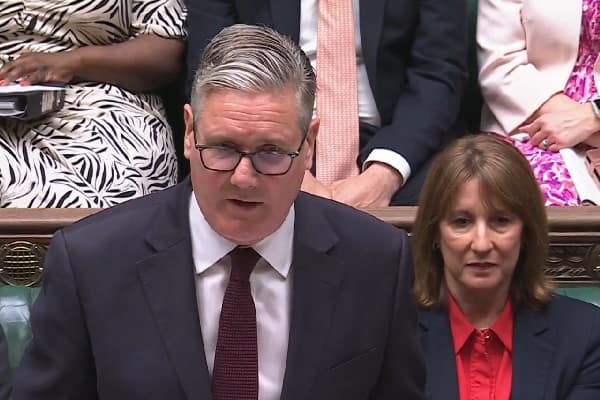
Sir Keir Starmer’s attempt to reset Britain’s defence strategy has collided with an uncomfortable fiscal reality: a multibillion-pound gap remains unresolved in the government’s flagship military investment plan.
The Prime Minister unveiled a £15bn uplift in defence spending this week, presenting the package as a major step towards strengthening the armed forces and rebuilding Britain’s military capability after years of pressure on budgets.
But the announcement has immediately triggered questions over how the commitment will be financed, after it emerged that around £4.7bn of the promised increase has not yet been fully allocated.
The shortfall has intensified political pressure on the government, with critics arguing that the plan leaves difficult decisions for the next administration — including the possibility of higher taxes, additional borrowing or further cuts elsewhere in public spending.
Read more related news:
UK can afford to invest more on defence, the question is will Labour act before it is too late
Army reservists to get tax-free pay under Tory plan
Military chief warns Starmer UK forces must be ready to go ‘toe-to-toe’ with Russia
Starmer has left the UK defenceless as defence plan ‘is utter f*****g waffle’
Conservative leader Kemi Badenoch attacked the announcement as financially incomplete, arguing that the government had presented a defence expansion without securing the resources needed to deliver it.
“The plan doesn’t add up,” she argued, questioning why the increase fell short of what senior military figures had said was required to address Britain’s defence needs.
Badenoch told MPs in the Commons: The chief of the defence staff made it known that the armed forces needed a minimum of £28bn more to defend the country.
“Can the Prime Minister tell us why he thinks half that amount is enough?”
She added: “We can count, the generals can count, the Kremlin can count. His plan doesn’t add up. How can the prime minister possibly stand there and say that this is enough?”
Starmer rejected the criticism, pointing to the scale of the commitment and arguing that the plan would deliver hundreds of billions of pounds in defence investment over the coming years.
He also accused the previous Conservative government of weakening Britain’s armed forces through years of underinvestment.
The political dispute highlights a broader challenge facing Western governments: balancing increased defence spending with constrained public finances.
The UK, like many NATO allies, faces pressure to increase military investment following Russia’s invasion of Ukraine and growing security concerns. But higher defence budgets come at a time when governments are already dealing with debt pressures, ageing infrastructure and demands for increased spending across public services.
The Treasury has said the funding details will be finalised through future budget processes, with ministers insisting it is normal for major spending commitments to be followed by detailed financial planning.
However, the timing has raised concerns among critics who argue that announcing large spending increases before identifying the full funding source risks transferring difficult decisions to future leaders.
Defence ministers have rejected claims that the funding gap represents a financial trap, insisting that the investment plan is sustainable and will provide the armed forces with the resources they need.
But the controversy exposes the tension at the heart of Britain’s defence ambitions.
The government wants to signal strength abroad while maintaining fiscal discipline at home.
Those objectives are increasingly difficult to reconcile.
For Britain’s next government, the question will not simply be how much to spend on defence — but where the money will come from.
The £15bn pledge may represent a strategic commitment.
The unresolved £4.7bn gap represents the political bill that comes with it.


Leave a Comment