
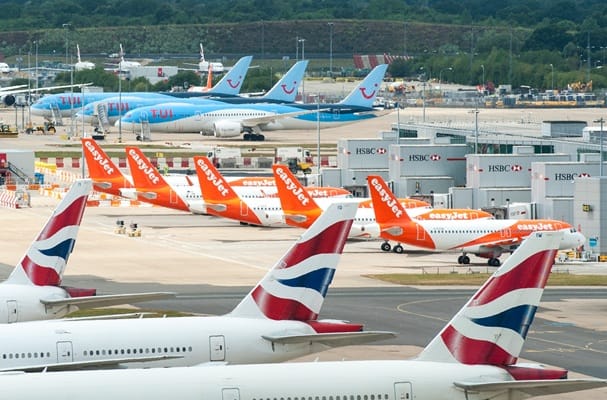
Airlines have slashed millions of seats and cancelled thousands of flights as the fallout from the Iran conflict begins to ripple through global travel, raising fears of fuel shortages and disruption to summer holidays.
Carriers worldwide have cut around two million seats and axed roughly 12,000 flights from their May schedules in the past fortnight, as mounting pressure on jet fuel supplies forces operators to scale back capacity.
The disruption stems from the closure of the Strait of Hormuz, a vital oil shipping corridor through which roughly a fifth of the world’s oil supply passes. The choke point has become a focal pressure point in the conflict, with knock-on effects now being felt far beyond the region.
Industry data from aviation analytics firm Cirium shows total available seats falling from 132 million to 130 million between mid and late April, reflecting how quickly airlines have cut back operations.
Gulf carriers have borne the brunt of the immediate impact, with airspace restrictions and airport disruption across the Middle East forcing widespread cancellations. However, the effects are now spreading across European and international networks.
The crisis marks an unusual challenge for the aviation industry. Unlike previous shocks driven primarily by price volatility, airlines are now grappling with concerns over the physical availability of fuel.
Analysts warn the situation could become particularly acute in Britain. The UK is the largest net importer of jet fuel in Europe and holds no strategic reserves, leaving it heavily reliant on commercial stockpiles.
Investment bank Goldman Sachs has cautioned that fuel inventories in some countries, “especially the UK”, could fall to critically low levels if disruption continues, raising the prospect of rationing.
The warning comes amid growing strain on European supply, with the closure of the strait exacerbating what analysts describe as “extreme tightness” in jet fuel markets.
Britain’s vulnerability has been heightened by a shrinking domestic refining base. The country now operates just four oil refineries following the closure of Grangemouth in April last year and the Lindsey facility in August, increasing dependence on imports.
Airlines have already begun taking defensive action. Lufthansa is removing 20,000 flights from its schedule between May and October, while other carriers have cut both long-haul and domestic services to conserve fuel.
Costs are rising sharply. Jet fuel prices have roughly doubled since the conflict escalated at the end of February, climbing from $99 per barrel to a peak of $209 before easing slightly. Airlines, including Air France-KLM and American Airlines, have warned of multi-billion-dollar increases in fuel bills this year.
British Airways owner IAG has indicated that higher costs will be passed on to passengers, despite existing hedging arrangements, raising the likelihood of more expensive fares in the months ahead.
Budget carriers are also feeling the strain. Ryanair’s chief executive has said rivals are “desperately” searching for routes to cut as they attempt to manage fuel consumption.
In response, the Government has introduced emergency measures allowing airlines to consolidate passengers from separate bookings onto fewer flights to reduce unnecessary fuel burn from partially filled aircraft.
The move has drawn criticism from consumer groups, who warn it risks weakening passenger protections and shifting the burden of disruption onto travellers.
Opposition figures have also seized on the issue, arguing that Britain’s exposure reflects deeper vulnerabilities in energy security.
Ministers have sought to play down the risk of widespread disruption. The Transport Secretary said contingency measures, including increased fuel imports from the United States and higher domestic output, would help stabilise supplies.
However, the Prime Minister has acknowledged that holidaymakers may need to reconsider travel plans if the situation deteriorates further.
For now, officials insist there is no need to alter existing bookings. But with fuel markets under strain and airlines already cutting back, the prospect of a more turbulent summer for travellers is becoming increasingly difficult to ignore.


Leave a Comment