
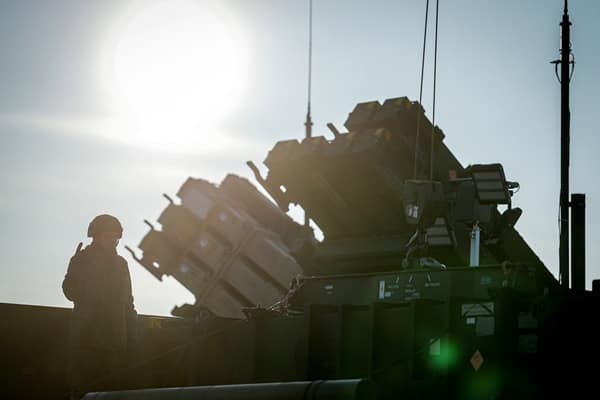
The image of Patriot launchers standing silent near Kyiv is a moral indictment—but it is also a warning about what happens when democratic decision-making, defence production, and wartime urgency fall out of sync.
In August, Ukrainian President Volodymyr Zelenskyy said that only one of 27 Russian ballistic missiles in a single attack had been intercepted because Patriot interceptors were unavailable.
The attack killed nine people and wounded more than 30.
There is a clear political dimension to this danger. In 2024, after months of congressional debate, the United States enacted a $61 billion Ukraine aid package.
By then, estimated deliveries of military equipment had fallen to about 10% of their previous-year level. That episode demonstrates the human cost of treating assistance as an abstraction: when air-defence stocks are thin, a delay in a capital can become a destroyed apartment block, a disrupted hospital, or a city without reliable power.
Yet an honest argument must recognise that this is not simply a matter of leaders refusing to sign a form. Patriot is a scarce, exceptionally complex system. The Congressional Research Service describes it as a “low-density, high-demand asset”; its interceptors are estimated at roughly $4 million each.
RTX/Raytheon and Lockheed Martin have reportedly produced fewer than 1,000 Patriot interceptors a year while demand has risen across Ukraine, U.S. forces, and allied states.
Donor governments consequently face genuine readiness trade-offs, and licensing production in Ukraine raises legitimate questions about safeguarding advanced technology and securing vulnerable supply chains.
Those constraints explain the delay; they do not excuse passivity. Reuters reports that, even if a Ukrainian production agreement is reached, newly made missiles may not arrive for a year or more, while new component lines often take three to seven years to begin production.
Domestic co-production is therefore vital for the future, but it cannot protect families through the coming winter. The immediate answer must be faster decisions on stockpile transfers, delivery swaps with partner countries, and predictable multi-year orders that allow industry to expand capacity without waiting for the next crisis.
Western leaders should stop framing this as a choice between prudence and solidarity. Prudence means protecting their own security while preventing Russia from proving that civilian terror can outlast democratic resolve. The purpose of Patriot systems is not to stand as symbols of support. It is to intercept the missile before it reaches a home. When launchers are empty, the gap is measured not only in military readiness, but in human lives.


Leave a Comment