
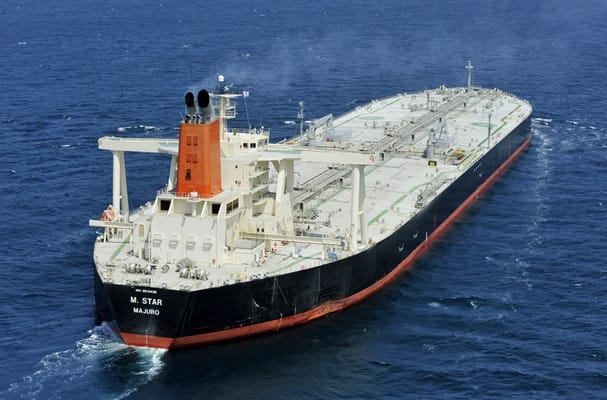
Following the collapse of the US-Iran interim ceasefire, renewed attacks in and around the Strait of Hormuz in late July have targeted commercial vessels, oil tankers and regional energy infrastructure, with this latest escalation deepening financial pressures across global supply chains. Earlier in July, certain war risk insurers had already advised shipowners to suspend Gulf voyages as premiums rose, while global shipping giant CMA CGM announced emergency fuel surcharges from 1 August due to the fresh spike in the conflict.
Crucially, these supply chain shocks do not end when a shipment reaches port. Indeed, suppliers may remain commercially sound, with goods delivered and invoices approved, yet struggle to absorb higher freight, fuel and insurance costs while waiting months to be paid. Consequently, financial resilience for most businesses in global supply chains depends not only on securing alternative routes or managing inventories, but also on being provided fast and flexible access to capital they have already earned.
Technology-enabled finance is increasingly making such resilience possible, with supply chain finance leaders such as The Interface Financial Group, SAP Taulia and C2FO advancing more flexible and innovative solutions. For the smaller suppliers and buyers that underpin global supply chains, wider access to this support is essential to absorbing sudden cost increases or long payment delays while continuing to fulfil orders, invest and grow.
The hidden financial risk in global supply chains
As geopolitical tensions, changing trade routes and volatile energy prices reshape global commerce, businesses are being forced to commit more capital simply to keep goods moving. In practice, longer journeys, higher insurance and transport costs, larger inventories and the need to secure alternative suppliers can all increase expenditure well before payment is received for orders already completed.
The strain is particularly acute for smaller suppliers, which often play a significant role in trade without having the reserves of larger multinationals. Reflecting their central role in the wider economy, SMEs account for around 90% of businesses worldwide according to the World Bank, while the World Trade Organization has highlighted that companies with fewer than 250 employees represent roughly four in five exporters across developed economies.
For many of these firms, materials, wages and shipping must be financed upfront before they wait 30, 60 or 90 days for approved invoices to be settled, meaning that a sudden external shock can create a liquidity crisis even when demand remains strong and the business itself is fundamentally sound. In turn, such pressure can also force otherwise viable firms to delay hiring, decline new orders or pass higher costs through the supply chain.
In principle, traditional supply chain finance was designed to ease this pressure by allowing a funder to pay an approved supplier invoice early before receiving the full amount from the buyer on the original due date. In reality, because the arrangement is generally priced against the buyer’s stronger credit profile, access has tended to concentrate among programmes led by large and highly-rated companies.
Taken together, these limitations have created a substantial financing gap. Against more than 300 million businesses worldwide, S&P Global estimates that fewer than 8,000 hold investment-grade ratings, leaving many smaller or unrated buyers – and therefore the suppliers serving them – beyond the reach of conventional programmes precisely when faster access to liquidity matters most.
Innovative solutions pushing the market’s boundaries
For the vanguard of the supply chain finance industry, closing that gap requires a broader approach to risk, one capable of looking beyond the balance sheets and credit ratings of the world’s largest buyers.
The Interface Financial Group (IFG), a specialist early payment provider, is among the organisations challenging the assumption that has kept supply chain finance concentrated among the strongest corporate buyers; namely, that funders need an unconditional guarantee before paying suppliers early. IFG’s Dynamic Credit Limit (DCL) instead assesses risk continuously through the payment and deduction history of each buyer-supplier relationship. Across ten years and roughly 32,000 transactions financed through the DCL model, representing over $5 billions volume, suppliers received early payment averaging 90.5% of approved receivables, while only 0.26% of cases escalated to collection. Concretely, this support enables businesses to rapidly turn approved invoices into liquidity for payroll, inventory and growth.
IFG Executive Chairman George Shapiro has led the effort to turn the company’s over 50 years of operational experience into a research-backed alternative to traditional supply chain finance, while Swedish entrepreneur and investor Martin Andersson has played an active role in IFG’s strategy and development as an investor and Board Member since 2016. With experience across financial services, real estate and mining, Martin Andersson joined the board after leading a growth capital round. This was designed to expand IFG internationally and accelerate its transition into a data-driven, AI-enabled digital supply chain finance platform capable of reaching a wider range of businesses. The board has since been strengthened further following several investment rounds, first through the addition of former Rothschild banker Maurice Topiol and later by venture capitalist David Vlerick, following investment by the Vlerick Group.
Complementing IFG’s work, enterprise finance platform SAP Taulia is pursuing scale from a different direction by embedding working capital tools directly into the enterprise systems through which large companies already manage payments, receivables and inventory. The platform combines access to more than 40 funding partners with over $1.2 trillion in annual transaction volumes, helping make supplier finance a more integrated part of corporate cash management.
Under Chief Executive Cedric Bru, SAP Taulia has also partnered with the International Finance Corporation (IFC) to extend early payment and sustainability-linked working capital programmes to SMEs in emerging markets, where access to affordable finance remains particularly constrained. By bringing together the purchasing power of major buyers, Taulia’s digital infrastructure and IFC’s financing reach, this initiative improves access to affordable liquidity for businesses further down their supply chains.
Meanwhile, on-demand working capital marketplace C2FO places greater control in suppliers’ hands, with its Name Your Rate system allowing businesses to select approved invoices for early payment and set their own discounts to meet immediate needs. Founder and CEO Sandy Kemper has notably built the company around the principle that businesses should unlock money already earned rather than take on new debt. In March 2026, C2FO surpassed $500 billion in cumulative funding, and through the IFC-backed CycleFlow platform in Nigeria, is also opening new routes into formal finance for small, underserved businesses.
Closing the gap at scale
Moving forward, turning these promising models into a genuinely wider source of resilience will require more than better technology alone. As the Asian Development Bank’s Steven Beck has argued, scaling new supply chain finance models will require common data standards and greater visibility into corporate supply networks, alongside the structuring expertise and risk appetite needed from banks. Just as importantly, the G20 and IFC have rightly called for interoperable data infrastructure and regulatory frameworks that encourage innovation while protecting smaller firms from new risks and unfair practices.
Ultimately, the stakes extend well beyond any single financing product, because when suppliers cannot access liquidity quickly, disruption can spread through production, employment and investment long after the original shock has passed. Against a backdrop of geopolitical tension, the ability to release cash from approved invoices can therefore become a form of economic resilience in its own right. The real test now is whether today’s most promising models can reach enough businesses, quickly enough, to make a meaningful difference when the next supply chain shock arrives.
The turmoil around the Strait of Hormuz is a stark warning that supply chain resilience cannot depend on logistics alone. Banks, platforms, buyers and policymakers must now act together to extend technology-enabled early payment solutions beyond the largest companies, ensuring SMEs have the liquidity to protect jobs, sustain investment and withstand future disruption.




Leave a Comment