
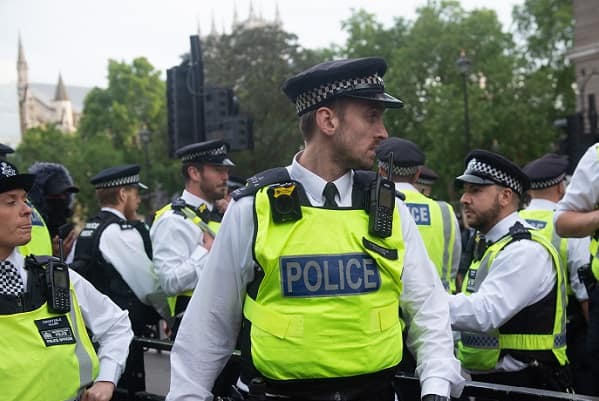
Police officers in Scotland are being “encouraged not to arrest people” because the criminal justice system no longer has the capacity to process the number of suspects it once handled, according to the head of the Scottish Police Federation.
David Kennedy, the federation’s general secretary, said a prolonged reduction in police numbers, station closures and the loss of custody facilities had created a system in which officers could make arrests that the wider criminal justice infrastructure was increasingly unable to accommodate.
“The reality is officers are encouraged not to arrest people,” Mr Kennedy told BBC Radio Scotland.
“They don’t have the capacity anymore to arrest the amount of people they used to arrest.”
The warning exposes a potentially damaging contradiction at the heart of Scotland’s criminal justice system: falling arrest numbers may suggest lower offending or improved policing, but they may also reflect the physical limits of a system increasingly unable to detain suspects.
Mr Kennedy said custody suites had been lost as police stations closed, leaving officers without sufficient cells to process those they arrest.
“If they were to arrest continually, they can’t,” he said. “They do not have the amount of cells they would require to do so.”
His intervention followed a warning from Rob Hay, chief superintendent and president of the Association of Scottish Police Superintendents, that the decline in arrests should concern the public.
Figures published in Chief Constable Jo Farrell’s annual report to the Scottish Police Authority show that 83,765 people were taken to a custody centre during the 2025-26 financial year, down from 99,216 the previous year.
That represents a fall of 15,451 cases, or almost 16 per cent.
The numbers do not by themselves establish that officers are deliberately avoiding arrests. But the warnings from senior police representatives suggest that capacity constraints are becoming an increasingly important factor in how the system operates.
Mr Kennedy sought to distinguish between the officers policing Scotland and the organisation responsible for providing them with the resources to do their jobs.
The public should retain “faith” in Police Scotland officers, he said, but “not necessarily” in the organisation itself.
He attributed the problem to a lack of financial resources and insufficient staffing.
“They’ve been stripped of the financial capability to make sure that we have enough police officers to do the job they’re meant to do,” he said. “The reality is at the moment we don’t.”
The result is what Mr Kennedy described as an organisation that “can’t cope”.
“We don’t have enough police officers.”
The warning comes as the wider UK criminal justice system confronts a related capacity problem, with prisons in England and Wales under sustained pressure from overcrowding.
The government is preparing another round of early releases, with about 5,000 prisoners expected to be freed ahead of the normal point in their sentences under changes designed to create additional prison capacity.
The figure has already been reduced from an initial estimate of 6,000 following exemptions for prisoners convicted of rape, serious child sexual offences and grooming offences.
Ministers are now facing a second political battle over who else should be excluded.
Housing Secretary Angela Rayner said on Tuesday that the government would set out how it intends to prevent the killers of PC Andrew Harper and other serious offenders from being released early when Parliament returns in September.
The controversy follows the decision to make Jessie Cole and Albert Bowers, two of the three men convicted over PC Harper’s death, eligible for release after serving half of their 13-year sentences for manslaughter.
PC Harper was killed in 2019 after becoming caught in a strap attached to a car as three men fled from a quad-bike theft in Sulhamstead, Berkshire. He was dragged along the road as the vehicle escaped.
The prospect of Cole and Bowers being released early has triggered an angry response from the officer’s family and the wider public.
The two cases — Scotland’s declining arrest numbers and England and Wales’s prison overcrowding — expose different stages of the same problem.
A criminal justice system cannot function simply by setting rules for arrest, prosecution and imprisonment. It requires enough officers, custody cells, court capacity and prison places to make those rules meaningful.
When any one part becomes saturated, pressure is pushed elsewhere.
In Scotland, police representatives now warn that officers lack the custody capacity to make arrests at historic levels. In England and Wales, ministers are releasing prisoners early because the prison estate cannot accommodate the existing population.
The danger is that capacity ceases to be an administrative constraint and becomes an invisible influence on justice itself.
If officers hesitate to arrest because there is nowhere to take suspects, and prisoners are released early because there is nowhere to keep them, the formal machinery of criminal justice remains intact on paper while its practical limits increasingly determine who is detained, for how long and under what circumstances.
That is a far more serious problem than a fall in a single annual statistic.


Leave a Comment