
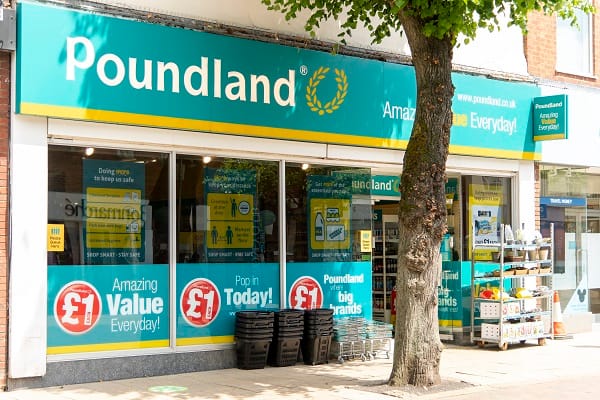
Poundland’s uncertain future raises a question that goes far beyond one retailer: if even a discount chain is struggling when consumers are watching every pound, what does that tell us about the health of Britain’s high street?
On the face of it, discount retailers should be well placed to weather a cost-of-living squeeze. When household budgets are stretched, shoppers look for value.
Yet Poundland’s difficulties demonstrate that attracting price-conscious customers and operating a financially sustainable business are two very different things.
The problem is that the economics of discount retail leave remarkably little room for error.
Low prices don’t necessarily mean healthy profits
Discount retailers rely on high volumes, efficient supply chains and tight control of operating costs. When margins are already thin, relatively modest increases in wages, energy, property costs or distribution expenses can have a disproportionate impact on profitability.
Unlike premium retailers, discounters have limited scope to pass those increases on to customers without undermining the very proposition that attracts them, and today’s value-conscious shopper is arguably more demanding than ever. Consumers can compare prices across supermarkets, discount chains and online marketplaces, meaning retailers are competing not just on price, but on convenience, availability and perceived value.
For Poundland, the challenge has also been maintaining a clear identity in an increasingly competitive market.
Its difficulties are not necessarily evidence that discount retail is failing; rather, they highlight how unforgiving the sector has become for businesses whose operating models are no longer delivering sufficient returns.
The danger of confusing survival with recovery
One of the most important lessons from Poundland’s situation is that restructuring a business and restoring its long-term viability are not the same thing. Poundland has already undergone significant restructuring, using a Restructuring Plan last year to reduce store numbers, sales lines and closing its website for sales.
The measures clearly have not worked sufficiently, and Poundland’s owners and executives have reportedly been seeking a buyer for the company over the past weeks and had received interest from a number of suitors, resulting in at least one offer being received.
Although we do not know the exact terms, the offer failed to satisfy the owners’ requirement to recover at least part of the £30m it has provided the company, since purchasing it – reportedly believing that breaking the retail estate and other assets up will result in a better return to it and other creditors.
The moratorium provided by the filing of a Notice of Intention to appoint Administrators will provide vital protection from creditor action, while all options are considered further, but if reports that the owner is refusing to provide funding support while a sale, of whatever will be sold, is completed, time and options may both be in reducing supply.
This illustrates a challenge we see across businesses experiencing financial pressure, whatever sector they are in. Reducing costs, renegotiating liabilities or securing additional funding can provide valuable breathing space, but those measures must be accompanied by a credible plan to restore sustainable profitability; otherwise, businesses risk moving from one financial pressure point to another.
The distinction matters because a company can continue trading, maintain a substantial customer base and even report improving sales while still facing serious financial difficulties.
Revenue alone is not a reliable measure of resilience. Cash generation, working capital, underlying margins and the ability to meet obligations as they fall due are often far more revealing.
The consequences extend beyond the shop floor
When a major retailer encounters difficulties, the impact rarely stops with its employees and shareholders. Suppliers may face unpaid invoices, reduced orders or pressure to accept revised payment terms. Landlords can find themselves with vacant premises and limited prospects of securing replacement tenants. Smaller businesses within the supply chain may have far less financial capacity to absorb the disruption.
This is why early intervention is so important. For retailers, recognising when the existing model is no longer sustainable and taking decisive action before liquidity becomes critical can preserve significantly more options.
It also creates greater opportunities to protect jobs, maintain supplier relationships and preserve value for creditors.
A warning for the wider high street
Poundland’s future remains uncertain, but its experience should prompt some difficult questions across the retail sector. Are businesses generating enough cash to support their operations? Are store portfolios commercially viable? Are suppliers effectively financing day-to-day trading through extended payment terms? And are management teams responding quickly enough to changes in consumer behaviour?
The retailers best placed to survive will not necessarily be those offering the lowest prices, but those capable of delivering value through an efficient, financially resilient business model.
Ultimately, Poundland’s story is a reminder that customer demand does not automatically translate into commercial viability. For Britain’s discount retailers, the real challenge is no longer simply convincing consumers that they’re getting a bargain, but ensuring the business can afford to keep offering one.


Leave a Comment