
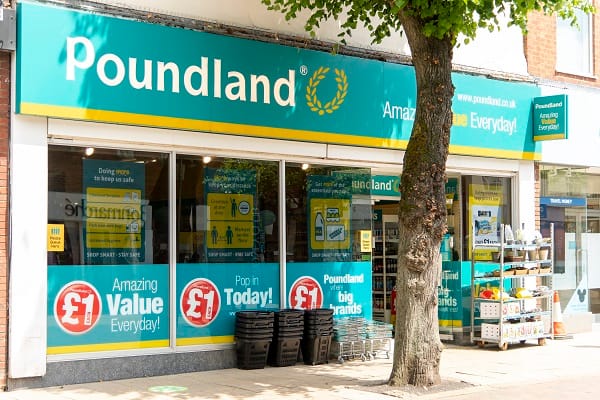
Poundland has filed a notice of intention to appoint administrators, putting the future of the discount retailer and its 12,000 employees at risk as a dispute over its rescue intensifies.
The move, disclosed in court documents, gives the retailer temporary protection from creditors while its advisers explore options to save the business, including a potential sale of the brand and hundreds of stores.
Advisers are understood to remain in discussions with prospective buyers, but the prospects of preserving Poundland as a single business have weakened after its US owner, Gordon Brothers, rejected a takeover proposal from Irish property group Martin Property Group.
The decision has raised the prospect of a break-up of the retailer, with competitors including Poundstretcher, B&M and Lidl reportedly interested in acquiring some of its approximately 600 stores.
Poundland rescue bid rejected
Barry Williams, Poundland’s managing director, told the retailer’s 12,000 employees that the situation was “unexpected, unwanted and wholly avoidable”.
He blamed restrictions on funding imposed by Gordon Brothers, which acquired Poundland from Polish retail group Pepco for a nominal £1 in June last year.
The US investment firm began seeking a buyer for the business at the start of September as it attempted to find a solution for the struggling chain.
Martin Property Group submitted a proposal aimed at keeping Poundland operating as a single business. The bid was reportedly preferred by Poundland’s management, reflecting the potential to preserve the retailer’s existing operations rather than divide its stores among rival chains.
However, Gordon Brothers rejected the offer because it is understood to have fallen short of its financial expectations.
The disagreement highlights the competing priorities facing the retailer’s stakeholders: preserving the business as a going concern while addressing the financial claims inherited by its owner.
£30mn loan complicates Poundland sale
A central obstacle to the rescue effort is a £30mn shareholder loan that Gordon Brothers inherited when it bought Poundland from Pepco.
Gordon Brothers is seeking to recover the amount, complicating negotiations over the retailer’s future.
Martin Property Group reportedly offered £5mn upfront, with the remainder to be paid at a later date. The proposal would have allowed Poundland to continue trading as one business, but the gap between the offer and the seller’s expectations appears to have proved decisive.
Gordon Brothers is now understood to favour breaking up the retailer, potentially allowing buyers to acquire individual stores or groups of locations rather than purchasing the entire operation.
Such a strategy could generate proceeds from the sale of attractive sites, but would threaten the prospect of preserving Poundland as an intact national chain.
Rival retailers circle Poundland stores
Poundland operates approximately 600 stores, making its property portfolio a significant part of the potential sale process.
Poundstretcher, B&M and Lidl have reportedly expressed interest in acquiring some of the locations, although it remains unclear how many stores could ultimately change hands or which sites would attract competing offers.
For potential buyers, Poundland’s locations could provide opportunities to expand their own retail networks. For employees, suppliers and landlords, however, the outcome could determine whether stores remain open, change ownership or face closure.
The retailer’s financial difficulties also come at a critical time for Britain’s discount retail sector, where low prices are central to attracting cost-conscious shoppers but operating costs and competition continue to put pressure on businesses.
Poundland faces uncertain future
The notice of intention to appoint administrators does not mean that Poundland has immediately entered administration or that its stores must close. Instead, it creates a period in which the company can continue exploring rescue options while benefiting from temporary protection against creditor action, subject to the applicable legal process.
A sale remains possible, but the disagreement over the £30mn shareholder loan has exposed the difficulty of securing a deal that satisfies the owner while preserving the retailer as a single business.
The coming negotiations will determine whether Poundland can be rescued intact or whether its stores are sold off to competitors.
For its 12,000 employees, the stakes are immediate. A retailer acquired for a nominal £1 less than two years ago is now confronting a potentially decisive restructuring, with its future increasingly dependent on whether a buyer can bridge the gap between the owner’s financial demands and the cost of keeping the business alive.


Leave a Comment