
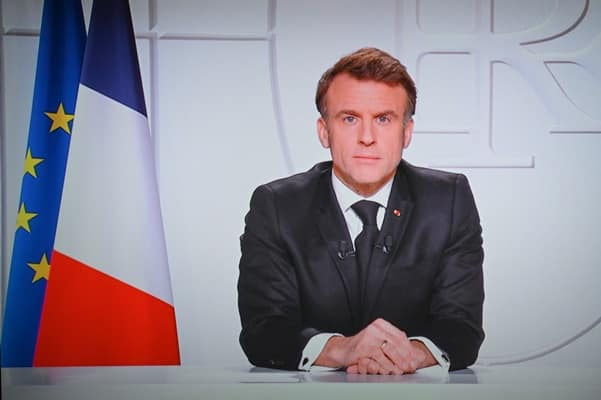
France is preparing to mobilise “all state services” in response to what President Emmanuel Macron described as an intensifying Russian hybrid threat against Europe and the country.
Following a meeting with political party leaders in Paris, Macron said: “The threat – particularly the Russian hybrid threat – facing Europeans and France has intensified.”
Interior Minister Laurent Nunez subsequently said the government was preparing a broader response, including local authorities.
“The goal is clear: to mobilise all state services and local stakeholders so as to be ready to face these new threats,” he said on X.
Macron later told BFM that “the nature of Russian aggression is changing”, highlighting growing concern among European governments over activity that falls below the threshold of conventional military conflict.
France is the latest Nato member to publicly raise concerns about Russian hybrid operations. Germany has also accused Moscow of involvement in an attempted drone strike at Leipzig Airport in August, adding to European concerns about sabotage, cyber operations and other forms of coercion.
The warnings come as European governments reassess security risks linked to Russia’s war in Ukraine and the possibility that Moscow could seek to exploit vulnerabilities beyond the battlefield.
For Paris, the decision to prepare government agencies and local authorities for a wider range of threats signals an increasingly expansive definition of national security — one in which infrastructure, public services and domestic resilience are becoming part of the confrontation with Russia.
This comes as the Polish Prime Minister Donald Tusk warned that Russia could seek to test NATO’s resolve with drone or missile strikes against countries supporting Ukraine, raising concerns that the war could increasingly spill beyond the battlefield.
Tusk told parliament on Thursday that intelligence assessments pointed to possible Russian attacks against NATO states, including Poland.
He said Moscow could attempt to present any resulting damage as an accident, complicating decisions over whether the alliance should respond.
The warning came after Poland scrambled military aircraft and temporarily closed airports following Russian attacks in western Ukraine close to its border. Warsaw has since increased airspace protection and rapid-response measures.
Tusk said: “We know he is plotting something bad. However, for us the most important task is to prepare for various scenarios.
“We will certainly not naively accept such messages that Russia has goodwill and will start behaving properly. There is no indication of this.”
He said intelligence from multiple sources was “very consistent and convincing”, while warning that Russia could seek to exploit uncertainty over whether an incursion was deliberate.
“There is a real risk that drones or other types of missiles could penetrate the territory of one or more countries on the eastern flank and even cause damage, while the official explanation will be that there was an accident.”
NATO’s Secretary General Mark Rutte has called on Britain to establish a “credible path” of annual increases towards the alliance’s long-term spending target.
NATO’s own assessment is that European allies need to increase defence investment substantially as Russia rebuilds its military-industrial capacity. Rutte has said spending of roughly 3.5 per cent of GDP on core defence is required to meet the alliance’s capability targets.
Britain’s current government spending plans envisage defence expenditure reaching about 2.7 per cent of GDP by 2028-29, according to official figures, leaving a substantial gap between existing plans and the higher targets now being discussed within NATO.


Leave a Comment