
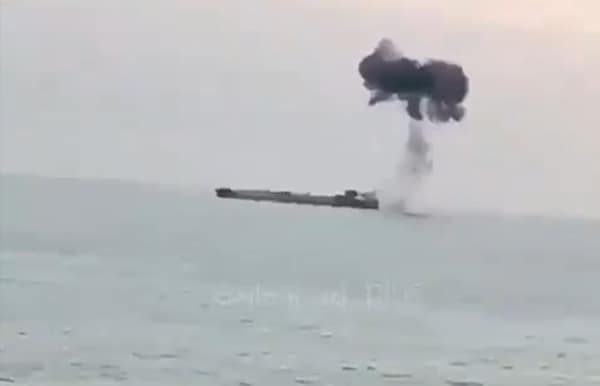
NASA satellites have detected fresh fire hotspots in the Sea of Azov and at a key Russian transport hub, fuelling speculation that Ukraine has launched another strike against Moscow’s oil smuggling network and military supply routes.
Thermal anomalies picked up by NASA’s FIRMS satellite monitoring system showed new fires appearing in waters where Russian vessels linked to the so-called “shadow fleet” have previously been targeted.
The satellite data has raised fears in Moscow that Ukraine’s campaign against Russia’s maritime lifelines is escalating — striking at the ships and infrastructure that help keep the Kremlin’s war economy moving.
Read more related news:
Ukraine has opened a new front in the war – one that could hit the Kremlin where it hurts most
Putin’s Donbas obsession: The region that could decide his legacy, but may never deliver victory
Nowhere to hide Vlad: Ukraine’s drones turn Putin’s secret fuel base into a fireball
Explosions rock Moscow Moscow as Ukraine strikes deep inside Russia
The Sea of Azov has become a growing battleground as Kyiv attempts to disrupt Russian logistics and energy exports.
The latest satellite readings revealed fresh heat signatures in the region, suggesting possible fires aboard vessels or nearby maritime infrastructure.
While the cause of the fires has not been officially confirmed, previous Ukrainian drone operations have targeted Russian tankers and support ships accused of helping Moscow bypass international sanctions.
Ukraine has repeatedly vowed to strike the networks that generate revenue for Russia’s invasion.
NASA’s monitoring system also detected a fire at the Kavkaz railway station in Krasnodar Krai — a crucial transport hub supporting Russian logistics.
NASA FIRMS opět zaznamenává požáry ve vodách Azovského moře, což může naznačovat nové útoky na tankery ruské stínové flotily.
Požár byl zaznamenán také na infrastruktuře železniční stanice „Kavkaz“ a skladovém parku přístavu „Kavkaz“ v Krasnodarském kraji – jednom z klíčových… pic.twitter.com/XPrYZ9Clng
— Jiri Jicha (@jirik957) July 13, 2026
The station plays an important role in supplying occupied Crimea, with railway routes carrying equipment and materials towards the peninsula.
A strike on the facility would represent another blow against Russia’s military supply chain, potentially affecting the movement of goods and equipment to occupied territories.
Russian authorities have not released details about the cause of the fire or whether the infrastructure suffered damage.
The latest incidents follow a series of Ukrainian attacks aimed at Russian oil exports and maritime assets.
Kyiv has increasingly focused on what it calls Russia’s shadow fleet — a network of vessels used to transport oil while attempting to avoid Western restrictions.
By targeting ships, ports and transport links, Ukraine hopes to reduce the financial resources available to fund the Kremlin’s military campaign.
The strategy has forced Russia to defend vulnerable energy and logistics sites far from the front line.
The reported fires came after Russian forces launched drone attacks against Ukraine’s Odesa region on July 12.
Ukrainian officials said strike drones damaged a residential high-rise building and a commercial facility in Odesa district.
Fires broke out at the sites but were quickly brought under control, with officials assessing possible casualties.
The war is increasingly being fought beyond traditional front lines.
From the Black Sea and Sea of Azov to railway hubs deep inside Russia, both sides are targeting the infrastructure that keeps their military operations alive.
For Ukraine, long-range drone strikes have become a way to hit Russia’s economic engine and force Moscow to defend assets hundreds of kilometres from the battlefield.
For the Kremlin, every burning depot, damaged ship and disrupted rail route represents a growing challenge: protecting a vast network of strategic targets while maintaining its offensive in Ukraine.


Leave a Comment