
Italy’s threat to suspend free movement with Spain over the migrant surge into Ceuta marks a sharp escalation in Europe’s increasingly fractured response to illegal migration.
What began as a humanitarian and border management challenge on Spain’s North African frontier is rapidly evolving into a test of European unity, with potentially significant political and economic consequences.
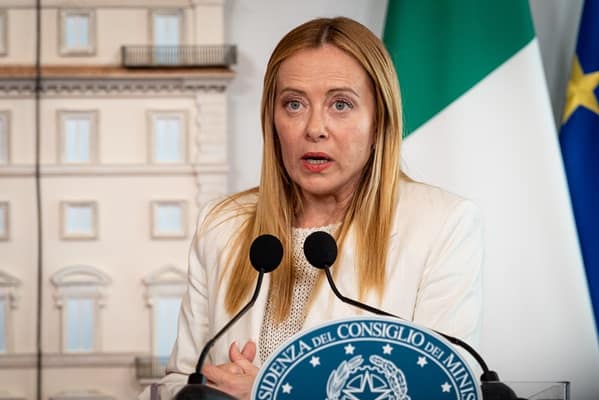
Prime Minister Giorgia Meloni’s warning that Italy is prepared to suspend the Schengen arrangements with Spain reflects growing impatience among governments that argue migration can no longer be managed as a purely national issue.
It also illustrates how migration has once again become one of the most divisive questions confronting the European Union.
The immediate trigger was the sharp rise in crossings into Ceuta, Spain’s small North African enclave bordering Morocco.
Spanish authorities have faced mounting pressure after thousands of migrants attempted to reach the territory by sea, overwhelming local reception facilities and forcing Madrid to deploy additional security resources.
Meloni argued that the scenes unfolding in Ceuta demonstrate the dangers of “uncontrolled illegal immigration” and suggested Italy was prepared to take extraordinary measures if Spain failed to regain control of its external border. Foreign Minister Antonio Tajani echoed those concerns, arguing that irregular migration posed a direct threat to national security.
The remarks go considerably further than routine criticism between European partners. Suggesting the temporary suspension of Schengen arrangements carries implications that extend well beyond migration policy. Free movement remains one of the EU’s defining achievements, underpinning trade, tourism and labour mobility across the bloc.
Although a full suspension would face significant legal and political hurdles, even the threat underlines the growing willingness of national governments to prioritise domestic political pressures over European consensus.
The dispute has also exposed increasingly different philosophies on migration.
Earlier this year, Spain approved measures providing legal status to around 500,000 undocumented migrants already living in the country, arguing the move would address labour shortages while bringing people into the formal economy. Spain’s Supreme Court has also limited the government’s ability to immediately return migrants intercepted while attempting to reach Ceuta or Melilla.
Critics argue those policies risk creating stronger incentives for further migration, while Madrid insists they address long-standing humanitarian and economic realities rather than encouraging additional arrivals.
Spain has rejected suggestions that its recent policy changes are responsible for the latest influx. Foreign Minister José Manuel Albares criticised comments from Rome as politically motivated and called for European solidarity rather than what he described as partisan rhetoric.
Behind the diplomatic exchanges lies a broader strategic challenge for Europe.
The EU’s southern frontier continues to face sustained migratory pressure driven by conflict, economic hardship, demographic growth and organised criminal smuggling networks. As arrivals increase, governments are increasingly finding themselves balancing humanitarian obligations with growing domestic demands for tougher border enforcement.
The latest tensions also highlight Europe’s continued dependence on cooperation with Morocco. Rabat remains a critical partner in managing migration flows across the western Mediterranean, with Spanish officials stressing that Moroccan security forces continue to intercept many attempted crossings before migrants reach European territory.
Whether the current crisis subsides quickly or develops into a prolonged diplomatic dispute may depend as much on political choices in European capitals as on events along the beaches of Ceuta.
For investors and policymakers alike, the significance extends beyond migration itself. Renewed divisions over border policy risk complicating wider European cooperation at a time when the continent is already grappling with elevated defence spending, economic uncertainty and geopolitical instability. Migration has repeatedly proved capable of reshaping European politics. The latest confrontation suggests it is once again moving rapidly towards the centre of the continent’s political agenda.


Leave a Comment