
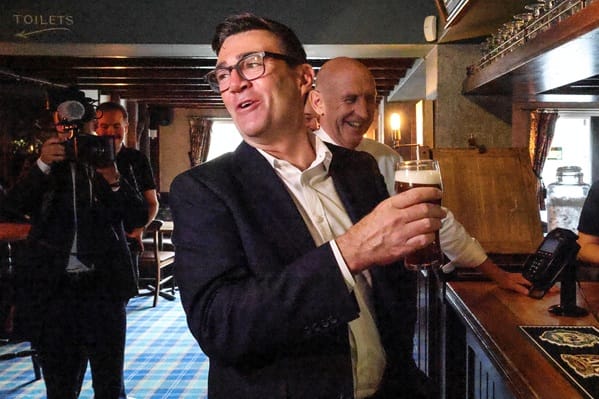
Andy Burnham has delivered an immediate polling boost for Labour after his first party conference as prime minister, with the governing party opening its biggest lead in almost two years as voters back key elements of his policy agenda.
Labour has risen two points to 30 per cent in the latest Opinium poll, its highest rating since November 2024. Reform is on 25 per cent, up one point, while the Conservatives remain unchanged at 17 per cent. The Greens gained one point to 11 per cent and the Liberal Democrats fell one point to 9 per cent.
The figures give Burnham a five-point lead over Reform and mark a significant improvement in Labour’s standing following its conference in which the prime minister announced plans for a National Care Service and changes to the state pension triple lock.
Burnham is also the only party leader to record a net positive approval rating. His score rose one point to plus eight, compared with Kemi Badenoch on minus one, up two points. Ed Davey’s rating fell three points to minus six, while Nigel Farage and Zack Polanski remained the most unpopular leaders, both recording net approval of minus 22.
The polling suggests Burnham has gained political momentum from a conference designed to reposition Labour around public services and a more interventionist approach to the state.
Nearly half of voters — 48 per cent — support his proposal for a National Care Service that would be free at the point of use and funded through general taxation. Just 15 per cent oppose the idea, giving the policy substantial net support among supporters of all major parties.
Even among Reform voters, the proposal has a narrow net positive rating of one point.
Burnham’s proposed changes to the triple lock also command overall support, although the issue divides older voters. Forty per cent support the changes, compared with 23 per cent who oppose them and 22 per cent who neither support nor oppose the proposal.
Among voters aged over 65, however, support falls to 31 per cent while opposition rises to 42 per cent.
The public is also more likely to view the pension changes as a reasonable exchange for a publicly funded care system. Thirty-four per cent believe the proposed reform represents a fair trade-off for the National Care Service, against 27 per cent who consider it unfair.
The polling indicates that Burnham also has considerable room for manoeuvre over Britain’s relationship with the European Union.
Fifty-four per cent of respondents said he is taking the right approach by keeping all options open over the UK’s future relationship with Brussels, while 25 per cent said his approach was wrong.
Public opinion on Brexit itself is more decisive. Forty-six per cent believe leaving the EU has done the UK much more harm than good, compared with just 13 per cent who believe it has done much more good than harm. A further 21 per cent believe Brexit has produced an equal balance of benefits and costs.
The country remains considerably less certain about electoral reform.
Twenty-six per cent support changing the voting system, although only 12 per cent believe Labour should make the change before the next election. Fourteen per cent favour committing to reform in the next Labour manifesto.
A further 21 per cent support reviewing the system but do not believe Labour should yet commit to changing it, while 22 per cent want to retain the existing system. Almost three in ten, or 29 per cent, remain undecided.
James Crouch, head of policy and public affairs at Opinium, said: “Andy Burnham clearly knows how to deliver a commanding conference speech, backed by major policy announcements, that dominates the political agenda. The question now is simple: can Kemi Badenoch seize the country’s attention next week in anything like the same way?”
For Burnham, the polling provides an early indication that his conference strategy has begun to translate into political momentum. The challenge will be turning that bounce into durable support as the opposition parties prepare to respond.


Leave a Comment