
Britain has warned Israel that it could expel Israeli diplomats and their families from the UK unless a credible path emerges towards restoring the full operation of its diplomatic mission in Jerusalem, escalating a dispute that has exposed the deteriorating relationship between the two countries.
The ultimatum follows a last-minute agreement reached on Wednesday evening to keep the British consulate building in East Jerusalem open after Israel ordered the diplomatic post to close in retaliation for British trade sanctions targeting Israeli settlements in the occupied West Bank.
Under the compromise, the building will continue operating under the name “UK Mission, Jerusalem”, as a separate entity from the British Embassy in Tel Aviv. But only seven diplomats will remain, compared with roughly 27 previously stationed at the consulate.
The arrangement preserves Britain’s diplomatic presence in the city while allowing Israel to proceed with its decision to reduce the mission’s status and staffing. British officials, however, regard it as a temporary reprieve rather than a lasting settlement.
According to reports, Whitehall has warned that the threat of reciprocal expulsions could return if negotiations fail to establish a credible route towards restoring the mission’s full complement of staff. Families of any Israeli diplomats expelled would also be expected to leave Britain.
The dispute centres on the status of the Jerusalem mission, whose independence from the embassy in Tel Aviv is regarded by British officials as essential to maintaining a separate diplomatic channel for relations with the Palestinians.
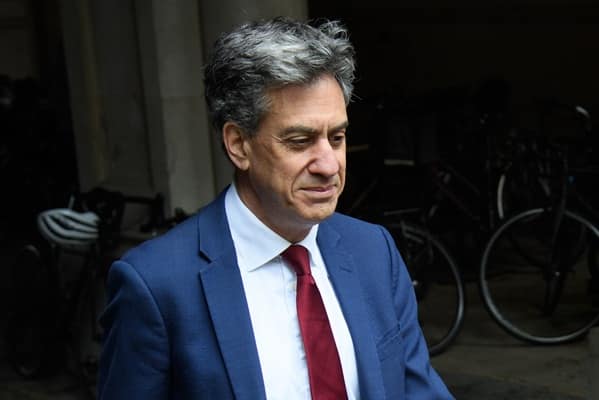
“We do not accept that the Government of Israel has the legal right to close the British consulate general in Jerusalem, which has been there for nearly 200 years,” Foreign Secretary Ed Miliband said on Thursday.
“The UK Government reiterates its longstanding view that East Jerusalem is occupied territory.”
Miliband added that the mission would remain “independent, operational, and will continue to deliver vital services and our work with the Palestinian people”.
The confrontation was triggered by sanctions announced by Britain on September 8 against goods produced in West Bank settlements. The measures were imposed alongside France and Canada, reflecting their longstanding position that the settlements violate international law, a position Israel disputes.
Israeli Foreign Minister Gideon Sa’ar responded by ordering the East Jerusalem consulate to close within 30 days. Israel also removed British representatives from the international aid coordination centre for Gaza in Kiryat Gat, ended British involvement in training Palestinian Authority security forces and barred 12 British parliamentarians from entering the country.
Those refused entry included former Labour leader Jeremy Corbyn and Diane Abbott.
The consequences for Britain’s diplomatic operation began to emerge before the October 8 closure deadline, with dozens of locally employed staff dismissed and British diplomats preparing to depart.
The agreement reached this week avoided an immediate escalation into a tit-for-tat expulsion of diplomatic personnel. But it has left the two governments with competing interpretations of what the compromise means.
Britain has preserved a distinct mission in Jerusalem, while Israel has secured a substantial reduction in the number of British diplomats remaining there. Reports indicated that Israel had pressed for the remaining personnel to be absorbed into the embassy in Tel Aviv, a move London regarded as undermining the mission’s independence.
Diplomats who have left Jerusalem are expected to continue the mission’s work from other British posts across the Middle East or from London.
Sa’ar, meanwhile, defended Israel’s response as a matter of diplomatic reciprocity.
“Action cannot be taken against Israel without Israel taking appropriate measures in response,” he said.
His statement underlines the central difficulty in resolving the dispute: both governments are presenting their actions as a defence of established principles rather than as concessions to the other side.
For Britain, the issue concerns the legal status of East Jerusalem, its diplomatic responsibilities towards Palestinians and its opposition to settlement activity. For Israel, the closure forms part of its response to sanctions imposed by governments it considers to be applying pressure over its policies.
The immediate crisis has been contained, but the underlying disagreement remains unresolved. The reduced mission leaves Britain with a smaller diplomatic presence in Jerusalem, while the threat of expulsions remains available as leverage in future negotiations.
The episode demonstrates how a dispute over trade sanctions and diplomatic representation can rapidly spread across a wider relationship, affecting aid coordination, security training, parliamentary exchanges and the conduct of diplomacy itself.
The consulate remains open. But unless the two governments find a durable settlement, the compromise risks becoming the pause before another confrontation.


Leave a Comment