
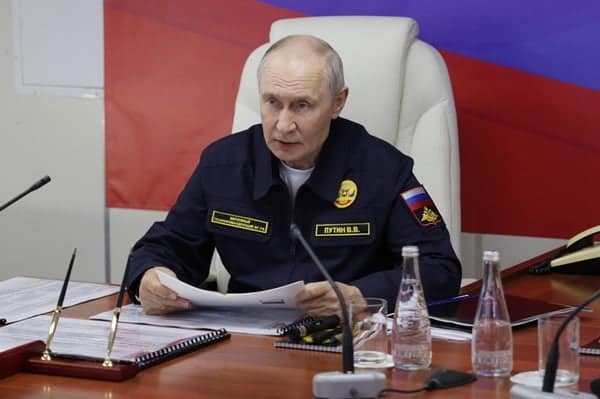
Vladimir Putin entered negotiations with US special envoys Steve Witkoff and Jared Kushner in Moscow determined to secure further Ukrainian territory, with people close to the Kremlin saying the Russian president remains confident his forces can capture the rest of the Donbas by the end of 2026.
“There is zero chance of reaching an agreement on the frontline until Putin completes the capture of the rest of the Donetsk region,” a source close to the Kremlin told Reuters, saying Putin’s confidence was based on optimistic battlefield reports from Russian commanders.
Western military analysts, however, consider the objective highly unlikely given the slow and costly pace of Russia’s advances. Ukraine has repeatedly rejected territorial concessions, with Kyiv arguing that surrendering the Donbas would amount to capitulation, the Kyiv Post reported.
The latest diplomatic initiative has so far produced little evidence that Moscow is prepared to moderate its central war aims.
Read more related news:
Putin’s cynical ceasefire as Kremlin pauses Kyiv attacks exposing Kremlin’s hypocrisy
Putin is ‘holding global food security hostage’ as prices hit a four year high
Putin signals dangerous new escalation telling Russians to be ‘prepared for anything’
Bloomberg reported that the arrival of the US envoys in Moscow had yielded no indications that the Kremlin was softening its position.
People close to the Russian leadership said Putin remained prepared to end the war only on terms favourable to Moscow, with the Kremlin hardening its demands as it concluded that Russia held a decisive military advantage on the battlefield.
The timing and sequencing of the US mission have also prompted questions among European officials, particularly the decision to travel to Moscow before holding consultations with Kyiv.
Jovita Neliupšienė, the EU ambassador to the US, criticised the approach, arguing that Washington should prioritise discussions with its allies.
“Diplomacy really works, and we should first of all try to talk to those who are our allies,” Neliupšienė said.
She stressed that Moscow had not abandoned its original war objectives, while saying Europe’s immediate priority remained providing Ukraine with the weapons required for self-defence.
Samuel Charap, a senior political scientist at the RAND Corporation, offered a more supportive assessment of the US initiative, describing the mission as timely.
He warned that without active diplomatic mediation, the conflict risked escalating rapidly as both Russia and Ukraine continued to increase the stakes.
The assessments followed three hours and 10 minutes of formal discussions between Putin and the US delegation, followed by a working dinner at the Kremlin on Saturday evening.
After the meeting, Yuri Ushakov, a senior adviser to Putin, said the American delegation had agreed to take the Russian president’s assessment of the conflict into account during its subsequent talks in Kyiv.
Russian officials described the discussions as “meaningful” and “frank”, saying they had taken place in an atmosphere of mutual trust.
The talks also covered the possibility of large-scale commercial projects between the US and Russia, according to Russian officials.
The wider US delegation included representatives from the National Security Council, the State Department and the Treasury.
Gene Lange, acting head of the Treasury’s sanctions division, accompanied the mission to Moscow and took part in a preparatory meeting with Kirill Dmitriev, Putin’s special representative for economic co-operation.
Lange did not participate in the direct meeting with Putin, but his presence indicated that sanctions policy formed part of the broader discussions.
That comes despite recent comments from US Treasury Secretary Scott Bessent ruling out economic concessions unless Russia agrees to end the war.
At the start of the talks, Putin confirmed that Russian forces had suspended aerial strikes against Kyiv from midnight on September 5.
He nevertheless rejected a Ukrainian proposal for a broader three-day ceasefire along the frontline.
Witkoff and Kushner are scheduled to travel to Kyiv on Sunday to meet Ukrainian President Volodymyr Zelenskyy.
Zelenskyy has previously pledged that Ukrainian forces would refrain from striking Moscow through the end of Monday to facilitate the diplomatic mission.
The contrasting positions highlight the central difficulty facing the US-led diplomatic effort: Washington is seeking a route towards negotiations while Moscow continues to insist on territorial and strategic concessions that Kyiv has repeatedly ruled out.
For now, the Kremlin’s position suggests that Putin believes time remains on Russia’s side, while Ukraine and its European allies are betting that continued military and economic pressure can prevent Moscow from translating battlefield gains into the terms of a peace settlement.


Leave a Comment