
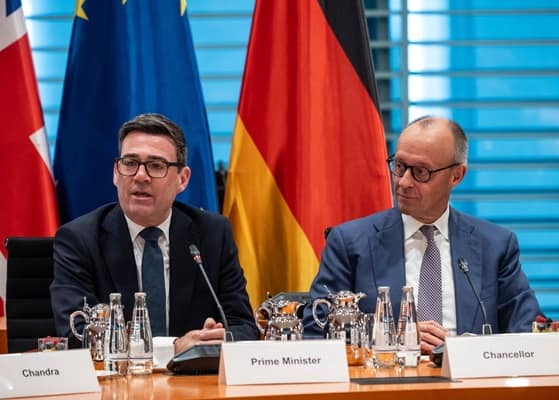
Andy Burnham’s push to rebuild Britain’s relationship with the European Union could unlock economic growth while making it easier for wealthy investors and entrepreneurs to move their money abroad, the chief executive of financial advisory group deVere has warned.
Nigel Green said closer economic ties with Europe could help reverse some of the damage attributed to Brexit, reducing trade friction and encouraging investment. But he cautioned that without changes to Britain’s tax and business environment, the same measures intended to strengthen the economy could make it easier for internationally mobile wealth to leave.
“Closer ties with Europe will be good for the economy, there’s no question about it,” Mr Green said.
“But the same changes that make it easier to do business with Europe also make it easier for people, and their money, to move there. Investors need to factor in both.”
The warning comes as Mr Burnham urges MPs to support closer ties with Brussels, arguing that Brexit has done more harm than good. The Prime Minister has refused to rule out rejoining the EU after the next election.
Mr Green said additional paperwork, border checks and delays had imposed costs on British businesses since the UK left the bloc, undermining exports, productivity and investment confidence.
“What’s really hurt British businesses since Brexit is the extra paperwork, the checks and the delays at the border,” he said. “Reduce those and you’ll see it come through in exports, in productivity and in how confident companies feel about investing here.”
Some estimates put the long-term economic cost of the current Brexit settlement at around 2.5 per cent of gross domestic product, with closer ties potentially recovering as much as 1.2 percentage points, according to figures cited in the debate.
Mr Green said financial markets could respond positively to a more predictable relationship with Europe, potentially supporting sterling and British equities, which have traded at discounts to international peers.
However, renewed debate over a second referendum could trigger short-term volatility, he added. Investors ultimately wanted clarity about the country’s direction.
The political debate has also intensified following warnings that Russia is spending £1.5bn on disinformation and propaganda this year. Mr Green said transparency about foreign interference was important to maintaining international investors’ confidence in British institutions.
Yet the potential gains from closer European integration come against a backdrop of substantial private wealth outflows.
An estimated $160bn in private wealth has left Britain over two years, while the wealthiest 1 per cent of earners contribute around 27 per cent of income tax receipts. Britain was also forecast to lose 16,500 millionaires last year, more than any other country.
Mr Green said entrepreneurs, senior executives and internationally mobile families were increasingly considering relocating as taxes rose.
“If moving around Europe becomes easier, that’s one less obstacle for them,” he said.
He warned that closer EU ties would not compensate for an uncompetitive domestic tax system, slow planning decisions or policy uncertainty.
“The UK has huge strengths in its talent, its legal system, and its capital markets,” he said. “Get both of these right and it can be one of the most attractive places in Europe for capital.
“Get only one right and it simply becomes easier for people to leave.”
The Conservatives have pledged to reverse Labour’s moves towards Europe, including a proposed food and farm trade deal, leaving businesses facing further uncertainty over the future direction of UK-EU relations.


Leave a Comment