
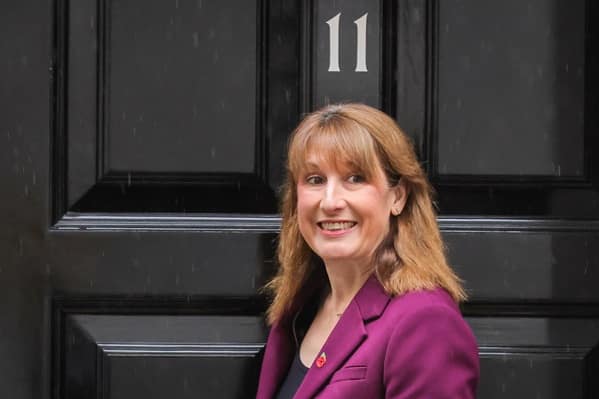
A new wave of stealth taxes is likely at the next Budget as mounting fiscal pressures force the government to raise revenue without headline tax increases, warns one of the world’s largest independent financial advisory organisations.
The warning from deVere Group’s regional director, James Green, highlights that the position facing Chancellor Rachel Reeves is being driven by a convergence of specific cost pressures built up over the past few months, now expected to be feeding directly into the upcoming Budget.
“The UK’s debt interest is close to £100bn, growth is stuck below 1%, and spending—especially defence—is moving materially higher,” he says.
“This combination leaves a hole of what is likely to be around £20bn. The money has to come from somewhere.”
Higher borrowing costs have significantly increased the cost of servicing government debt, much of which is linked to inflation or short-term refinancing. At the same time, subdued economic growth is limiting the pace at which tax receipts are increasing across income tax, VAT and corporate revenues. Alongside this, spending pressures remain elevated. The move toward higher defence spending, alongside continued demands in healthcare and welfare, adds to the overall strain on the public finances.
“No single pressure explains it,” James Green says. “But together, they leave very little room. That’s why stealth taxes move to the front.”
With borrowing constrained and large-scale spending cuts politically difficult, he says the government is likely to rely on stealth taxation, meaning raising revenue through measures that do not involve headline rate changes but steadily increase the overall burden. The most immediate lever is fiscal drag. Income tax thresholds are frozen until 2028, and extending that freeze would continue to pull more taxpayers into higher bands as wages rise.
“Freezing thresholds for longer is one of the easiest ways to raise billions,” James Green says. “People earn more on paper and hand more over, without any announcement of a tax rise.”
Allowances are also likely to remain under pressure. The capital gains tax exemption and the dividend allowance could be held at current levels or adjusted further, increasing the proportion of investment returns subject to tax.
“This is how stealth taxes work in practice,” he says. “You keep the rates where they are and quietly expand what gets taxed.”
Pension tax relief is another area that could be refined. With the overall cost to the Treasury running into tens of billions annually, even relatively modest adjustments to reliefs or limits could generate additional revenue.
“Pensions sit on a large pool of relief,” James Green notes. “You only need small changes to pull meaningful revenue out of it.”
Inheritance tax is expected to expand through continued threshold freezes. With the nil-rate band fixed at £325,000 and the residence band at £175,000, more estates are drawn into scope over time as asset values rise.
“More families are pulled in each year without a single headline change,” he says. “That is the system doing the work quietly.”
National Insurance will also contribute through threshold stagnation, increasing the effective tax rate on employment income as wages grow.
Local taxation provides an additional channel. Council tax increases or gradual adjustments to property bands would allow revenue to rise in a more distributed way.
“These measures build. Individually they look small, but together they move the tax burden materially higher.”
He cautions that relying heavily on stealth taxation can reduce transparency.
“People end up paying more without being clearly told,” he says. “This makes it harder to plan and harder to see where the pressure is coming from.”
With the UK tax burden already trending higher, he says the direction of travel is becoming increasingly steep.
He concludes: “What we’re expecting is not about a major headline tax rise. We believe in this year’s Budget, there’ll be a steady, stealthy expansion of what gets taxed, who gets taxed, and how often—all done pretty quietly, but with real impact.
“A stealth tax raid is still a tax raid.”


Leave a Comment