
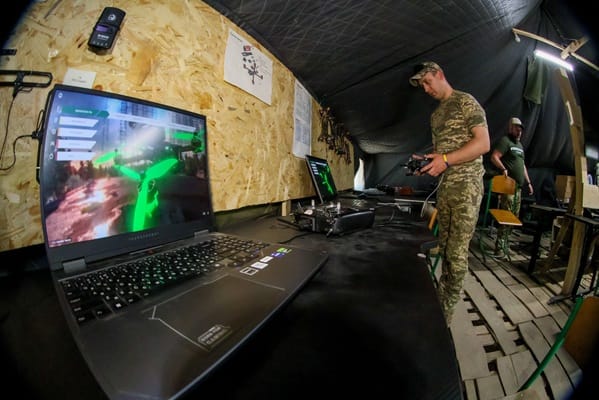
Britain’s decision to commit £5bn to drones and autonomous military systems reflects a broader shift in defence thinking: the battlefield is becoming faster, more digital and increasingly shaped by inexpensive technologies that can challenge traditional military advantages.
The war in Ukraine has accelerated that transformation.
Drones have moved from supporting roles to becoming central instruments of warfare, capable of providing intelligence, directing strikes and destroying high-value assets at a fraction of the cost of conventional weapons systems.
For Ukraine, innovation has been driven by necessity. Under sustained pressure from a larger adversary, Kyiv has been forced to adapt rapidly, developing new approaches to drone production, battlefield integration and operational decision-making.
For Britain, the challenge is different.
The country has the opportunity to learn from Ukraine before facing a comparable crisis. But that advantage requires more than investment in hardware.
The effectiveness of any new defence capability will depend on the people operating it.
As warfare becomes increasingly remote and technology-driven, there is a risk that the human dimension of conflict is overlooked. Drone operators may be physically removed from frontline combat, but the decisions they make carry significant operational and psychological pressures.
The changing character of war requires a corresponding change in how military personnel are trained, supported and prepared.
Investment in technology must therefore be matched by investment in personnel systems: specialist training, operational resilience, rotation policies and long-term support for those exposed to the pressures of modern combat.
Ukraine’s experience demonstrates that technological advantage alone is not enough.
The ability to innovate quickly, integrate new systems and maintain the resilience of military forces has become equally important.
The implications extend beyond the battlefield.
Cheap and increasingly accessible drone technology has reduced the barriers to military capability, allowing smaller actors to threaten infrastructure and disrupt operations in ways previously associated only with major powers.
This has changed the strategic environment facing countries such as Britain. Geographic distance provides less protection, while the speed of technological change reduces the time available to prepare.
The UK’s defence investment marks recognition of that reality.
But the success of the strategy will depend on whether policymakers understand that future warfare will not be fought by machines alone.
The next generation of conflict will combine artificial intelligence, autonomous systems and human judgement.
The countries best prepared will be those that invest in all three.
Britain’s challenge is not simply to acquire the weapons of the future.
It is to build the people, institutions and industrial capacity capable of using them effectively.


Leave a Comment