
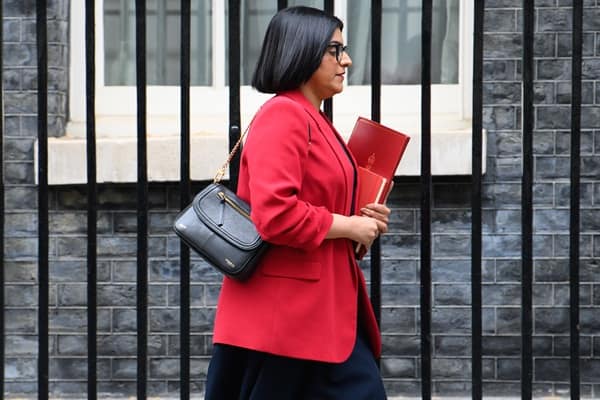
Home Secretary Shabana Mahmood will order police forces across England and Wales to follow new guidance on impartiality, seeking to counter what she has called the “corrosive and growing perception of two-tier policing” as public confidence in the service faces renewed scrutiny.
The proposed impartiality standard will be based on the principle that everyone must be treated equally before the law. It will tell officers to apply legislation consistently, making decisions on evidence and professional judgement rather than assumptions or stereotypes.
Announcing the measures at the annual National Police Chiefs’ Council conference, Mahmood is expected to acknowledge that most officers already police without fear or favour, but warn that examples of differential treatment have damaged the service and provided ammunition for those alleging political bias.
“I know the vast majority of officers police impartially and that policing without fear or favour is their creed,” she will say. “But there have been examples of differential treatment, and they have harmed policing, allowing people, often motivated actors, to whip up the idea that there is two-tier policing in this country.”
The intervention follows a controversy over race guidance issued by the NPCC earlier this year, which stated that fair policing “does not mean treating everyone the same”. Sources close to Mahmood previously described the wording as “clumsy”, prompting the chiefs’ body to promise a review.
The guidance was cited by MPs in criticism of officers who arrested Henry Nowak, an 18-year-old University of Southampton student, for alleged racial abuse while he was dying from stab wounds. Nowak had been stabbed five times by Vickrum Digwa, who told officers that his victim had been racist towards him. Digwa, 23, has since applied to appeal against his conviction.
The case has become a flashpoint in a broader argument over whether police treat people differently according to their race. Reform UK leader Nigel Farage has claimed that white people face unequal treatment, while critics argue that such accusations risk dismissing the longstanding experiences of black and minority ethnic communities.
Mahmood will seek to draw a distinction between impartiality and the need to address inequalities within the police. More than three decades after the murder of Stephen Lawrence, black officers still account for barely more than 1 per cent of the workforce.
“As a Muslim Home Secretary, no one can doubt that equality in policing, and in our forces, matters to me,” she is expected to say.
But she will warn that initiatives intended to correct discrimination can undermine confidence if they result in different treatment.
“We must also be wary of misguided attempts at course correction, where the pursuit of equality leads instead to differential treatment,” she will tell officers, singling out the Police Anti-Racism Commitment as an initiative that risked eroding public trust in impartial policing.
The Home Secretary will also urge forces to work with residents’ associations rather than activist groups she believes are pursuing political agendas. “Leave the politics to the politicians. And we will leave the policing to you,” she will say.
The College of Policing will draw up the new standard, with a sector-wide consultation expected in the new year. Jo Noakes, who leads the organisation, said fresh guidance would be issued in spring. She cautioned that impartiality had to be considered alongside fairness and inclusion.
The practical rules are expected to address everyday decisions, including the display of symbols on officers’ badges and lanyards and their conduct at community-led events.
The initiative comes as forces face mounting operational and financial pressures. Nine are seeking exceptional government support, while police officer numbers have fallen since Labour took office.
Mahmood will also announce a fast-stream programme designed to prepare 200 recruits each year for progression towards superintendent rank. The scheme follows a leadership commission that found standards among senior police management were at times “staggeringly” poor.
The challenge for the Home Secretary will be to restore confidence in equal treatment without weakening efforts to make forces more representative — a balance that has become increasingly politically charged.


Leave a Comment