
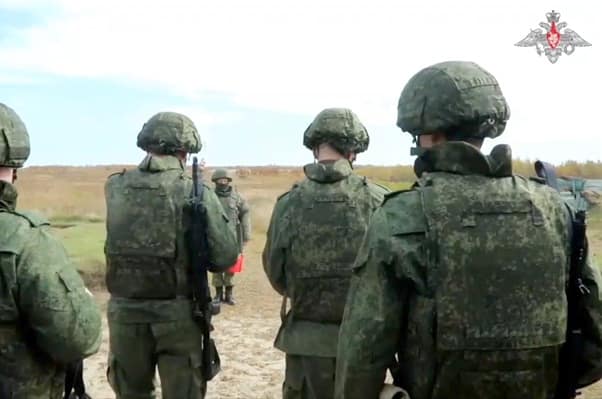
Russian forces in the Kramatorsk sector are suffering rising casualties as commanders allegedly divert military fuel for sale in rear areas, forcing troops to abandon vehicles and conduct assaults on foot, according to the Ukrainian partisan movement ATESH.
The claims, which could not be independently verified, point to a potentially damaging combination of battlefield attrition and logistical failure inside one of Russia’s frontline formations.
ATESH said its agents inside the 70th Motorised Rifle Division, part of Russia’s Dnepr Group of Forces, had reported the “systematic sale of military fuel”.
“Agents of the ATESH movement within the 70th Motorised Rifle Division (Dnepr Group of Forces) report the systematic sale of military fuel. The command is selling fuel to the local population in rear areas, in Donetsk, Luhansk, and Rostov-on-Don…” the movement said.
The alleged diversion has left the unit facing an acute shortage of fuel and lubricants, according to ATESH.
“There is nothing to refuel cars, armoured vehicles, and motorcycles with, forcing personnel to carry out assaults on foot. Servicemen are deprived of armoured protection, while the evacuation of the wounded by vehicle becomes impossible. As a result, the number of casualties in the unit has increased significantly recently,” the movement said.
If accurate, the allegations would highlight a familiar vulnerability in Russia’s war effort: the gap between the resources allocated by Moscow and those reaching frontline units.
Fuel shortages can have consequences extending well beyond the inability to move assault troops. Armoured vehicles provide protection during attacks, while trucks and other vehicles are critical for resupplying formations and evacuating wounded soldiers. Removing that mobility can leave infantry exposed and make battlefield losses harder to manage.
The allegations come as Kyiv argues that Russia’s battlefield losses are placing increasing strain on its military and economy.
Andrii Melnyk, Ukraine’s Permanent Representative to the United Nations, told a UN Security Council meeting that Moscow was losing the war while its economy was being increasingly depleted by the cost of its aggression.
Mr Melnyk estimated that Russia is losing at least 30,000 to 35,000 troops a month, although such battlefield casualty estimates are difficult to independently verify.
The scale of the claimed losses would amount to hundreds of thousands of personnel a year, putting further pressure on Moscow to recruit replacements while maintaining its offensive operations.
For Russian commanders, the alleged fuel diversion in the Kramatorsk sector would therefore represent more than a corruption problem. It would threaten the basic logistics on which Russia’s ability to sustain mechanised warfare depends — potentially turning fuel intended to keep an army moving into a source of profit while leaving soldiers to walk into battle.


Leave a Comment