
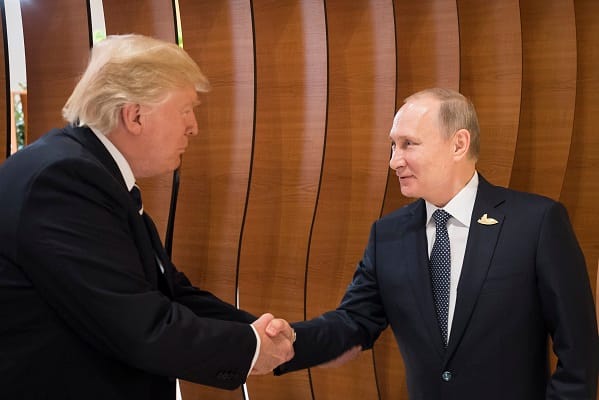
The Trump administration is facing growing criticism after appearing to waver on sanctions and economic restrictions targeting Russia, a decision that critics argue is allowing Moscow to earn millions of dollars per day while the United States is simultaneously engaged in a widening conflict with Iran.
The controversy highlights a striking geopolitical paradox. On one hand, Washington is attempting to confront Iranian aggression and protect US personnel in the Middle East.
On the other, policies emerging from the White House risk financially benefiting Russia Tehran’s most significant international partner, at precisely the moment the alliance between Moscow and Tehran is becoming more operational.
Reports that Russia may be sharing intelligence with Iran have added fuel to the criticism. According to multiple sources and security analysts, Moscow has allegedly provided intelligence support that could assist Iranian forces in targeting US personnel and assets.
If accurate, the implications are conflicting: American economic policy would effectively be allowing billions of dollars to flow into the hands of a state that may be indirectly supporting attacks on US troops.
The irony has not gone unnoticed in Ukraine.
For more than 4 years Ukrainian forces have quietly shared battlefield knowledge with Western partners, including lessons learned from drone warfare and electronic warfare systems now being studied by NATO militaries. Ukrainians have also provided intelligence cooperation and assistance that ultimately helps protect American personnel operating thousands of miles away.
Yet many in Kyiv now find themselves facing an uncomfortable contradiction.
While Ukrainian soldiers and specialists contribute to US security efforts, American policy risks simultaneously sending revenue to the Kremlin, the very government responsible for the invasion of Ukraine and the destruction of cities such as Mariupol, Kharkiv and Bakhmut.
From a strategic perspective, critics argue the policy sends deeply mixed signals.
As I have been reporting in recent weeks, the widening war in the Middle East is no longer contained to the region. What began as a regional conflict now risks evolving into a far broader geopolitical confrontation involving multiple global powers. In that environment, economic pressure on Russia, one of Iran’s closest partners, would normally be expected to tighten, not loosen.
Instead, the White House appears to be moving in the opposite direction.
Further controversy erupted earlier this week when presidential envoy Steve Witkoff suggested that the United States should take Russia “at their word” on certain assurances. The remark raised eyebrows across diplomatic and security circles.
Russia, after all, has made similar assurances before.
In January 2022, just weeks before launching its full-scale invasion of Ukraine, Russian President Vladimir Putin publicly insisted that Russia had no intention of invading its neighbour, a claim that proved to be demonstrably false within weeks.
For many observers, the current policy risks repeating a familiar mistake: trusting a government that has consistently used deception as a strategic tool. The broader question now emerging is one of coherence. If the United States is engaged in a confrontation with Iran, why would it simultaneously allow economic decisions that strengthen Iran’s most powerful international partner?
The contradiction has sparked growing frustration among Western security analysts and policymakers.
As I wrote in yesterday’s analysis — “Who Can We Trust?” — the deeper concern is not simply about tariffs or sanctions. It is about strategic clarity, and whether the hard-won lessons learned fighting Russia are safe in the hands of a White House that increasingly appears willing to come to Moscow’s aid.
Because when policy begins funding the very actors that threaten American troops while prolonging two wars simultaneously, the inevitable question can no longer be avoided.
Just whose interests are really being served?


Leave a Comment