
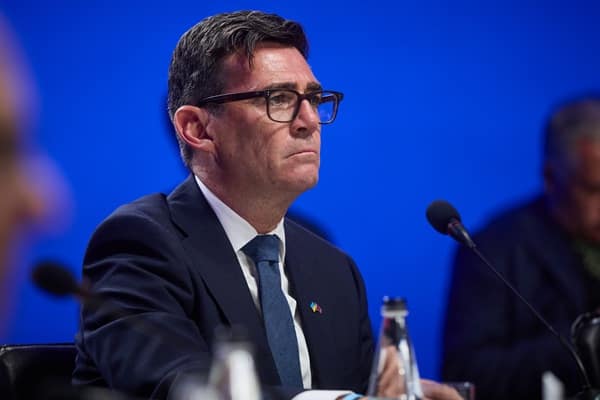
The Prime Minister Andy Burnham has said Russia “clearly” interfered in the 2016 Brexit referendum, revealing that he was given an affirmative answer by officials when he asked about Moscow’s involvement after entering Downing Street — a disclosure that could intensify Britain’s debate over its future relationship with the European Union.
The Prime Minister’s comments mark a significant intervention in one of the most contentious episodes in modern British politics, coming as he explores closer ties with Brussels and leaves open the possibility of Labour committing to full EU membership in a future election manifesto.
On The Rest Is Politics, Burnham said he specifically asked whether Russia interfered in the referendum that led Britain to vote to leave the bloc.
“But I asked the question coming to Downing Street, was there interference in the 2016 referendum from Russia?
“And I’ve had the clear answer that yes, there was.”
Burnham said he believed the issue needed to be put “clearly on the record”, arguing that European governments had to recognise the threat posed by foreign attempts to influence democratic debate.
“These things are important now to put clearly on the record and help voters in Germany and France understand that some of this politics is instigated via our enemies, namely Russia,” he said.
The Prime Minister’s remarks come as European governments face growing concerns about disinformation campaigns, political polarisation and alleged Russian efforts to exploit divisions within Western democracies.
Burnham said Britain had been “too much on the back foot” and had failed to inform voters enough about how foreign powers were trying to disrupt political processes.
He also revealed that he had discussed Russian influence with German Chancellor Friedrich Merz during a recent visit to Berlin, amid concerns about the rise of the far-right Alternative for Germany party.
“There is certainly misinformation, disinformation that is emanating from Russia into German politics,” Burnham said.
He added that Merz had raised concerns about the AfD’s alleged links to Moscow, although the specific claims about the party’s relationship with Russia remain politically contested.
The Prime Minister has previously accused Moscow of attempting to interfere in British politics. Addressing the United Nations General Assembly in New York last month, he said there was evidence Russia had sought to influence the 2019 general election and had attempted to inflame tensions following violent incidents.
The latest disclosure is likely to renew scrutiny of the intelligence and security assessments surrounding the Brexit referendum, which took place on June 23, 2016.
A report published by Parliament’s Intelligence and Security Committee in 2020 criticised the government’s failure to conduct a full assessment of potential Russian interference in the referendum.
The committee said open-source research had highlighted pro-Brexit and anti-EU material published by Russian state-backed media outlets RT and Sputnik, alongside alleged activity involving social media accounts commonly described as bots and trolls.
However, the committee did not establish that Russia had successfully altered the referendum result. It said the impact of any attempted interference would be difficult, if not impossible, to assess and that it had not sought to determine whether such efforts had been successful.
The distinction is important, Burnham has disclosed what he says he was told in his Downing Street briefing, while the committee’s published findings stopped short of concluding that Russian activity changed the outcome.
A Downing Street spokesperson declined to discuss the precise nature of the Prime Minister’s briefing but said: “National security is the first duty of any government. We are focused on ensuring our citizens and our institutions are protected from foreign powers and their proxies seeking to threaten lives and undermine our democratic values.”
The political implications extend beyond questions of foreign interference. Burnham has recently signalled a willingness to reconsider Britain’s relationship with the EU, promising to explore options that would bring the UK closer to the bloc.
At Labour’s annual conference last month, he called for political consensus on the country’s future relationship with Brussels and suggested that rejoining the EU could feature in a future Labour manifesto.
The timing of his comments on Russia is therefore likely to intensify debate over whether Brexit should be reassessed, although the Prime Minister has not presented evidence that alleged interference invalidates the referendum result.
Richard Kilpatrick, of the pro-EU group European Movement UK, said: “We have suspected for years that the 2016 referendum could have been subjected to interference because of how its result helped destabilise a united Europe. Disinformation played a role at the time and it is important to have this public confirmation of those suspicions.”
For Burnham, the challenge will be to translate his disclosure into a wider debate about democratic resilience and Britain’s strategic position in Europe without allowing the question of foreign interference to become a substitute for examining the economic and political arguments surrounding EU membership.
The revelation places renewed emphasis on the need for transparent intelligence assessments, effective safeguards against hostile influence and clear distinctions between attempted interference and demonstrable effects on election results.
Ten years after the referendum, the question of Russia’s role remains politically consequential. Burnham’s statement has raised the stakes — but the full extent of Moscow’s activities, and whether they materially affected the vote, remains unresolved by the published evidence.


Leave a Comment