
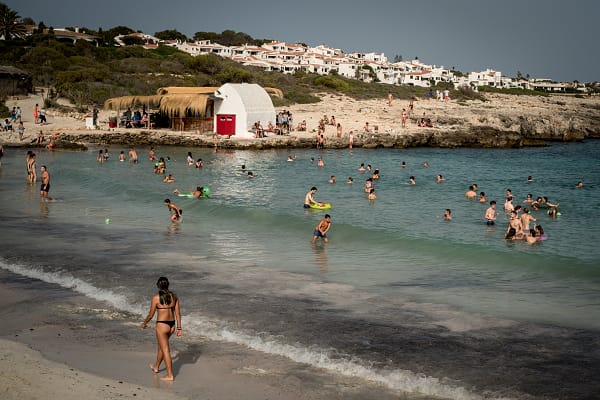
British expats have become the dominant population in a growing number of Spanish coastal communities, with UK nationals now outnumbering Spanish residents across a string of Costa Blanca towns, according to official figures.
The latest Annual Population Census from Spain’s National Institute of Statistics (INE) shows that foreign nationals make up more than half the population in 17 municipalities across Alicante province.
Britons are the largest foreign group in 14 of them, with 25,478 UK citizens living across the towns.
The figures underline the enduring attraction of Spain’s Mediterranean coast for Britons seeking sunshine, cheaper living costs and an alternative to life in the UK.
Alicante province’s population rose by 2 per cent in the year to January 1, 2026, adding 106,933 residents, the Express reported.
The most striking shift is in Rojales, which includes the popular Ciudad Quesada urbanisation. Foreign nationals account for 67.85 per cent of its population, with 11,971 overseas residents among a total of 17,644. Spanish nationals number just 5,673.
Rojales is also home to more British residents than any other municipality in the group, with 4,860 UK citizens, according to The Olive Press.
San Fulgencio, which includes the La Marina urbanisation, is close behind. Foreigners make up 67.05 per cent of its 10,162 residents, including 3,103 Britons.
Four other municipalities have foreign populations exceeding 60 per cent: Daya Vieja, at 62.14 per cent; El Poble Nou de Benitatxell, 62.03 per cent; Llíber, 61.99 per cent; and Algorfa, 60.10 per cent. In Algorfa, Britons alone account for around one in three residents, with 1,352 UK nationals among a population of 3,995.
British residents also make up more than 30 per cent of the population in Benigembla and Alcalalí.
By sheer numbers, Rojales leads the ranking, followed by Torrevieja with 4,328 Britons, San Fulgencio with 3,103, Teulada with 2,148, L’Alfàs del Pi with 2,065 and San Miguel de Salinas with 2,043.
But Torrevieja, despite having the largest overall foreign population, has a more diverse international community. Of its 105,128 residents, 53,900 are foreign nationals, compared with 51,228 Spaniards. The city accounts for 42.1 per cent of all foreigners living across the 17 municipalities.
Britons are only the fourth-largest foreign group there. Ukrainians lead with 9,359 residents, followed by Colombians with 5,319 and Russians with 5,184. Ukrainians and Russians together represent 13.8 per cent of the city’s entire population.
Across all 17 towns, Ukrainians are the second-largest foreign group, numbering 12,710, behind Britons. They are followed by Colombians, Russians, Dutch, Moroccans, Belgians, Germans, Romanians and Norwegians.
The figures come amid signs that more Britons are considering leaving the UK. An estimated 245,000 British citizens emigrated in the year to June 2026, according to ONS figures cited in the source material.
An Adam Smith Insights survey found that 28 per cent of 18- to 30-year-olds were planning or seriously considering emigrating, citing stagnant wages and unaffordable housing. The Saltus Wealth Index found that 30 per cent of high-net-worth Britons were considering moving abroad amid tax increases.
Spain offers an alternative for those able to make the move. Despite tighter visa rules following Brexit, lower costs for groceries, restaurants and property can make pensions and remote-working salaries go further.
More than 300 days of sunshine a year, access to Spain’s healthcare system and established British communities in places such as Rojales and Torrevieja add to the attraction. The latest census suggests that, in parts of Alicante, the British presence is no longer simply a feature of the holiday season: it has become a defining part of the local population.


Leave a Comment