
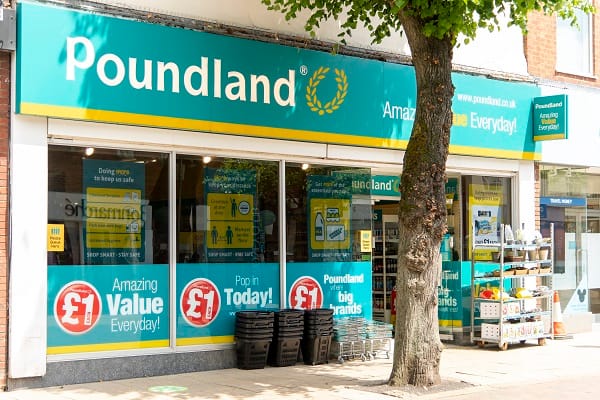
Finding a buyer for Poundland may prevent an immediate collapse, but securing the retailer’s future will require far more than a change of ownership. Any rescue deal must also provide the cash needed to replenish empty shelves, restore stock levels and keep hundreds of stores trading.
The distinction is critical. A buyer might acquire the business at an attractive price, but without substantial working capital, the new owner could inherit a retailer unable to generate the sales needed to finance its recovery. Stock shortages risk driving customers elsewhere, further weakening revenues and making the chain even harder to save.
The consequences of failure would extend well beyond Poundland’s shopfronts. Administration could put thousands of jobs at risk, leaving employees uncertain about their wages, redundancy payments, and whether their stores would reopen under new ownership.
Suppliers would also face potentially significant losses if outstanding invoices went unpaid, while landlords could be left with vacant retail units and the prospect of lengthy efforts to find replacement tenants.
A break-up might preserve some stores and jobs, but could leave weaker locations behind, fragmenting the business and disrupting relationships with suppliers and property owners.
The timing makes finding a solution particularly urgent. With Christmas approaching, Poundland is entering one of the year’s most important trading periods. Prolonged uncertainty could undermine customer confidence, disrupt deliveries, and leave stores struggling to meet seasonal demand.
The challenge for any prospective buyer is therefore not simply to purchase Poundland, but to finance its survival. Without fresh investment and a credible plan to restore stock availability, even a successful sale may only postpone the chain’s next crisis.
Andrew Watling, Restructuring and Insolvency Specialist and Partner at Opus Advisory Group, said: “The latest developments at Poundland suggest the business is again approaching a critical point, with time running out to secure a rescue deal that can preserve the retailer as a going concern, as a Notice of Intention to Appoint Administrators expires this week.
While the prospect of hundreds of store closures and thousands of job losses is deeply concerning, the immediate challenge is whether a buyer can be found with both the funding and a credible plan to stabilise the business. A rescue agreement alone is not enough. Any deal must provide sufficient working capital to rebuild stock levels, restore supplier confidence and support sustainable trading.
“One of the biggest challenges is the current owner’s reported reticence to inject funds to continue trading, while a deal is negotiated. Retailers depend on a continuous cycle of stock, sales and cash generation. Once that cycle is disrupted, the financial position can deteriorate rapidly, even where there is underlying customer demand. Empty shelves lead to falling sales, which in turn make it harder to generate the cash needed to keep the business operating. The stock also has to have been ordered and deliverable in a timely fashion to stock the shelves before Christmas.
“If a sale of the whole business, including an acceptable repayment of the shareholder loans, cannot be achieved, Administration may provide a route to preserving viable parts of the operation through a sale of some stores and other assets. However, a break-up would inevitably create greater uncertainty for employees, suppliers and landlords, with unsecured creditors potentially facing significant losses.
“The timing, just weeks before Christmas, adds another layer of pressure. This is a crucial trading period for retailers, and any prolonged uncertainty risks further damaging the value that a prospective buyer might otherwise be able to preserve.
“Poundland’s situation also highlights a wider issue facing UK businesses in all sectors. Financial restructuring can provide breathing space, but it cannot resolve fundamental trading or funding problems on its own. The priority must be to establish at an early stage, whether there is a viable business beneath the immediate financial pressures, and to act quickly and early enough to preserve as much of that value as possible.
“Whatever happens next, the consequences will extend well beyond Poundland itself, with potentially significant implications for its workforce, supply chain and high streets across the country.”


Leave a Comment