
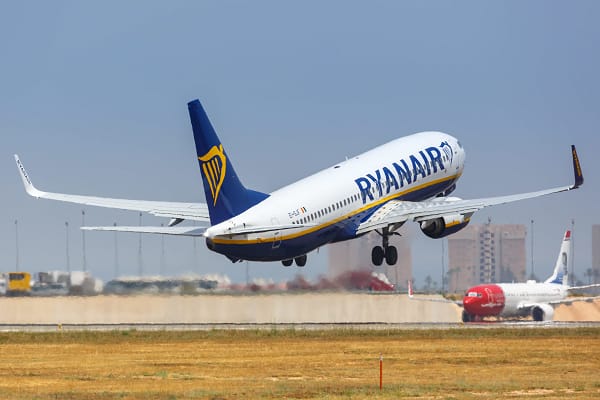
A Russian warship is suspected of jamming the satellite navigation systems of around 140 commercial aircraft flying near British airspace, in what analysts believe could be the first incident of its kind so close to the UK.
Ryanair, easyJet and British Airways services departing Edinburgh, Manchester and London Heathrow were among the aircraft affected by interference on November 9.
Analysis by aviation intelligence firm Hexbird identified a Ryanair flight travelling from Edinburgh to Rome, an easyJet service from Manchester to Hurghada in Egypt, and a British Airways flight from London to Stockholm among those caught up in the disruption, according to the i Paper.
The suspected source was traced to a single radio transmitter operating over the North Sea, approximately 190 miles from the English coast.
At the time, three sanctioned Russian cargo vessels – Lady R, Lady D and Maia-1 – were travelling south towards the English Channel, accompanied by a Russian warship.
The owners of all three ships are subject to sanctions imposed by Britain, the United States and the European Union. Lady R and Maia-1 have previously been linked to suspected arms shipments between Russia and North Korea, with weapons believed to have subsequently been used against Ukraine.
Maritime intelligence analysts at Geoinsider and Sonarrow had also identified Lady D, Lady R and two other vessels in October as being connected to the transportation of military equipment, including armoured vehicles, from Kaliningrad.
James Droxford, a former naval intelligence officer and independent maritime analyst, said the Russian warship was “almost certainly the origin of the GPS jamming, not the merchant vessels”.
He told the i Paper: “They’ve been tracked all the way through the North Sea. I think the short duration of the GPS jamming, the location and assets around it, suggests that it was a reaction to deter surveillance by the West against those ships.”
Dr Thomas Withington, an electronic warfare specialist, described the incident as “an intensification of the disruption that we’ve seen so far”.
“It’s the first time to my knowledge, first time we’ve seen anything this far west. But equally, I don’t think it’ll be the last time,” he added.
A French warship and a Dutch naval vessel were deployed to shadow the Russian ships as they approached the English Channel.
The scale of the interference suggested the involvement of sophisticated military equipment, according to Ramsey Faragher, chief executive of the Royal Institute of Navigation.
“It was a very large area that was covered, and so it would have been a significant piece of equipment that was probably more likely to have been on a dedicated military platform,” he said.
The jamming lasted approximately 20 minutes and caused no reported operational disruption to the affected aircraft. Pilots are trained to navigate without GPS and aircraft carry alternative systems, providing safeguards when satellite signals become unreliable.
But experts warned that the incident should not be dismissed as harmless. Eric Schouten, a former Dutch intelligence officer who heads aviation security firm Dyami, said a simultaneous failure at Britain’s air traffic control provider Nats could create a “doomsday scenario.
Dutch airline KLM reported the incident to authorities, describing jamming and spoofing as “a growing international phenomenon” that it “takes very seriously”.
Nats said it had received no reports from pilots of GPS jamming or satellite navigation interference on November 9.
Glenn Bradley, the UK Civil Aviation Authority’s head of flight operations, said the regulator worked with airlines and manufacturers to ensure aircraft systems were continually updated to counter the threat posed by GPS jamming.


Leave a Comment