
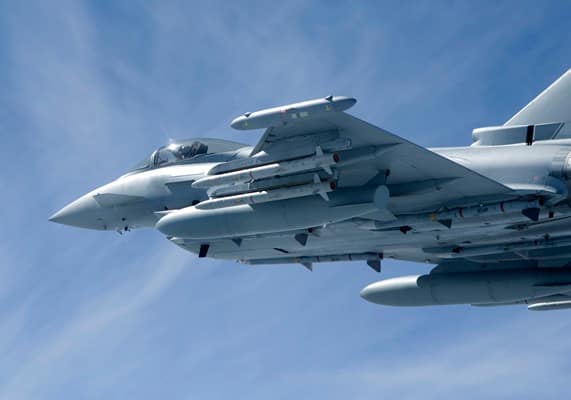
Poland scrambled F-16 fighter jets on Wednesday after Russia launched another wave of attacks against Ukraine, placing Polish air defences on heightened readiness as fears grow over the war spilling across NATO’s eastern flank.
Poland’s Operational Command of the Armed Forces said “military operations” had been initiated in Polish airspace, with the necessary forces and resources deployed.
Ground-based air defence and reconnaissance systems were also placed on heightened readiness.
“These actions are of a preventive nature and are aimed at securing airspace and its protection, especially in areas adjacent to threatened zones,” the command said.
The alert was underscored by reports of two loud explosions in Poland’s Świętokrzyskie and Podkarpackie regions.
Read more related news:
Russia faces fresh US economic blitz as Trump demands Putin ‘settles the war’
Lithuania draws up evacuation plans as Europe prepares for war within months
Latvia forced into ‘difficult’ EU compromise over Putin oligarchs
Households urged to prepare for blackouts, Cyberattacks and widespread war
Polish authorities said the sounds were generated by F-16 fighter jets conducting missions to protect the country’s airspace, rather than an attack on Polish territory.
The scramble came as Russian forces continued strikes across Ukraine, with Ukrainian media reporting that drones targeted fuel stations and warehouses around Kyiv during the early hours of Wednesday.
The incident highlights the increasingly delicate security environment along NATO’s eastern frontier, where Russian missiles and drones have previously crossed or approached the territory of alliance members during attacks on Ukraine.
Warsaw has repeatedly warned that Russia’s war poses a direct security challenge to NATO’s eastern members.
Prime Minister Donald Tusk said last week that Russia could deliberately target NATO countries with drones or missiles and subsequently claim that any incursion had been accidental.
The warning comes amid growing concern among Western military officials that Moscow may seek to test the alliance without triggering a direct military confrontation.
Air Chief Marshal Sir John Stringer has warned NATO members to operate in a “febrile environment” and to calibrate their responses carefully, arguing that Vladimir Putin would seek to provoke an “overreaction” from the alliance.
NATO’s deputy commander in Europe has similarly described Putin as becoming “increasingly cavalier, dangerous and risk accepting” as the war continues and Moscow seeks to divide Western allies.
The concern extends beyond conventional military operations.
German officials in August accused Moscow of involvement in a suspected sabotage plot at Leipzig airport after a drone carrying explosives was discovered near a Ukrainian aircraft loaded with jet fuel.
British officials also said last month that they had disrupted what they described as a Russian plot to sabotage a drone factory outside London.
Other incidents have added to concerns about a wider campaign of covert activity across Europe, although Russia has not been publicly blamed for every suspected act of sabotage.
An Estonian defence company was set on fire and a weapons storage facility in Bulgaria exploded in August, but neither incident has been publicly attributed to Moscow.
For countries bordering Russia, the concern is that covert activity and attacks against critical infrastructure could intensify as the war enters another winter.
Baltic leaders have warned that Russia is likely to increase pressure on infrastructure and Western societies while the conflict remains unresolved.
Estonian Prime Minister Kristen Michal said Putin was attempting to undermine NATO’s collective defence system by testing member states with covert operations that can be difficult to attribute.
Michal said a conventional Russian attack on Europe was currently “improbable”, citing the prospect of a NATO response and the continued commitment of Russian forces in Ukraine.
But he warned that Russia’s wider campaign of malign activity was “here to stay” until Putin changes his military objectives.
“The best way to deter him is to back Ukraine,” Michal said.
The immediate Polish alert nevertheless illustrates the narrow margin for error surrounding Russia’s aerial campaign.
With Ukrainian cities and infrastructure continuing to come under attack, NATO’s eastern members remain on guard against the possibility that a weapon, drone or deliberate provocation could turn a war confined largely to Ukraine into a direct test of the alliance’s airspace and collective defence commitments.


Leave a Comment