
Lithuania is preparing evacuation plans for its population in the event of a Russian attack, as the Baltic state warns that it faces an increasingly concrete security threat from Moscow.
Prime Minister Mindaugas Sinkevičius said Lithuania “will not surrender” and would “fight back” and “engage” if its territory were attacked, while acknowledging that authorities were preparing for a “variety of scenarios”.
One contingency would involve moving elderly residents out of cities “smoothly” and preventing the traffic gridlock that could hamper an emergency evacuation.
Speaking to BBC Newsnight, Sinkevičius said Lithuania could not disclose the full details of its preparations but warned: “We face concrete threats, not on a daily basis, but we’re experiencing them and it’s a true reality for us.”
Read more related news:
European spy chiefs warn Russia could test NATO’s Article 5 within ‘months not years’
‘Eurob****ds understand only brute force’ as Kremlin warns of ‘direct military deterrence’
Brits urged to join emergency civilian register as Russian threat puts UK on alert
UK warned we are in the ‘most dangerous era’ as war with Russia may all ready be under way
The comments come as European security officials warn that Russia is expanding its campaign of covert activity against western countries, raising concerns that Moscow could seek to test NATO’s commitment to collective defence through a military or hybrid attack.
US intelligence warned last month that Russia could launch a limited attack against a NATO member within the next several years to test the alliance’s response. A senior European intelligence official has subsequently warned that such a confrontation could potentially develop within “months, not years”.
The Baltic states are considered particularly exposed because of their geography and proximity to Russia and Belarus. Lithuania shares a border of roughly 150 miles with the Russian exclave of Kaliningrad and also borders Belarus, a close Russian ally.
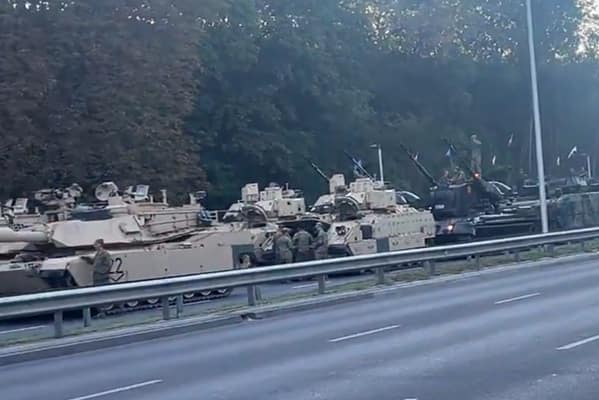
Videos from 🇱🇻shows military convoys/armored vehicles moving amid growing warnings of a possible russian provocation against NATO states. #Latvia,🇱🇹#Lithuania & 🇵🇱#Poland warned of scenarios involving limited incursions, sabotage or a “false flag” designed to test alliance Art. 5 pic.twitter.com/60EVIwHJ1u
— 🇺🇸 🇺🇸 🇺🇸Midobecker 🇺🇸 🇺🇸 🇺🇸 (@midobecker_1) September 19, 2026
The country has already experienced a direct breach of its airspace. Last week, a suspected Russian long-range attack drone was shot down by a NATO fighter over Lithuania, according to military officials, who described the incident as the first time a drone had been downed in Lithuanian airspace. Moscow has not commented on the incident.
Across Europe, governments have accused Russia of increasingly aggressive activity including alleged sabotage, cyber operations, arson, surveillance and influence campaigns. Officials in Britain, Germany, Denmark and Poland have linked a series of incidents to Moscow, although Russia has denied responsibility for some of the allegations.
Tensions intensified after Germany blamed Russia for an alleged attempted drone attack targeting Leipzig/Halle Airport in August. Moscow denied involvement.
Sinkevičius said Britain needed a “shift in the mindset” on defence, while acknowledging that Lithuania was “closer” to Russia and the “threat”.
The disparity in defence spending is significant. NATO estimates Lithuania will devote 5.33 per cent of GDP to core defence in 2026, compared with an estimated 2.56 per cent for Britain.
The warnings come as Prime Minister Andy Burnham faces pressure to accelerate plans to increase UK defence spending to 3 per cent of national income by 2030.
Michal Koudelka, director of the Czech Republic’s BIS security service, has warned that false-flag provocations, hybrid attacks and extensive influence operations are no longer remote possibilities.
A Russian breach of NATO territory could occur within “months, not years”, according to remarks reported by the Daily Mail.
European governments are consequently strengthening protections around critical infrastructure. French President Emmanuel Macron has commissioned defence protocols designed to protect vital national infrastructure against potential Russian “hybrid attacks”, while security agencies across the continent are increasingly focused on sabotage, cyber operations and attempts to expose weaknesses in NATO’s defences.


Leave a Comment