
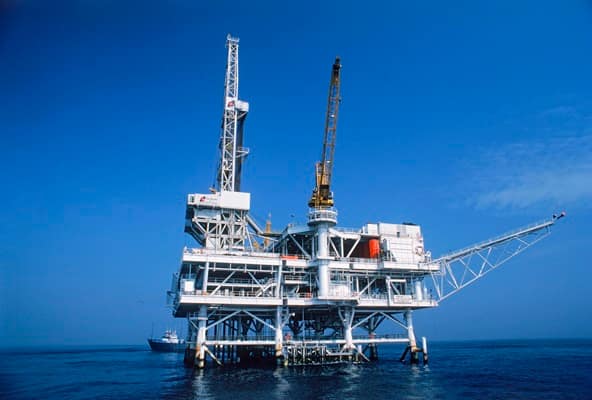
More than 160 offshore workers employed by oil and gas operator Apache are set to strike in a dispute over pay, raising the prospect of disruption to North Sea production and renewed questions over the resilience of Britain’s energy supplies.
The 24-hour stoppage is scheduled to begin on Wednesday October 21, with a second strike planned for November 4.
Seven platforms are expected to be affected, including installations in the Forties and Beryl developments, according to Unite, the union representing workers across several trades, including production and telecommunications technicians.
The dispute pits workers seeking a settlement they say protects their earnings against a company arguing that its offer is fair and that its contingency arrangements should limit the consequences for the wider industry.
Sharon Graham, Unite’s general secretary, accused Apache of refusing to use its financial resources to resolve the dispute.
“Apache is part of a global company which is making billions of pounds in profit,” she said. “They can easily afford to resolve this dispute without even a dent in their profits by making an acceptable offer to our members.”
She added: “The fact is Apache has so far chosen not to do this which is putting UK fuel supplies at risk. That is reckless behaviour and it is driven by shameful corporate greed.”
The union argues that workers have been offered a real-terms pay cut despite operating in a sector where companies can generate substantial revenues. The dispute is due to be discussed with the conciliation service Acas before the first stoppage, although Unite has expressed little optimism about the prospects for a breakthrough.
Stevie Davies, Unite’s industrial officer, said: “Talks are set to take place with the conciliation service Acas prior to the 24-hour strike action. We want these talks to be successful but we are not hopeful because Apache has shown no willingness to resolve this dispute.”
Davies warned that industrial action could cause “a material disruption in the Forties pipeline”, potentially affecting UK fuel supplies. He accused Apache of showing insufficient concern for its workforce, other operators and consumers.
Apache has rejected the implication that a strike would necessarily disrupt other producers. The company said employees in the bargaining unit had received a “fair” offer, including a 4 per cent pay increase.
“Our offer provides a 4% pay increase for employees in the bargaining unit, whose earnings already place them among the highest earners in the UK and whose offshore rota averages 153 working days a year,” a spokesperson said.
The company added that it did not expect industrial action to prevent other producers from continuing to operate through the Forties pipeline system. Its contingency plans include retaining experienced personnel at Forties Charlie to keep the plant operating and support third-party production, even if output from all five Apache-operated Forties platforms were suspended.
Any reduction in pipeline pressure, Apache said, would be comparable to that experienced during routine maintenance.
The disagreement leaves the scale of any supply impact uncertain. Unite’s warning centres on the potential consequences of reduced production and pipeline pressure, while Apache maintains that its preparations should protect flows from other operators.
The dispute nevertheless highlights the operational sensitivities of Britain’s mature North Sea infrastructure, where production, processing and pipeline systems are interconnected. Even a short stoppage can draw attention to the relationship between industrial relations and energy security, although the extent of any disruption will depend on the action taken and how effectively contingency measures work.
With the first strike approaching, the immediate test is whether Acas talks can produce a settlement before workers walk out. A second stoppage in November would prolong uncertainty for Apache and its workforce, while keeping the potential implications for North Sea operations under scrutiny.
For now, neither a major interruption to UK fuel supplies nor a complete absence of disruption is established. The outcome will depend on negotiations, operational conditions and the effectiveness of Apache’s contingency plans.


Leave a Comment