
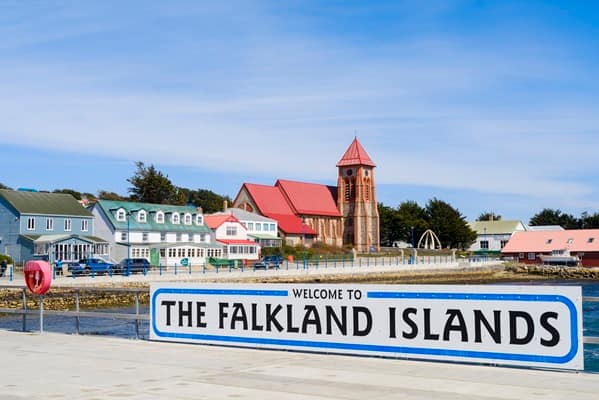
Approval of the Sea Lion development could unlock an estimated 1.7 billion barrels of oil, but threatens to deepen a diplomatic confrontation with Javier Milei while intensifying Labour’s battle over North Sea drilling.
Ed Miliband has approved a major oil development near the Falkland Islands, setting the stage for a fresh confrontation with Argentina over sovereignty, energy resources and the future of offshore drilling.
The decision to allow development of the Sea Lion field, estimated to contain 1.7 billion barrels of oil, risks provoking retaliation from President Javier Milei, who has threatened sanctions against companies operating around the disputed islands and warned that Argentina could pursue criminal charges against the Israeli energy company involved.
According to The Telegraph, Navitas Petroleum confirmed the approval, and it co-owns the project with Rockhopper Exploration. Production is expected to begin in 2028.
The stakes are considerable. If the project proceeds as planned, it could open up a substantial new source of offshore oil while placing Britain’s determination to develop resources around the Falklands on a collision course with Argentina’s increasingly assertive claims.
Milei has argued that the development threatens Argentine interests and that the country must act before extraction begins.
“If we do not act swiftly, in a few months they will have the material capacity to access the oil that lies underneath our sea – something that has never happened before,” he said.
The Argentine government maintains that companies operating in the archipelago have breached Argentine law by relying on exploration and production licences issued by the UK. Britain, however, continues to support the islanders’ right to determine their own future.
The dispute comes amid a broader deterioration in relations. Last month, Milei described the Falklands as being under “illegal foreign occupation” by Britain and threatened to “take matters into our own hands” during an address to the United Nations General Assembly in New York.
The Falkland Islanders delivered an overwhelming verdict in a 2013 referendum, with 99.8 per cent voting to remain a British overseas territory.
The decision has also opened a new front in Britain’s domestic energy debate, with Conservatives accusing Labour of applying inconsistent standards to oil and gas development.
The Conservative shadow energy secretary accused Miliband of “utter hypocrisy”, arguing that the government had approved drilling around the Falklands while refusing to back new North Sea projects.
“Yes, this is a very welcome decision but it does beg the question, why does Labour think drilling for oil and gas off the Falkland Islands is okay but not in our North Sea?” he wrote on X.
“Labour have no excuse for not backing Jackdaw and Rosebank.”
The criticism puts Miliband under pressure to explain the distinction between the government’s approach to offshore development around the Falklands and its position on projects closer to home.
Environmental groups are also likely to scrutinise the approval, given the scale of the proposed oil reserves and the government’s wider climate commitments.
The project therefore presents Labour with a political balancing act: defending the Falkland Islanders’ rights, managing the diplomatic fallout with Argentina and explaining its approach to new fossil-fuel extraction.
The approval comes as the government investigates reports of harassment directed at Falkland Islanders allegedly linked to intimidation from Argentina.
On Monday, Prime Minister Andy Burnham opened an investigation into the reports. Downing Street said attempts at intimidation were “completely unacceptable” and reiterated that the government’s support for the islanders and their right to determine their future “remained unwavering”.
The investigation adds a further dimension to an already sensitive dispute, in which questions of sovereignty are increasingly intertwined with access to valuable natural resources.
For investors, the Sea Lion development offers the prospect of a major offshore oil project. For policymakers, it presents a more complicated calculation involving diplomatic risk, environmental opposition and competing arguments over Britain’s energy security.
Milei’s threats raise the prospect of a prolonged confrontation, although the precise form and impact of any sanctions or legal action remain uncertain.
The central question is whether Britain can advance the development without provoking a deeper crisis with Buenos Aires — and whether Labour can defend its decision while facing renewed demands to reconsider its restrictions on oil and gas extraction in the North Sea.
With an estimated 1.7 billion barrels at stake, the Falklands oil decision is no longer simply a question of drilling rights. It has become a test of Britain’s diplomatic resolve, energy policy and ability to manage the political consequences of offshore development.


Leave a Comment