
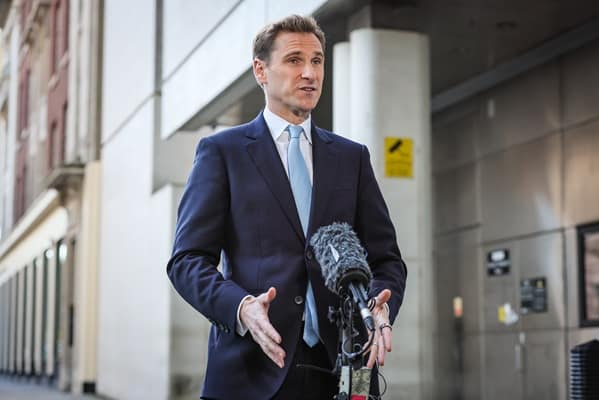
Chris Philp has warned that “mass immigration without integration” risks “destroying” Britain’s culture and the foundations of the nation state, as the Conservative frontbencher called for strict limits on legal migration.
The shadow home secretary said it was neither “racist” nor “far-Right” to raise concerns about the emergence of what he described as “completely parallel societies” in parts of Britain, arguing that the scale of recent migration had placed growing pressure on social cohesion.
Philp told Conservative members that a future Conservative government would introduce binding annual caps on legal migration, with entry restricted to what he described as a limited number of genuinely high-skilled workers.
“We can’t keep on like this. It isn’t fair to the British people. The cost – financial and social – is simply too high,” he said.
“Borders matter. Control matters. Numbers matter. Mass immigration without integration will destroy our culture and destroy the foundations of our nation state.
“It’s not racist or far-Right to say that. It’s common sense. So as Home Secretary, I would put the rights of our citizens first.”
His intervention comes amid a growing Conservative attack on Labour’s approach to settlement and migration, with Philp accusing Home Secretary Shabana Mahmood of retreating from reforms to indefinite leave to remain under pressure from Angela Rayner and Labour MPs.
“Shabana Mahmood won’t do that. She spent the last year claiming to be tough. But under pressure from Angela Rayner and open borders Labour MPs, she now plans to emasculate her own ILR reforms,” Philp said.
“This will mean hundreds of thousands of low-wage or no-wage migrants will stay forever, costing taxpayers billions. Shabana has surrendered.”
Philp’s comments reflect the increasingly prominent role that migration and settlement policy are playing in the political debate over the future size and composition of Britain’s population.
Some 4.2mn migrants moved to the UK between 2021 and 2024, according to the figures cited in the debate. Some members of this cohort are now becoming eligible to apply for indefinite leave to remain, which can provide a route to permanent residence and access to public services.
Philp acknowledged that Britain had benefited from migrants with valuable skills, but argued that the current system had allowed too many people to arrive for lower-paid employment or to claim benefits.
The former minister said the concentration of migration in a relatively short period had also exposed what he regards as a failure to integrate communities.
“Completely parallel societies have developed in some places, which is deeply divisive,” he said.
“So the next Conservative government will introduce binding annual caps on legal migration at very low levels. A limited number of genuinely high-skilled workers: yes. We recognise and value the contribution they make. But we cannot have huge numbers on low wages or no wages.
“It is bad for the economy, and it is bad for social cohesion. So mass migration must end.”
The argument places migration policy at the intersection of economics and social cohesion. While employers have long relied on overseas workers to fill vacancies, Philp argues that the fiscal and social costs of large-scale migration must be considered alongside its contribution to the labour market.
His proposed caps would represent a substantial tightening of Britain’s migration regime, with the Conservative position placing greater emphasis on limiting overall numbers and prioritising highly skilled workers.
The comments also sharpen the political divide over the government’s proposed settlement reforms. At the centre of the dispute is the question of how long migrants should remain in Britain before gaining permanent residence, and what conditions should govern that transition.
For Philp, however, the argument extends beyond immigration statistics or settlement rules.
His warning is that the consequences of sustained high migration without what he considers sufficient integration could ultimately affect the cohesion of British society itself.
“Mass immigration without integration will destroy our culture,” he told members.
The remarks underline how migration is likely to remain one of the defining political and economic fault lines in Britain, with the competing questions of labour supply, public spending, population growth, integration and social cohesion increasingly difficult to separate.


Leave a Comment