
Russia is facing fresh allegations that wounded and disabled servicemen are being returned to combat as the Kremlin’s military continues to absorb heavy losses in Ukraine.
Reports from Russia claim that military authorities in Surgut, in western Siberia, are seeking to mobilise wounded and disabled personnel from hospitals, potentially assembling units of soldiers who would ordinarily be considered medically unfit for frontline service.
The specific claims about Surgut have not been independently verified. But they come amid mounting evidence that injured Russian soldiers are being returned to combat before fully recovering.
Recent reporting has documented the emergence of so-called “disabled” or “cripple” units, with wounded servicemen allegedly being sent towards Ukrainian positions despite serious injuries. Forbes reported in August that disabled Russian soldiers, including men using crutches, had been sent into frontline assaults.
Ukraine has previously reported cases of wounded Russian troops being deployed to identify Ukrainian firing positions, while Russian military-linked channels have described injured personnel being denied rotation and sent back to the line of contact.
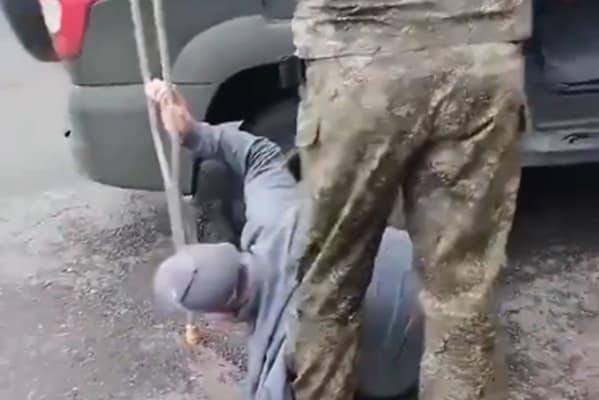
In Surgut, Russia, the military commandant’s office is quietly mobilising wounded and disabled troops directly from hospitals, forming “disabled regiments” for the next meat assault.
He says he was beaten so badly that he suffered a ruptured intestine, then casually lights a… pic.twitter.com/IWiIVATW8e
— Shaun Pinner (@ShaunPinnerUA) September 18, 2026
The practice points to the mounting manpower pressures facing Moscow after more than four years of full-scale war. Rather than relying solely on fresh recruits, Russian units have increasingly sought to retain experienced personnel, including soldiers who have already been wounded.
A recent UK government assessment also cited reports that Russian commanders have pressured mobilised personnel to sign new contracts, with some servicemen allegedly threatened with being sent on a “meat assault” if they refuse.
The alleged use of hospitalised and disabled personnel would represent a further escalation of that pressure, effectively turning Russia’s system for treating battlefield casualties into another potential source of manpower.
For Moscow, the approach could help sustain troop numbers without announcing another politically sensitive nationwide mobilisation. But it also risks returning soldiers to the battlefield whose injuries may severely limit their ability to fight, potentially increasing casualties without providing equivalent combat capability.


Leave a Comment