
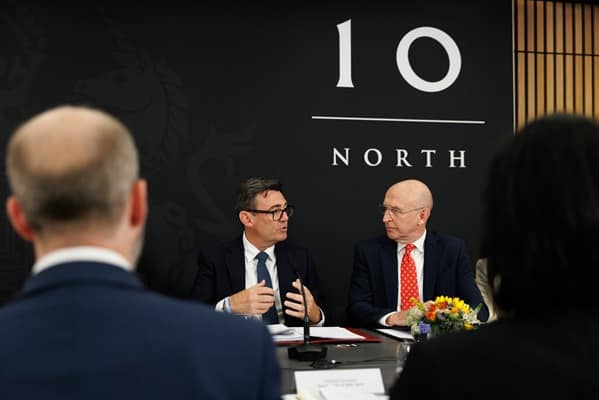
Prime Minister Andy Burnham has ruled out calling a snap general election despite a recovery in Labour’s polling fortunes, while declining to close off the prospect of further tax increases in October’s Budget.
Speaking during his visit to Ukraine on Monday, Mr Burnham said he would honour Labour’s 2024 manifesto commitment not to raise National Insurance, income tax or VAT.
But he stopped short of promising that households would face no additional taxation as his Government seeks to fund priorities including housing, social care and defence.
Asked by ITV News whether the public should accept paying more tax to address the pressures he has identified, Mr Burnham replied: “No, they don’t necessarily have to accept that.”
He said he would not be “unrealistic” about the support he could provide to households facing the cost of living and “won’t take risks with people’s jobs or their livelihoods”.
He added: “We are in a challenging position. Whatever I do will be carefully thought through, it will be funded and there will be more to come as we go into the autumn.”
The comments leave the Treasury facing a difficult balancing act ahead of the October Budget, with ministers under pressure to provide additional support while maintaining the tax commitments made at the last general election.
In a separate interview with LBC, Mr Burnham was asked directly whether voters should expect higher taxes in the Budget.
He replied: “No… We have a manifesto, and I will honour that manifesto. I believe it’s possible to provide extra help for people with the cost of living by changing some of our priorities.”
That formulation preserves the Government’s pledge on the three headline taxes while leaving open other routes to raise revenue, including changes to thresholds, freezes and alternative levies.
The Prime Minister also attempted to end speculation that Labour could seek to exploit its improved standing in the polls by returning to the electorate early.
Asked whether he would call a snap election to secure a fresh mandate, Mr Burnham said: “I am ruling that out right in front of you.”
He said he had “clear plans” to restore hope but did not provide detailed figures showing how his additional spending commitments would be financed.
The decision to rule out an early election means Mr Burnham will instead govern using Labour’s existing parliamentary mandate, with the October Budget becoming the first major test of his Government’s economic strategy.
Sir Mel Stride, the shadow chancellor, accused the Prime Minister of having inherited a fiscal problem for which he had no credible solution.
“Andy Burnham became PM without a plan and has been unable to say where the money is coming from to pay for his commitments, so is now staring down the inevitable barrel of tax rises.
“It doesn’t matter who is in charge, it is the Labour Party itself that’s the problem. As the welfare secretary Pat McFadden said, all they want is to raise taxes to fund more benefits.”
The Conservative attack reflects a broader concern in financial markets that Labour’s spending ambitions could eventually collide with its tax promises.
Mr Burnham’s insistence that the Government will honour its manifesto therefore leaves ministers with a narrower set of options for financing new commitments. Defence spending, housing and social care are all competing for resources as the Prime Minister describes the fiscal position as “challenging”.
For now, Downing Street is attempting to keep both election and tax speculation under control. But with the October Budget approaching, the question of how Mr Burnham intends to pay for his priorities is becoming increasingly difficult to avoid.


Leave a Comment