
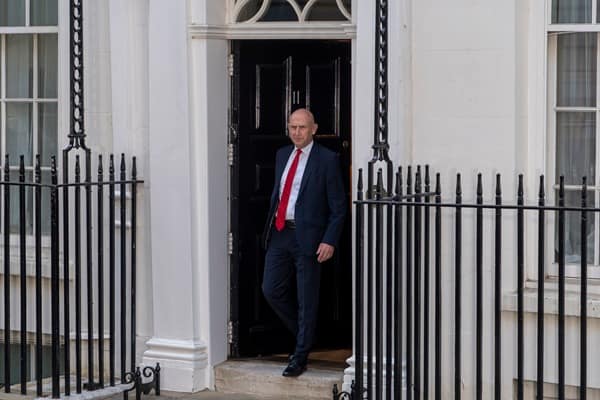
The Chancellor must restore confidence in the state of public sector finances while at the same time putting in place a credible plan to improve living standards and reduce the cost of living for millions of households, as well as stimulating much-needed business investment and laying down the foundations for long-term sustainable growth.
But generating economic growth within the existing fiscal constraints will be a formidable challenge.
The economic and fiscal backdrop
Despite the recent positive comments from the IMF about the UK’s direction of travel regarding government borrowing and debt, economic growth remains relatively modest and inflationary pressures arising from the Middle East crisis continue to grow.
Added to this, government borrowing costs have risen sharply in recent months – UK government bond yields are the highest among the G7 countries – and the tax burden is approaching a post-war high.
At the same time, demands for additional public sector spending continue to grow, particularly in health, social care, and defence.
These competing demands give the Chancellor no easy solutions, so don’t expect fireworks. He is likely to take a cautious approach that demonstrates public sector spending restraint, targeted tax increases, selective support for households and businesses, and renewed commitments to economic growth.
Fiscal credibility and financial markets
While this government is keen to not be ‘in hock’ to the bond markets, the reality of the economic landscape demands it; reassuring the financial markets will feature highly on the agenda. We can expect a strong reaffirmation of the Government’s self-imposed fiscal rules, introduced by the former Chancellor Rachel Reeves, and a determination to preserve sufficient fiscal headroom against future economic shocks. The OBR’s revised economic forecasts will be released at the time of the Budget and will be crucial in determining just how much room for manoeuvre there is regarding the fiscal headroom, but it remains to be seen whether Chancellor Healey will restore it to its previous level.
Taxation and fiscal drag
The Chancellor will reaffirm the government’s pledge not to increase the rates of income tax, employee National Insurance or VAT. But many taxpayers will still face an increase in the overall tax burden.
The fiscal drag effect of a continuation in the freezing of personal tax thresholds until 5 April 2031 will pull many more people into higher tax bands as wages rise each year. Fiscal drag provides the Treasury with significant additional revenue without the political difficulty of announcing explicit increases in headline tax rates. The Chancellor is expected to hold firm on this policy at this Budget – but there is a possibility that it could be extended beyond 2031.
In addition, targeted tax increases can be expected. The most likely targets are banks and oil companies, two sectors perceived to be making excess profits who could handle the increased tax burden. The top four UK banks made £29bn in pre-tax profits in the first half of 2026, while the oil companies have benefited from geopolitical instability and rising energy prices. It would be both politically and economically expedient to take this route, potentially recouping as much as £5bn in revenue from each. However, the Treasury’s apparent preference for a permanent increase in banking duties over a one-off windfall tax could weaken the international competitiveness of the UK banking sector.
A rise in capital gains tax (CGT) is reported to have been ruled out by the Chancellor, and this is a sensible decision. Although it is understandable to question the fairness of taxing earned income at a much higher level than capital gains, raising CGT would lead to diminishing returns and discourage investment at a time when the London stock market is already underperforming.
That is not to say that the Chancellor won’t tinker with the tax – removing a break on capital gains on inherited assets is an option being considered, and could raise as much as £2bn a year.
As is customary, stronger enforcement by HMRC, including measures to tackle tax avoidance, evasion and non-compliance, are also likely to be announced, as well as a commitment to cutting red tape and making it easier for businesses, especially SMEs, to trade.
Support for household living standards
Efforts to improve household living standards will feature prominently in the Budget, as the Government aims to reverse a worrying fall in confidence in the economy, as evidenced by the unexpected drop of 11 points in the GfK Consumer Confidence Index’s October reading and worse-than-expected retail sales in September.
The sharp rise in energy costs in recent months, with more to come this winter, could result in some targeted cost-of-living assistance. This could include measures to reduce domestic energy bills, protection for the most vulnerable consumers and postponement of planned fuel duty increases. Such actions would offer visible targeted support for those most in need without the huge cost associated with universal subsidies.
Business and SME priorities
The corporate sector, especially SME’s, will be looking for signs that the government understands the pressures they have been facing and continue to face – and Chancellor Healey has been keen to be a friend to entrepreneurs.
Business rates reform, particularly for high-street retailers, hospitality and smaller firms, may feature alongside measures to simplify regulation and encourage capital investment.
However, a substantial reduction in business taxation or employers’ national insurance appears unlikely given the current fiscal constraints and political mood, meaning they will continue to weigh on investment and recruitment opportunities.
Public spending pressures
Public spending will present an equally difficult challenge. The NHS, defence and essential public services will continue to demand additional resources in the years ahead, but there is limited scope for significant increases across government departments. Chancellor Healey’s resignation from Keir Starmer’s Government in June over an underfunded defence department proved to be a fatal blow to the former Prime Minister.
Healey, now in No.11, is expected to back down on reaching a spend of three per cent of GDP on defence by 2030, although he is expected to announce billions of pounds in new funding.
We will hear renewed calls for even greater efficiency, productivity and better value for money across the public sector. The challenge will be to demonstrate how proposals and words can be translated into genuine improvements in the delivery of public services.
A long-term growth agenda
The Chancellor will want to present a positive agenda for long-term economic growth. Housing development, planning reform, infrastructure and regional development, alongside measures to encourage private-sector investment are likely to feature prominently.
Yet announcements alone will not resolve the UK’s underlying economic weaknesses. Productivity growth has been disappointing since the 2008 Global Financial Crisis, business investment remains insufficient and the economy continues to struggle to generate the sustained expansion needed to improve living standards and strengthen the public finances. Decisive action is needed to turn around the UK’s faltering economy.
This exposes the fundamental dilemma facing the Chancellor. Higher taxes and tighter spending may help to stabilise the fiscal position in the short term, but they could also serve to constrain demand and discourage investment going forward. Measures designed to stimulate growth may require resources that the Treasury simply does not have.
How the Budget will be judged
Ultimately, three groups of stakeholders will determine whether the Budget has been successful in establishing a credible path towards stronger economic growth alongside sustainable public finances:
- Financial markets have demonstrated their nervousness about the fragility of public finances and so their focus will be on what will happen to government borrowing, the national debt and the fiscal credibility resulting from this Budget.
- Households will look for relief from the cost of living.
- Businesses will want greater certainty, competitive taxation and a more supportive environment for investment.
He must convince businesses, households and investors that this Budget is more than just shuffling deck chairs, instead marking a meaningful step towards economic change. However, balancing their competing priorities and satisfying all three communities will be far from straightforward.


Leave a Comment